
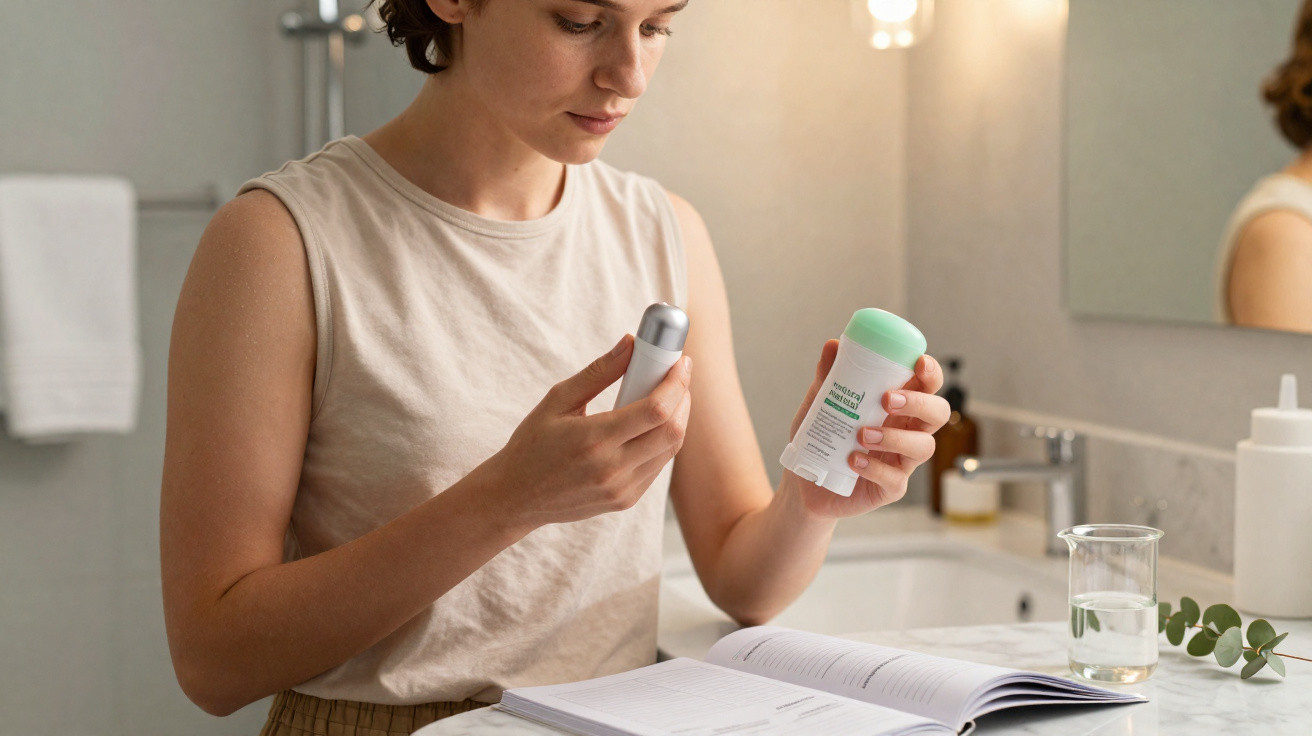
Many people worry about aluminium in deodorant, but newer data puts the potential risks in a far more measured perspective.
Aluminium-containing antiperspirants have been under scrutiny for years. Terms such as breast cancer or Alzheimer’s disease keep resurfacing, often without proper context. At the same time, millions of people use these products daily because they noticeably reduce heavy sweating. So how hazardous is this lightweight metal in reality - and what should you look out for when choosing a product?
Why aluminium is used in so many deodorants
Aluminium is the third most abundant element in the Earth’s crust and a real workhorse in industry. In cosmetics, it mainly appears as aluminium salts - found in antiperspirant deodorants, and also in products such as lipsticks, sun protection and whitening toothpastes.
The reason is simple: aluminium salts do more than mask odour. They interfere with sweating itself.
Aluminium salts form a temporary plug with proteins in the ducts of sweat glands - meaning less sweat reaches the skin’s surface.
Conventional deodorants primarily target smell, usually through fragrance and antibacterial ingredients. Antiperspirants, by contrast, at least partly reduce sweat output. For people who sweat heavily at work or in day-to-day life, that can make a genuine difference to comfort and confidence.
Aluminium is everywhere - not only in deodorant
If you focus only on deodorant, it is easy to single out the wrong main culprit. Specialists have been pointing this out for years: by far the largest share of aluminium exposure typically comes not through the skin, but through what we ingest.
Main everyday sources
Public health sources such as Apotheken Umschau and health insurers like AOK most often highlight the following as key contributors to day-to-day aluminium intake:
- Food (e.g. grain products, baked goods, vegetables, cocoa)
- Cookware and baking trays made of aluminium, particularly uncoated items
- Barbecue trays and aluminium foil, especially with acidic or salty foods
- Packaging containing aluminium
- Certain medicines and food supplements
Some aluminium can migrate from these materials into food - especially at high temperatures or with acidic ingredients such as tomatoes or citrus fruits. In practice, that means virtually everyone takes in some aluminium every day.
In healthy people, the body eliminates most aluminium via the kidneys. A small proportion remains and accumulates mainly in the skeleton, where it is only broken down very slowly.
How much aluminium is still considered safe?
The European Food Safety Authority (EFSA) has set a guide value: a tolerable weekly intake of 1 milligram of aluminium per kilogram of body weight. For someone weighing 70 kilograms, that equates to a benchmark of 70 milligrams per week.
This figure is not a hard cut-off beyond which harm starts immediately. It is intended to help regulators and manufacturers design products so that consumers do not take in excessive amounts over the long term.
At higher doses, aluminium can be harmful to health. The main potential effects mentioned relate to:
- Kidney function
- Bone health
- The nervous system
People with already reduced kidney function should be particularly cautious. Because they excrete less aluminium, the metal can build up more readily in the body. In such cases, medical advice can help to assess overall exposure more realistically.
Breast cancer, Alzheimer’s and more: what the research actually shows
Concern about aluminium in deodorants intensified years ago for two main reasons: the proximity of the underarms to breast tissue, and the hypothesis that aluminium might be involved in the development of Alzheimer’s-type dementia.
A few older studies suggested links, but they often relied on small samples, unclear measurement approaches or associations without robust evidence of causation. Later research then weakened these claims or did not confirm them at all.
The current assessment: there is no convincing evidence that aluminium-containing antiperspirants increase the risk of breast cancer or Alzheimer’s disease.
Major bodies such as Germany’s Federal Institute for Risk Assessment (BfR) have repeatedly re-evaluated the available data. The overall message in more recent statements is consistent: when used normally, harm from aluminium in deodorant appears unlikely.
How much aluminium actually gets through the skin?
For a long time, authorities assumed comparatively high absorption through the skin - largely as a precaution. More recent studies using improved methods indicate that substantially less aluminium penetrates intact skin than previously feared.
There is also the question of scale: the application area is limited, essentially to the underarms rather than the whole body. Compared with food or medicines, the contribution of antiperspirants to total exposure therefore seems smaller than once assumed.
One exception is freshly shaved skin. Tiny micro-cuts could, in theory, make absorption easier. For that reason, some experts advise avoiding aluminium-containing products immediately after shaving, or at least using them sparingly.
How to use aluminium antiperspirants as safely as possible
If you do not want to give up your preferred antiperspirant, a few straightforward habits can further reduce your personal exposure:
- Alternate products: on low-activity days, opt for an aluminium-free deodorant.
- Pause after shaving: do not spray or roll antiperspirant directly onto freshly shaved or damaged skin.
- Apply a thin layer: using more does not automatically mean better performance - but it may mean more contact with aluminium.
- Check the ingredient list: look for terms such as “Aluminium Chlorohydrate” or “Aluminium Zirconium”.
- Monitor sensitive skin: if you notice redness or itching, switch to gentler formulations.
Alternatives: what aluminium-free deodorants can (and cannot) do
The range of “aluminium-free” products has grown rapidly in recent years. Many people prefer to play it safe or simply want fewer additives.
Aluminium-free deodorants rely on different approaches, such as:
- Antibacterial ingredients like ethanol or certain plant extracts
- Fragrances that cover odours
- Powdery components such as bicarbonate of soda or starch, which can absorb a little moisture
These products can reduce odour noticeably, but they do little to stop sweating itself. Anyone who sweats very heavily or regularly works closely with other people often finds the difference obvious.
A practical compromise may be: use an effective antiperspirant for office days or sport, and choose an aluminium-free deodorant on quieter days or at home. That way, overall exposure falls without sacrificing comfort.
Reducing aluminium in daily life - not just in the bathroom
If aluminium exposure is your main worry, you will usually achieve more by changing kitchen habits than by emptying your bathroom cabinet. Useful steps include:
- Use baking paper instead of aluminium foil under oven dishes
- Avoid storing acidic foods such as tomatoes or lemons in foil or aluminium trays
- Prefer coated pans and pots
- For supplements and indigestion tablets, watch out for aluminium compounds
In particular, people who already eat a lot of processed foods can quickly add extra aluminium sources without realising it. A diet based more on fresh foods and fewer heavily processed products tends to reduce this risk as a side effect.
So how risky is aluminium in deodorant, really?
Anyone hoping for a simple black-and-white verdict will be disappointed. Aluminium is not a harmless trace element - but in everyday life it is not an instant poison either.
What the research to date suggests is this: antiperspirant deodorants contribute less to overall aluminium exposure than was once assumed. From the BfR’s perspective, the evidence currently available does not justify general panic about aluminium-containing deodorants.
Even so, it makes sense to manage personal exposure sensibly: alternate with aluminium-free products, take care with compromised or freshly shaved skin, and pay attention to other aluminium sources at home. If you feel particularly anxious - or you barely sweat - standard deodorants without aluminium salts are often a good fit.
Research into long-term accumulation in bone tissue remains relevant. Scientists are continuing to investigate how much aluminium is stored there and what effects that could have over decades. Findings like these help authorities refine guidance over time - and help consumers make more informed choices in their everyday routines.



Comments
No comments yet. Be the first to comment!
Leave a Comment