
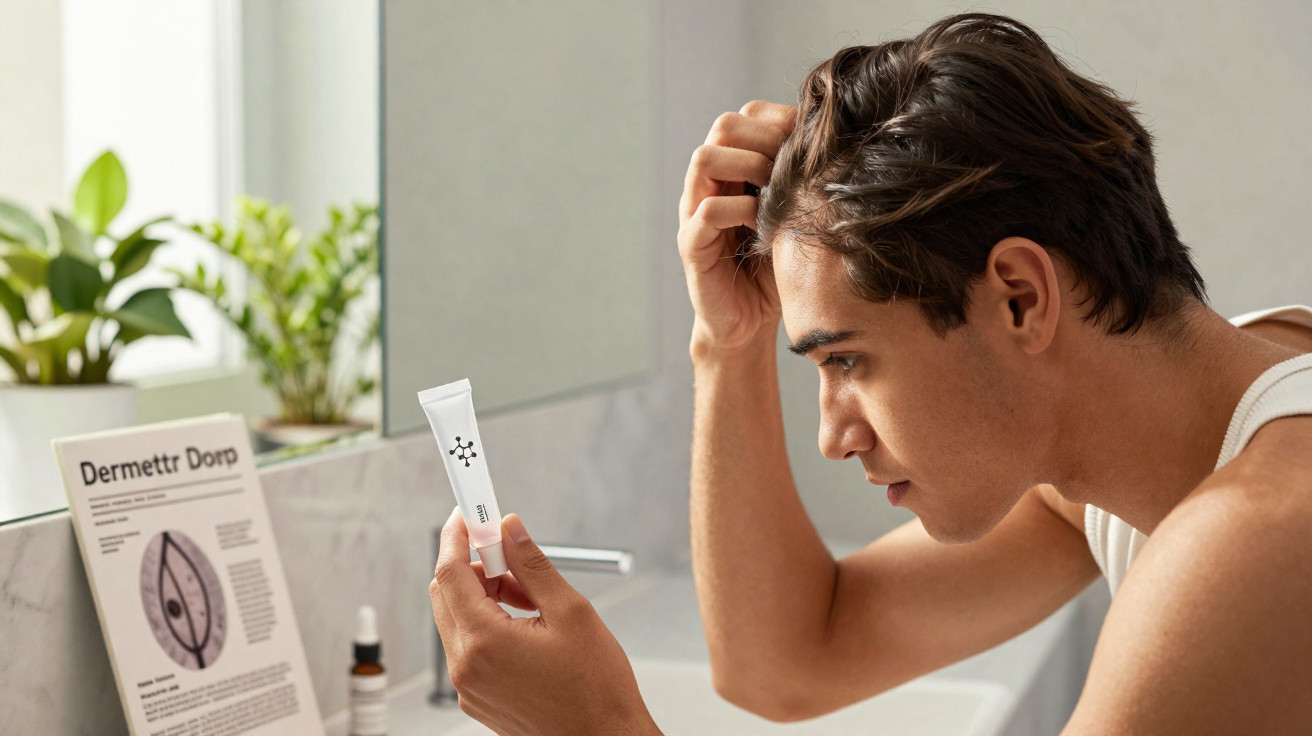
Hair loss feels inevitable for many people: treatments can be expensive, and results are often only moderate. A gel made from a naturally occurring sugar is now attracting attention in specialist circles. In animal studies, hair grew back at least as quickly as with established options such as Minoxidil, and in some cases appeared visibly denser.
How a DNA sugar unexpectedly became a hair-growth booster
The research did not start with hair loss at all, but with wound healing. Scientists from the University of Sheffield in the United Kingdom and COMSATS University Islamabad in Pakistan were studying the sugar deoxyribose, a building block of DNA.
Their original aim was to find out whether this sugar could improve the healing of skin injuries. They applied deoxyribose as a gel to small wounds on the skin of mice-and, almost by accident, noticed a striking side effect.
"Around the treated wounds, the fur grew back much faster and denser than in untreated areas."
Because of this unexpected observation, the team shifted its attention from wound repair to hair growth. The logic was straightforward: if the sugar can accelerate skin regeneration, it might also help reactivate hair follicles.
The mouse study: sugar gel versus hormone-driven baldness
For the dedicated hair-loss experiment, the researchers used a common model for hereditary hair loss: male mice with testosterone-driven thinning of the coat-similar to so-called male pattern hair loss in humans.
The scientists shaved a patch on the animals’ backs and then treated it once daily with different gels:
- Gel without an active ingredient (carrier base only)
- Gel containing the deoxyribose sugar
- Gel containing Minoxidil (a standard active ingredient for hair loss)
- A gel combining deoxyribose and Minoxidil
The key results after 20 days
- Rapid regrowth: In the sugar-gel group, the fur clearly returned within 20 days, with long, robust hairs.
- On a par with Minoxidil: The deoxyribose gel performed similarly to Minoxidil, which is a standard treatment for many people.
- No dramatic boost from combining them: The deoxyribose–Minoxidil mixture was not noticeably better than either treatment used alone.
Study photos compare bald control animals, mice treated with gel without any active ingredient, and the groups treated with sugar gel or Minoxidil gel. The difference was visible: where the sugar was used, the area looked covered more quickly and more evenly.
What may be happening in the body: more blood, more cells, more hair?
Researchers do not yet fully understand the precise mechanism. What is clear is that, in treated skin areas, they found more blood vessels and higher activity of skin cells.
"The better a hair follicle is supplied with blood, the stronger and thicker the hair grows back."
Deoxyribose therefore appears to promote the formation of new blood vessels and stimulate skin repair. Both effects could benefit hair roots, which sit deep in the skin and respond strongly to oxygen, nutrients and tissue signals.
The researchers, led by biomaterials specialist Muhammad Anjum, suspect that the sugar gel may act in a way comparable to known growth factors-except it uses a substance that is naturally present in the body.
Why this is interesting for millions of people
Hereditary hair loss-medically known as androgenetic alopecia-is estimated to affect up to 40 percent of the world’s population. Men typically lose density at the hairline and crown, while women more often notice widening along the parting.
Current standard therapies have clear limitations, both in terms of effectiveness and side effects.
| Therapy | Effect | Typical drawbacks |
|---|---|---|
| Minoxidil | Stimulates hair growth, slows further loss | Does not work for everyone; itching or scalp irritation is common; uneven results. |
| Finasteride | Stops hair loss in many men; sometimes increases density | Risk of erectile dysfunction, reduced libido, depressive symptoms; not approved for women. |
A gel applied locally that is based on a sugar the body already contains could become a new option-particularly if it proves to be well tolerated and does not trigger systemic hormonal effects.
What the sugar gel might be used for in future
So far, the evidence comes only from animal studies, but the researchers are already thinking ahead. Beyond classic hereditary hair loss, several potential uses are being considered:
- Hair loss after chemotherapy: If cancer medicines have damaged hair follicles, a regenerative gel might help speed up the restart.
- Alopecia areata: In this autoimmune form, hair falls out in episodes. An approach that strengthens the environment around the hair root would be appealing.
- Wound healing while preserving hair: Pairing improved scar healing with renewed hair growth at injured sites.
The main advantage is that deoxyribose is not an external, foreign compound-it is a natural component of DNA. That does not automatically make it risk-free, but it does put it in a different category from synthetic hormone blockers.
How far has the research really got?
The newly published paper in Frontiers in Pharmacology represents a very early step. The tests were carried out only in male mice whose hair loss was hormonally driven. No human participants were involved.
"The researchers themselves emphasise: we are right at the beginning; the data are preliminary and come from just one animal model."
Globally, the typical next steps would include:
- Further animal studies, for example using female mice and other hair-loss models.
- Safety assessments to rule out local reactions and any possible systemic side effects.
- Small first-in-human studies, starting with a few participants and low doses.
Only if these phases show that the sugar gel works reliably and is well tolerated would larger, randomised studies be considered. Realistically, that means several more years of research.
What people affected can take from this right now
Anyone dealing with hair loss today should not view the sugar gel as a short-term miracle solution. At present it exists only as a laboratory product, not as an approved cream or lotion available from pharmacies.
Even so, the study points to some noteworthy directions:
- Research is shifting more towards regeneration, not only hormone blockade.
- New blood vessel growth and scalp/skin health matter more than many people realise.
- The spotlight is increasingly on substances the body itself produces as potential active ingredients.
In parallel with existing medicines, it may be sensible for affected people to discuss supportive measures with a dermatologist-such as scalp care, treatment of inflammation, managing stress, or addressing nutrient deficiencies. Many of these factors also influence how well existing follicles may respond to emerging therapies.
Key terms explained briefly
Deoxyribose: A sugar component of DNA. In the study, it was the active ingredient in a gel that stimulated skin growth and blood vessel formation.
Minoxidil: The active ingredient in many over-the-counter hair-growth solutions. It was originally developed to treat high blood pressure and was later found to promote hair growth.
Androgenetic alopecia: The medical term for hereditary, hormone-related hair loss. Androgens (male sex hormones) play a central role, but the condition also affects women.
Anyone choosing a treatment should not be led by advertising claims, but should consider the evidence, personal risk factors and realistic expectations. The potential sugar gel sits in this landscape as an intriguing candidate-an approach that focuses on the skin’s capacity to repair itself rather than targeting the hormonal system.



Comments
No comments yet. Be the first to comment!
Leave a Comment