
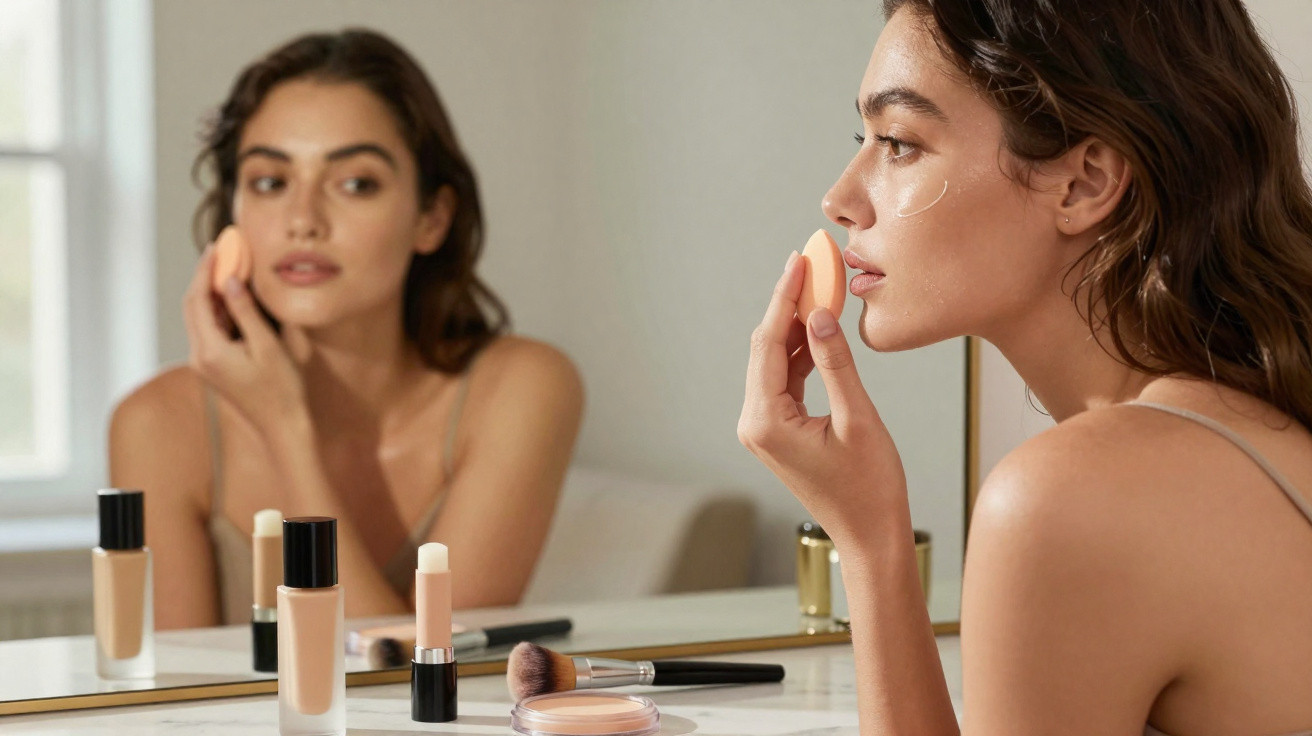
After a few hours, you catch your reflection and notice your foundation has settled into every pore or clung to dry patches. The aim was a smoother complexion, yet somehow it looks worse than before. The reassuring part: most of the time it’s not your skin “failing” you, but the wrong kind of make-up paired with an unhelpful application method.
The most important rule: foundation must match your skin type
Before brands or viral launches come into it, one thing matters most: how does your skin behave throughout the day? Does it feel dry, look shiny, stay balanced, or show more visible signs of maturity? That answer determines which type of foundation genuinely flatters your complexion-and which can make it look older or more uneven.
Normal to combination skin: lots of options, as long as you’re deliberate
With normal skin through to slightly oily combination skin, you’ve got the broadest choice. In general, these tend to work well:
- liquid foundation with medium coverage
- a tinted moisturiser or skin tint for a barely-there finish
- compact powder foundation when you want extra mattifying
The key is the finish. If your complexion often looks a little dull, a lightly radiant, dewy finish can make it appear fresher. If shine across the forehead, nose and chin bothers you, a semi-matte finish is usually more suitable. Fully matte formulas can quickly look flat and powdery, especially in daylight.
Dry skin: creamy beats powdery
If you’re prone to dry patches, tightness or flaking, you’ll do best with a foundation that brings a bit of skincare with it. Good options include:
- liquid formulas with a high water content
- creamy textures with light plant oils
- serum foundations with hydrating ingredients such as hyaluronic acid
Pure powders and strongly mattifying mousses tend to exaggerate dryness lines and leave skin looking dull. A better approach is lighter coverage overall, then concealer only where needed-rather than applying a thick layer everywhere.
"If you ‘kill’ dry skin with too much powder, you’ll look older very quickly-no matter how expensive the product is."
Oily skin: control shine without “clogging up” pores
When your skin gets shiny quickly or you’re prone to blemishes, ultra-matte products can sound like the obvious solution. In reality, very heavy, full-coverage formulas often look cakey and can settle into texture.
These usually perform better:
- oil-free liquid foundations
- lightweight gel textures with a mattifying effect
- mineral powders that absorb sebum without looking chalky
Often, a translucent setting powder just through the T-zone is enough. If you powder absolutely everything, you risk a mask-like finish and visible product build-up-especially later in the afternoon.
Mature skin: lightness beats full coverage
As skin matures, powders and firm mousses become trickier. They’re more likely to collect in lines and fine wrinkles, making features appear harsher.
That’s why many make-up artists recommend:
- very lightweight liquid foundations
- soft-focus textures with soothing or smoothing ingredients
- formulas with a subtle glow instead of a fully matte look
"Foundation shouldn’t hide wrinkles; it should draw attention away from them-with lightness and a fine glow."
The foundation type that genuinely makes the complexion look better
Across age groups, one pattern is clear: skin tends to look its best when foundation sits like a sheer, second-skin layer, not like an opaque mask. Products that achieve this usually share a few traits:
- light-to-medium coverage that can be built up in thin layers
- liquid or gel textures rather than heavy creams or dry powder bases
- a skin-like finish: not glaringly shiny, not chalk-matte
- skincare ingredients suited to your skin type (hydration for dry skin; oil-controlling components for oily skin)
For everyday wear, many people are happiest with a “your-skin-but-better” option-less of a classic full foundation, more of a complexion-enhancing tint. These formulas are more forgiving if your application isn’t perfect, they tend to crease less, and they’re easy to refresh during the day.
Foundation that tends to make your complexion look worse
Choosing the right type matters-but so does recognising which textures are better left on the shelf. Certain formulas reliably make even good skin look more textured or unsettled.
Avoid: dry, high-coverage powders on fine lines
Very compact powder paired with mature or dry skin is rarely a winning combination. The complexion can look flat, every line becomes more obvious, and the face loses that sense of life.
Also worth treating with caution: strongly mattifying mousse textures, particularly if you have visible fine lines or enlarged pores. They can sit over uneven areas like filler and end up highlighting exactly what you wanted to blur.
Heavy camouflage for everyday: more harm than help
High-coverage camouflage foundations absolutely have a place-such as for pronounced redness, scarring, or special occasions and camera work. In normal daylight, though, they can look artificial very quickly. Often, it’s enough to use:
- a lightweight foundation as your base
- a high-coverage concealer only on the areas that truly need it
That way, your natural skin texture still shows and the complexion looks alive rather than plastered over.
Application: how foundation can look like real skin
Even the best formula can fall flat if it’s applied poorly. For many people, foundation looks most natural when they use less than they instinctively reach for.
Less product, more precision
For a fresh daytime look, a small amount is usually plenty-around a pea-sized dab. Apply it:
- starting from the centre of the face (nose and cheeks)
- blending outward towards the edges
- buffing carefully at the hairline and along the jawline
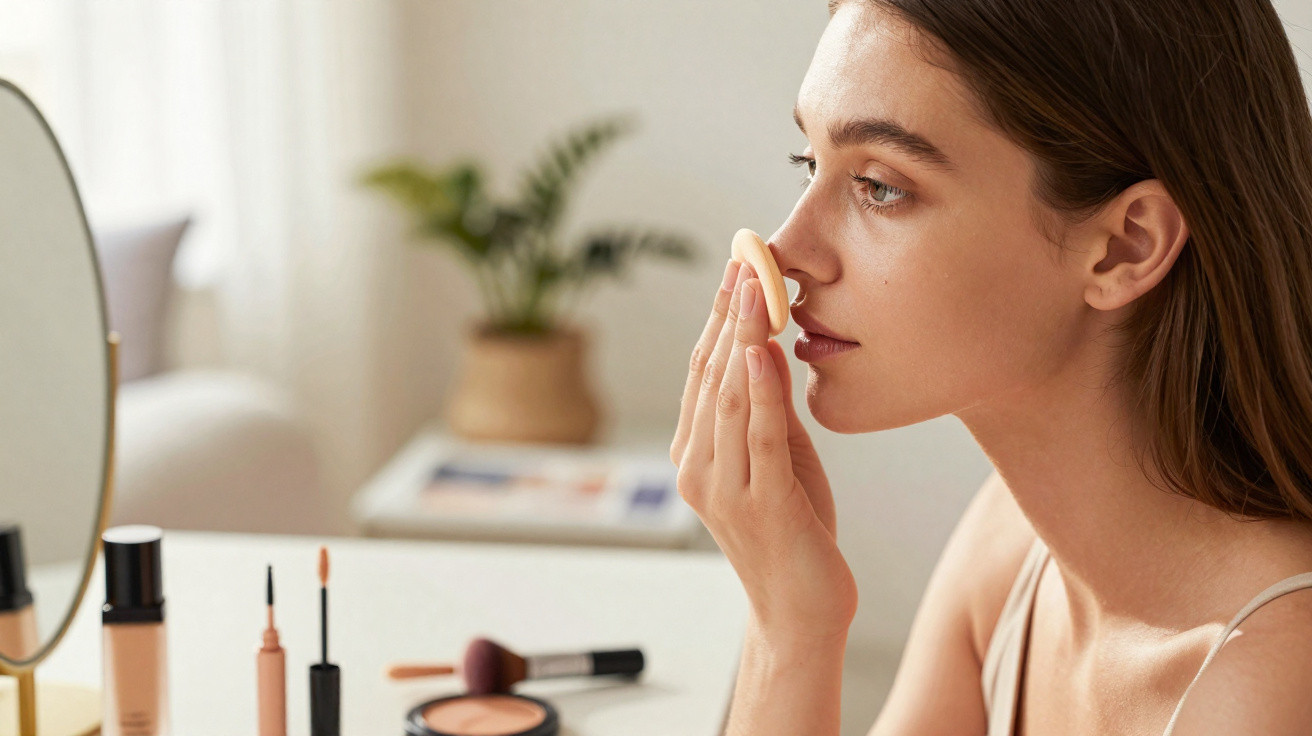
Fingers, a brush, or a slightly damp make-up sponge can all work. Fingers tend to give the most skin-like finish, sponges lift excess product and make everything look finer, and brushes usually deliver a bit more coverage.
"If you only apply foundation where it’s genuinely needed, you almost always look younger and more awake."
Powder only where shine truly bothers you
A light dusting of translucent powder across the forehead, nose and chin helps set your make-up without making the entire face look flat. Keeping the cheeks a touch more natural-and allowing a little sheen-can actually make skin look fresher.
What modern foundations can do as well
Many newer formulas blend make-up with skincare. Depending on the product, you may find:
- hydrators such as glycerin or hyaluronic acid
- antioxidants aimed at early signs of skin ageing
- UV filters as extra day-to-day sun support
Even so, foundation isn’t a substitute for a solid skincare routine. If you rely on make-up with SPF alone, you’ll usually apply too little to get meaningful protection. A better approach is dedicated sunscreen as your final skincare step, then a light foundation over the top.
Practical examples to help you choose
A few typical situations can make the right choice clearer:
- Dry cheeks, shiny forehead: a lightweight, hydrating foundation, then a touch of powder only on the forehead.
- Mature skin with visible pores: a fluid, softly glowy formula applied very thinly, concealer only where needed, minimal powder.
- Young, oily skin with spots: an oil-free foundation with medium coverage built in thin layers, extra coverage directly on blemishes, and a mattifying powder through the T-zone.
If you’re not sure where your skin sits, test different textures over a full day-ideally in daylight. You’ll quickly see whether a formula creases into lines, turns shiny, clings to dryness, or stays even.
In the end, no trend product decides whether your skin looks good. What matters is the combination of the right texture, a sensible finish, and a gentle application in thin layers. If you embrace lightness over full coverage, you’re far more likely to get what everyone wants: a complexion that looks like great skin, not lots of make-up.



Comments
No comments yet. Be the first to comment!
Leave a Comment