
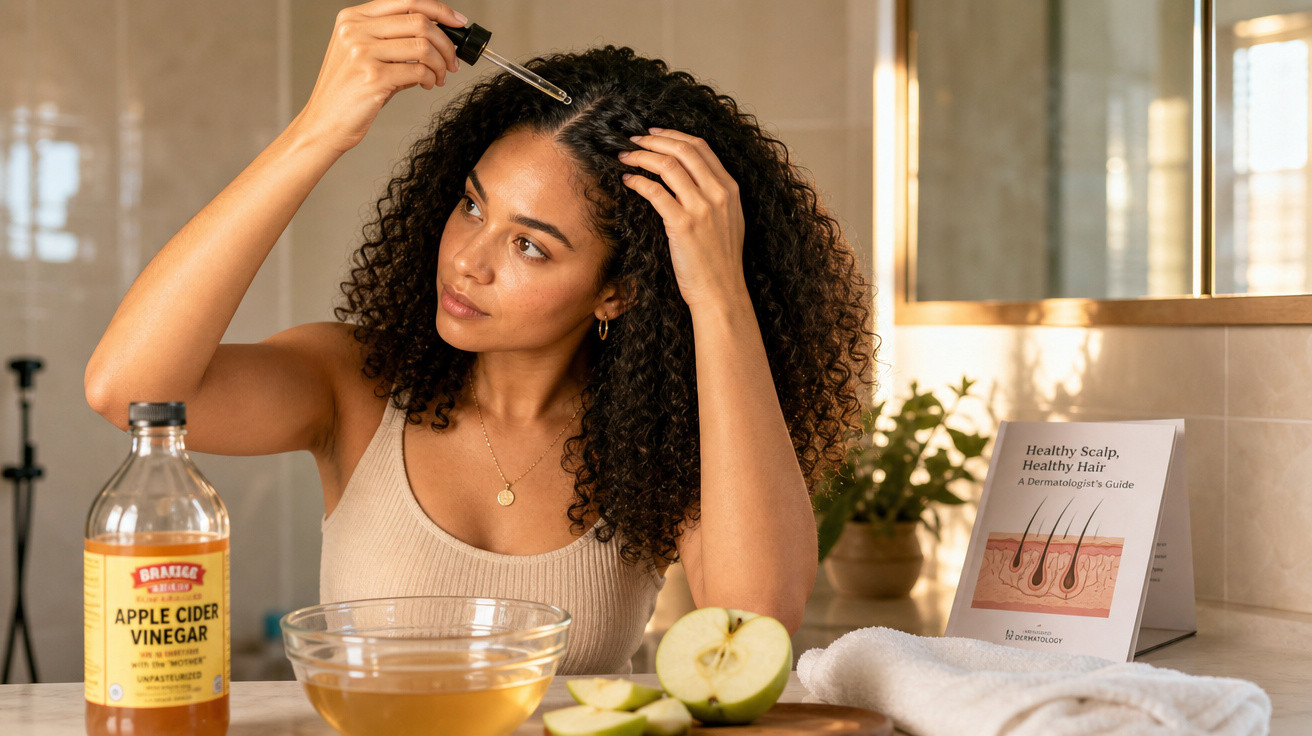
Apple cider vinegar on the scalp has once again drawn attention after studies and experts highlighted its potential to balance pH, reduce excess oil and improve the appearance of the hair, making it one of the most discussed topics on social media.
What makes apple cider vinegar work on the scalp?
Apple cider vinegar mainly contains acetic acid, a compound that helps rebalance the scalp’s pH after the use of alkaline products. This can help keep the hair cuticles more sealed and aligned, promoting shine and a softer feel.
Dermatologists explain that this effect is not a cure for hair or scalp issues, but it may serve as a helpful addition to a care routine when used properly and always diluted, lowering the risk of irritation.
What do scientific studies say about this ingredient?
Although there are still few clinical studies focused specifically on using apple cider vinegar directly on the scalp, research involving acetic acid points to antimicrobial activity against different microorganisms, which helps explain the growing interest from specialists.
A scientific review published in the journal MDPI noted that acetic acid has relevant antimicrobial properties. Dermatologists stress, however, that this does not replace treatments recommended for dandruff, seborrhoeic dermatitis or other scalp conditions.
How can apple cider vinegar be used safely on the hair?
Experts warn that the product should never be applied neat to the skin. The most common recommendation is to dilute one part vinegar in several parts water before use, helping to avoid discomfort and irritation.
After washing, the mixture can be applied for a few minutes before rinsing out. Anyone with wounds, allergies, a sensitive scalp or dermatological conditions should seek medical advice before trying this method.
What benefits are commonly noticed after use?
Many people report an improvement in the look of their hair after adding the product to their routine. Results vary depending on hair type, frequency of use and whether dermatological issues are present.
Among the benefits most often mentioned by experts and users are the following:
- More intense shine due to the alignment of the cuticles.
- Reduced oiliness in some types of scalp.
- A longer-lasting feeling of cleanliness.
- Less build-up of residue left by styling products.
- A healthier appearance of the hair when used in moderation.
The home remedy does not replace medical treatment
Despite its popularity on social media and among celebrities, apple cider vinegar does not remove the need for professional assessment when there is severe hair loss, persistent flaking, intense itching or inflammation.
Dermatologists point out that dandruff is often linked to the growth of the Malassezia fungus and may require medicated shampoos. This household ingredient can act only as a complementary step within a suitable care routine.




Comments
No comments yet. Be the first to comment!
Leave a Comment