
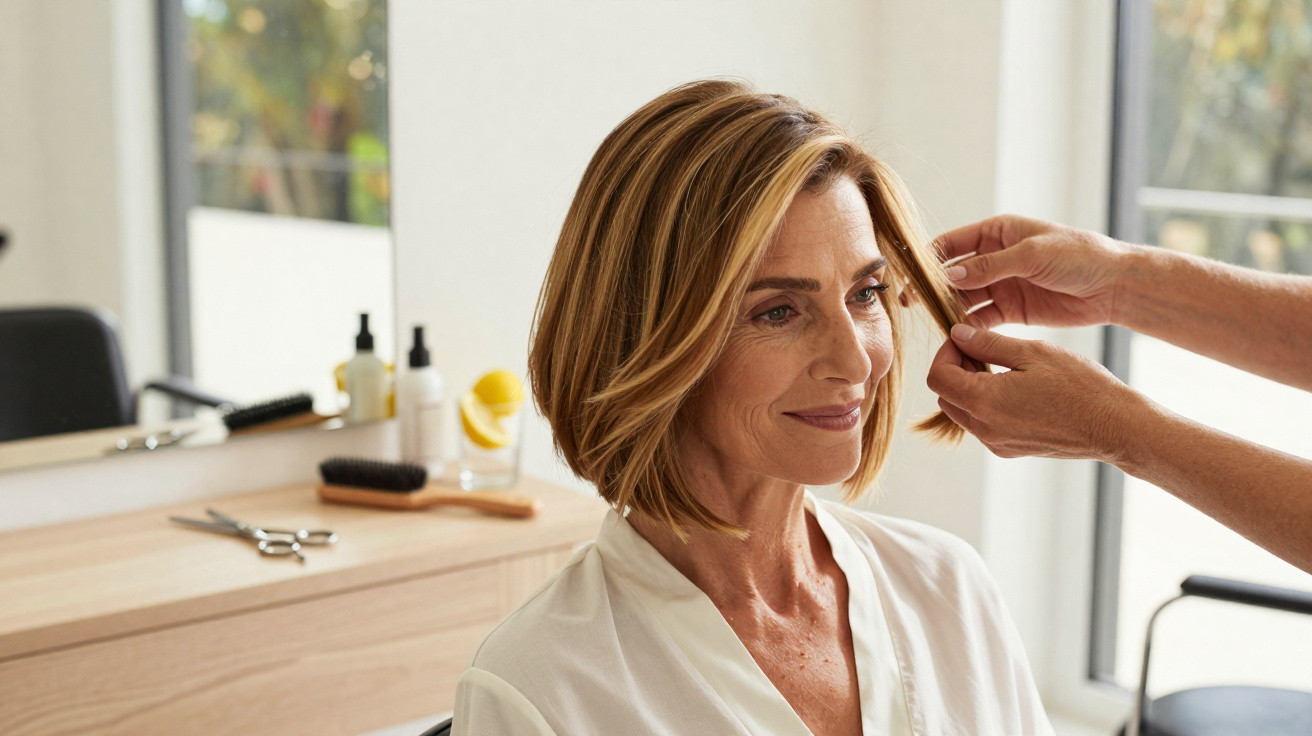
The hairdresser caught a section of my hair, held it up to the light and released a quiet sigh - the kind that communicates everything without saying much at all. “We’ll tidy up your French bob, then?” she said on autopilot, scissors already poised.
All around us, the late-morning salon hum was familiar: women in their 50s, 60s and 70s swapping notes on cruises, grandchildren and knee operations. Same soundtrack, same look. Short, smart, neat. Sensible. Safe.
Then her phone lit up with a photo that cut straight through the routine. A woman of about 65, sun warming her shoulders, salt-kissed hair skimming her collarbone. Not truly long, not properly short. Light, fluid, youthful without trying - labelled “Riviera bob”. The whole salon leaned closer.
The scissors dipped.
Something new had just walked into the room.
The bob that lets you grow older without looking “short and sensible”
After 60, haircuts have a habit of getting shorter. The reflex is almost automatic: “less length, less effort, more practical.” You arrive at the salon with a reference photo and leave looking like every other “active woman” pictured in the health-magazine waiting room.
The classic French bob has fallen into the same pattern. A crisp edge, jaw-length finish, a precise fringe - eternally stylish, yes. Yet on mature faces it can begin to feel a touch… confined.
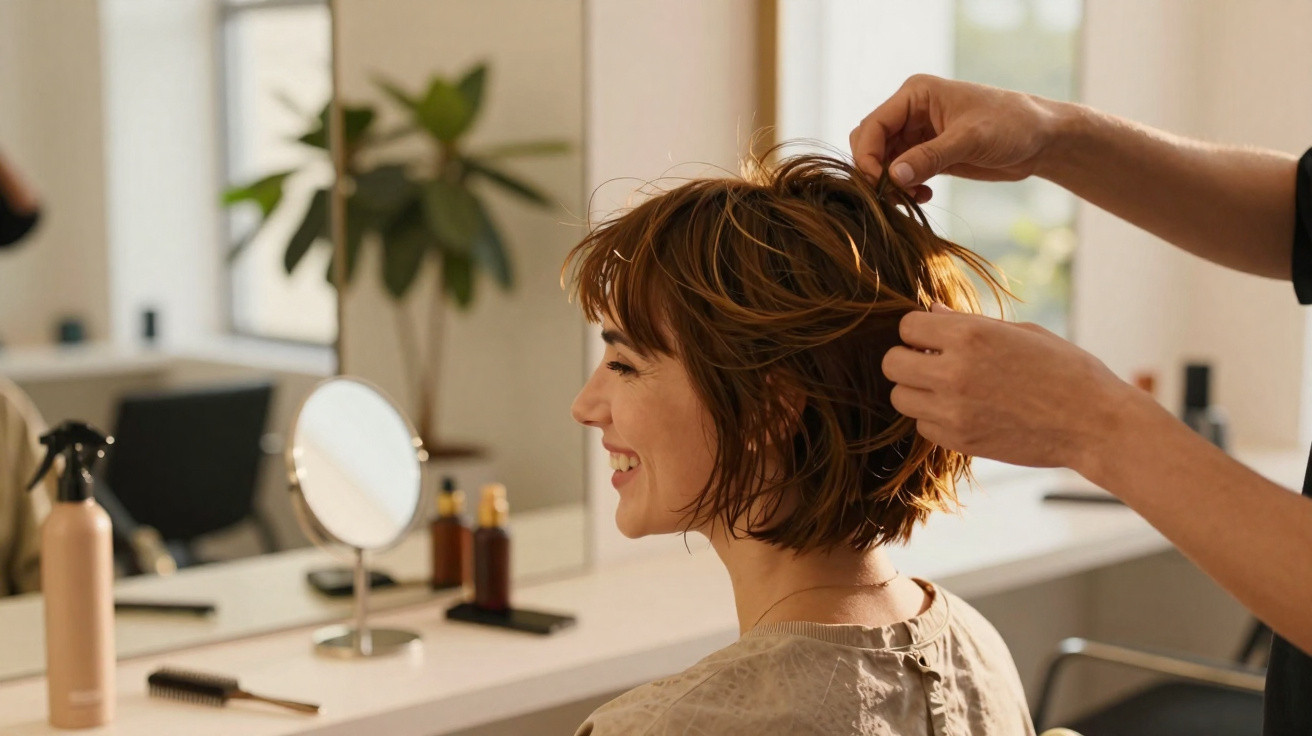
The Riviera bob moves in the opposite direction. It adds length, introduces softness and loosens the outline. The ends sit just below the chin, brushing the top of the neck or even grazing the collarbone. The shape is airy rather than strict. You can actually feel wind move through it.
Imagine a terrace in Nice last June: low sun, spritz glasses, and a table of girlfriends - all over 60 - marking a retirement. One of them, Anne, turned up late with sunglasses pushed into her hair. And for a moment, everyone forgot the cake.
She hadn’t had Botox. She hadn’t dropped ten kilograms. She hadn’t reinvented her wardrobe. She’d simply let her bob grow into that Riviera length, with a gentle side parting and a little movement around her cheekbones.
The response was almost ridiculous. “You look ten years younger.” “You look rested.” “You look like you’ve just come back from a film festival.” The haircut didn’t delete her age - it shifted the frame. Her face looked less compressed. Her neck appeared more elegant. Her jawline softened. And, crucially, nothing looked “done”.
There’s a straightforward reason the cut is so flattering after 60. Faces naturally drop a little, angles can sharpen, and features tend to drift downwards. A very short or very geometric bob can work against you by spotlighting every line and shadow. A Riviera bob adds gentleness where time creates edges. The slightly longer front lengthens the face. Those lighter ends that skim the collarbone pull the eye down - away from the nasolabial folds.
It also behaves better with the texture shifts that come with mature hair. When hair becomes finer or starts to frizz, a bit more length provides weight and swing, avoiding that stiff “helmet” look. The goal isn’t “young at any cost”. It’s “alive and moving”. That difference changes everything.
How to ask for a Riviera bob (and avoid the stiff salon version)
Begin with a feeling, not just a photo. Sit down and say: “I want a bob that feels like I spend weekends by the sea, with my hair in the breeze - not a strict, polished bob.” Then show an image that matches the mood: ends below the chin, a slightly softened line, and a few discreet layers that sit away from the face.
Be specific about length: ask for it to touch the top of your shoulders when it’s dry - not wet. Dry. That point matters. Hair springs up as it dries, especially if there’s any natural wave. You want the front to open your face, not slice it into two. The back can sit a touch shorter, but avoid an aggressive stack. Think glide, not step.
This is where women often get caught out: they request “Riviera” and leave with a traditional, dense bob - set solid with a round-brush blow-dry. The exact opposite of the brief. Describe sensations instead of technique. Say, “I want to be able to tuck it behind one ear,” or “I want to shake it out with my fingers after a swim.” Those images guide the cut better than jargon.
And if your hairdresser starts suggesting “very structured” lines or “sharp graduation” at the neckline, steer them back - kindly. Yes, there should be shape, but it must be invisible. A Riviera bob should look slightly lived-in from day one, as though you’ve had it for three weeks already.
One more pitfall is over-polishing at the styling stage. We’ve all had the moment: you catch your reflection in the salon mirror and a 1990s TV presenter stares back. Too-rounded blow-dry. Fringe locked in place. Ends curled under like a wig. The cut can be perfect, but the finish can ruin the effect.
“I always tell my over-60 clients: the secret is to accept one strand that misbehaves,” laughs Carla, a Paris-based hairstylist who spends her summers cutting hair in Antibes. “Perfection hardens. One little flaw makes you look real, and real is what reads as young.”
- Ask for it to be dried with a flat brush - or just fingers - rather than a round brush.
- Choose a light, flexible product such as a texturising spray instead of a heavy serum.
- Say you want “movement” and “air between the strands”, not a dense, compact block.
Grey, white, highlighted: when the Riviera bob becomes your best ally
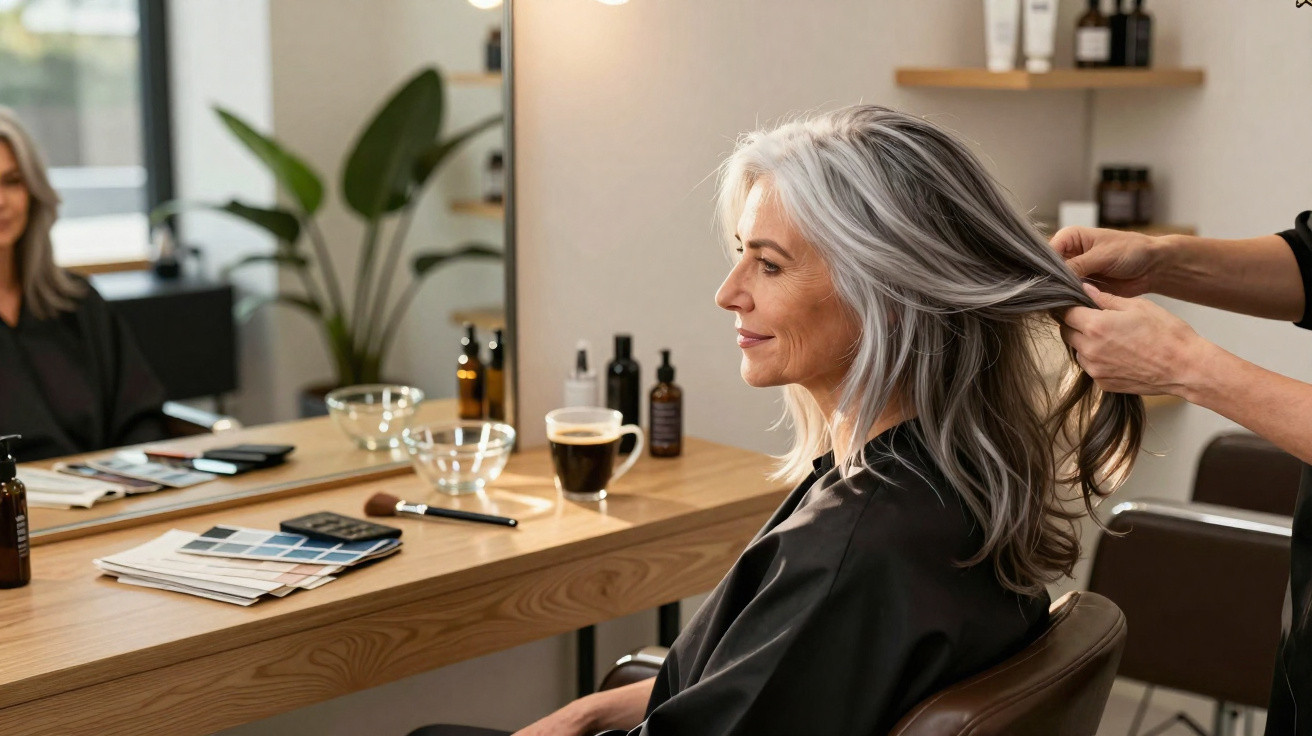
What makes the Riviera bob so effective after 60 is how gently it treats grey and white hair. Natural silver can look flat when it’s cut too short and kept too uniform. At this slightly longer length, with easy movement, it starts catching the light like satin. Add a few sun-kissed highlights around the face or a soft balayage and the cut brightens - without shouting, “I’ve just spent three hours in the salon.”
If your hair is very fine or thinning, this style also allows for subtle tricks. A delicate layer through the top and around the crown creates lift without that obvious “mushroom” silhouette. Keep the ends slightly feathered rather than blunt so they don’t drop into a square block. Think less about thickness and more about lightness on the shoulders and softness around the jaw.
There’s something quietly emotional about breaking the old rule: “After 60, hair should be short.” That line has aged worse than any of us. The Riviera bob is a middle ground that feels like gentle rebellion - not long enough to feel heavy or demanding, not short enough to read as harsh or “sensible grandma on a cruise”.
And let’s be truthful: almost nobody does an hour-long blow-dry every day. This cut doesn’t demand that kind of commitment. A quick towel dry, a few minutes with the dryer aimed downwards, a scrunch with a light cream - and you’re done. On damp mornings you can even let it air-dry and twist two front pieces around your fingers. Imperfection suits it.
So the real question is: are you “allowed” to look this soft and relaxed after 60? That’s the quiet revolution inside this hairstyle. It isn’t just an Instagram trend. It’s a way of showing up that says, “Yes, I’m older. I’ve earned the right to stop arguing with my reflection.”
A Riviera bob on a 25-year-old is sweet. On a 65-year-old, it carries a story. It says you’ve understood the most rejuvenating thing isn’t thickness or length - it’s movement. Light. The sense that your hair, like your life, hasn’t stopped, hasn’t closed down, hasn’t retired.
Next time you’re in the chair, you may feel that tiny pause before you say, “Short, please - same as always.” Let that pause linger. The scissors are ready. And so is a different version of you.
| Key point | Detail | Value for the reader |
|---|---|---|
| Riviera length | Ends between below the chin and top of shoulders, slightly longer in front | Elongates the face and softens features without high maintenance |
| Soft structure | Discreet layers for movement, no heavy graduation or sharp lines | Prevents the “helmet” effect and flatters greying or thinning hair |
| Natural styling | Finger-drying, light texturizing products, air between strands | Daily routine that feels realistic and keeps the result fresh and youthful |
FAQ:
- Is the Riviera bob suitable for very fine hair after 60?Yes, as long as the length is not too long and the layers are delicate. Ask for a subtle volume boost at the crown and feathered ends, then rely on a light mousse or spray, not heavy oils.
- Can I wear a Riviera bob with natural grey or white hair?Absolutely. The cut loves grey. A few soft highlights or a gloss treatment can reduce yellow tones and add shine, making the movement of the bob more visible.
- What face shapes benefit most from this cut?Round faces gain from the slightly longer front that slims and lengthens. Square faces enjoy the softened jawline. Heart-shaped faces get balance from the collarbone-skimming length.
- How often should I trim a Riviera bob to keep it fresh?Every 8–10 weeks is usually enough. The cut is designed to grow gracefully, so you’re not a prisoner of the salon schedule.
- Can I style a Riviera bob if I have some natural wave or curls?Yes, it actually works beautifully. Ask your stylist to cut with your curl pattern in mind, then dry with a diffuser or air-dry, scrunching in a light cream for soft, beachy movement.


Comments
No comments yet. Be the first to comment!
Leave a Comment