

The hairdresser fastened the cape around Sophie’s shoulders and met her gaze in the mirror. “Be honest,” she said, holding her comb in mid-air, “how much time do you truly want to spend on your hair every morning?”
Sophie let out a weary laugh - the kind you hear from women balancing work, family, older parents, and a body that no longer resets overnight. At 48, she kept her long hair wound into the same exhausted bun day after day. No blow-dry. No styling. Just getting through.
She breathed out. “Five minutes. Ten, if coffee’s strong.”
The hairdresser smiled as she reached for the scissors. This wasn’t only about a fresher cut - it was about giving Sophie back a small pocket of ease.
What happened next caught them both off guard.
The low-maintenance cut women keep asking for after 45
Look closely and you’ll spot it everywhere: on the high street, at the gym, in the supermarket queue. Women in their late forties, fifties and sixties whose hair looks effortlessly good - even when the rest of life is anything but. A touch shorter, softly shaped, the neck left clear, cheekbones more visible.
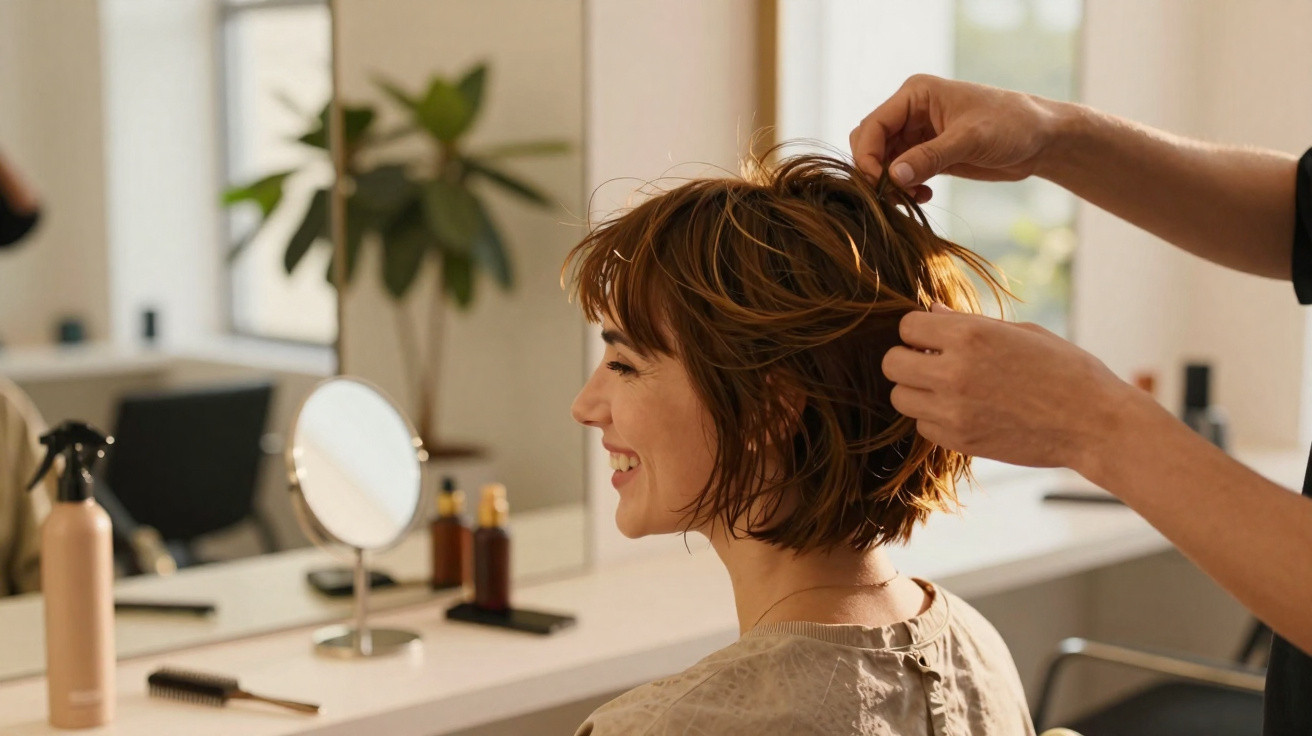
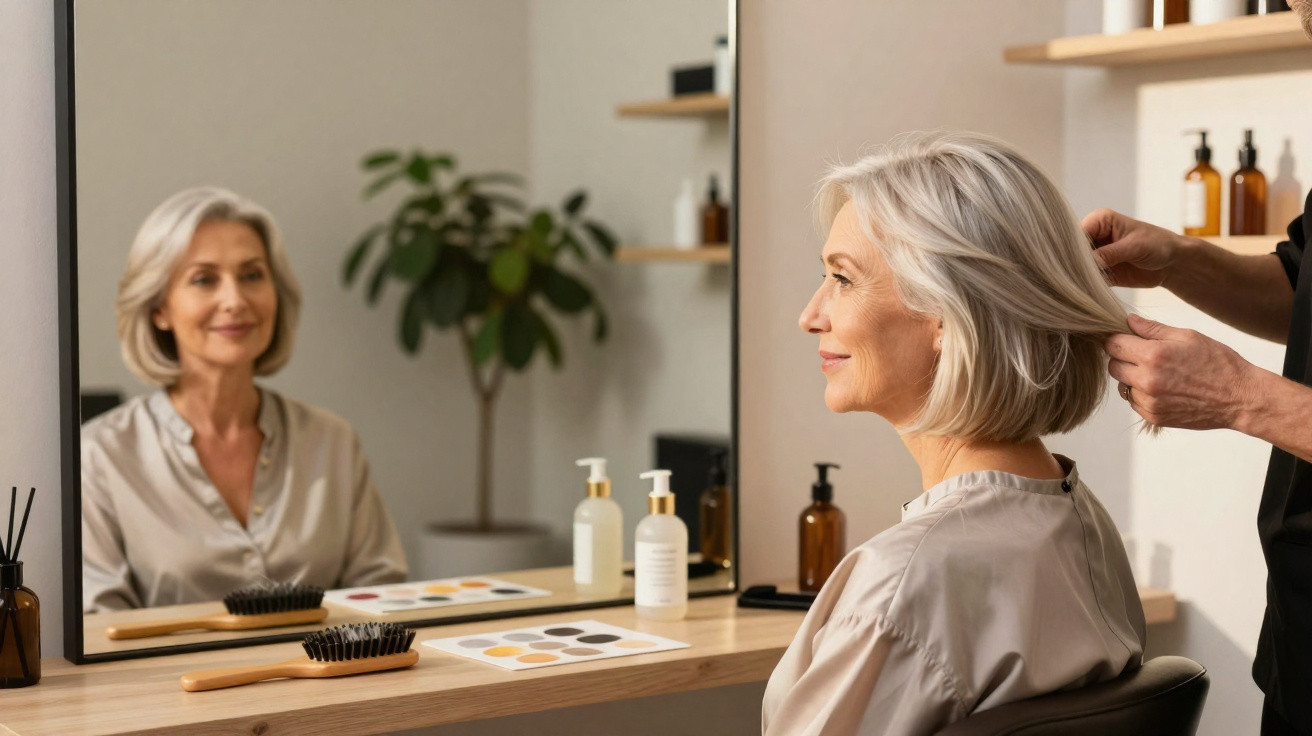
In salons, that look is often labelled the layered collarbone bob. It isn’t the rigid, workwear bob from the office years, and it isn’t the pixie that can feel like too big a leap. This version skims the shoulders, has a little float, and settles back into place - even after you’ve dozed on the sofa.
From the front, it softly outlines the face. From behind, it traces the neckline without sticking to it. From the side, it quietly signals: “I woke up like this… and honestly, most days, I almost did.”
Clara, 52, is a nurse working irregular shifts. For years she wore her hair down to mid-back, and it swallowed time she didn’t have. A good-day blow-dry took twenty minutes - and that was before the straighteners or curling wand came out. When her first grandchild arrived, she realised those twenty minutes had suddenly become a luxury.
Her stylist recommended a textured collarbone bob with gentle layers and a soft side fringe. In the first week, Clara kept waiting for the difficult bit - the pile of products, the tutorial rabbit holes, the constant trial and error. It never arrived. She washed it, towel-dried it, scrunched in a little cream and went straight to work.
Colleagues asked whether she’d started “doing” her hair. She hadn’t. The haircut was doing it for her.
There’s a straightforward reason this style lands differently after 45: hair changes as we age, quietly and without permission. It may thin at the crown, lose shine, get puffy at the ends, or become more fragile around the temples. Long lengths that once felt glamorous can start to hang heavily or pull the face down.
A collarbone bob with soft layers takes away that weight - physically and visually. It lifts the hair away from the ends where it’s prone to fraying, and it draws attention upward towards cheekbones and eyes. The length stays long enough to feel feminine, short enough to dry quickly, and layered enough to move.
And let’s be real: past forty-five, hardly anyone does a full blowout every single day. This cut simply honours that truth without broadcasting “low effort” the moment you step outside.
How to ask for the cut that almost styles itself
The results depend on what happens before any hair hits the floor. When you sit down, don’t start with a long Pinterest explanation - start with your mornings. Tell your stylist exactly how much time you’ll actually spend, and which tools you genuinely use. Then ask for a collarbone bob that falls between the base of the neck and the top of the shoulders, finished with soft, near-invisible layers.
Two phrases matter: “movement, not volume” and “low maintenance, air-dry friendly.” Request that the front is kept just a touch longer than the back, with the shortest pieces landing around the collarbone. That subtle angle prevents a boxy outline and means it grows out in a flattering way.
If you want a fringe, go for a soft, side-swept version rather than a blunt, straight line. It’s kinder to natural texture and it grows out without the awkward “curtain stuck halfway down the forehead” stage.
One of the most common mistakes is reacting to frustration by going too short or too blunt. You arrive fed up and craving a clean break. The stylist cuts it to the jaw and takes everything straight across - and suddenly you’re forced into daily styling, or it balloons at the sides. That’s usually the moment women say, “Short hair doesn’t suit me.”
Often, it isn’t the shortness that’s the problem - it’s the shape. A collarbone bob keeps enough weight so the hair doesn’t puff into a triangle, while removing the heavy drag at the ends. It sits in that sweet spot where a quick finger-comb and ten seconds with a round brush can be plenty.
If you’ve “failed” with short cuts before, be kind to yourself. Your life has shifted, your hair has shifted, and your patience for fuss has shifted too. Your next cut can reflect all of that.
“Women over 45 often think they need more products or more tools,” says Marianne, a Paris-trained stylist now working in London. “What they usually need is a smarter cut that respects the way their hair naturally wants to fall.”
- Ask for a dry check: Have your stylist rough-dry your hair partway through the cut, then fine-tune the layers. It shows how your texture behaves day to day.
- Bring one photo only: Choose someone with a similar hair type and face shape - not a celebrity from twenty years ago.
- Test the five-minute rule: Before you leave, ask your stylist to demonstrate a finish you can repeat at home in five minutes.
- Avoid razor-thin ends: Too much texturising can make maturing hair look frayed rather than light. Request scissor-only, soft layering.
- Check the back of the neck: The length should clear your collar and not fold into your shirt or blazer, otherwise it can crease and flip in odd ways.
More ease, less performance: when your haircut matches your life
What surprises women most after switching to this style isn’t “I look younger.” It’s “I feel less pressured.” Less pressure to cover greys perfectly. Less pressure to fight every wave and cowlick. Less pressure to perform an idea of “put together” that belonged to an earlier life.
This cut leaves room for real life. Natural wave becomes texture. A day without washing turns into a soft, lived-in bend. With a dab of smoothing cream or a quick spritz of sea-salt spray, the layered collarbone bob can shift its mood - without demanding your whole morning.
There’s a quiet freedom in walking out the door knowing your hair is “good enough” without having stolen time from your sleep, your walk, or your first cup of coffee.
| Key point | Detail | Value for the reader |
|---|---|---|
| Cut length | Finishes at the collarbone, with the front slightly longer than the back | Suits most face shapes, grows out softly, avoids a heavy “curtain” look |
| Layering style | Soft, barely-there layers designed for movement rather than bulk | Cuts down styling time, works with natural texture, avoids triangle or helmet shapes |
| Daily routine | Wash, quick towel-dry, minimal product, optional five-minute brush-through or wave | Easy to live with, fits busy schedules, reduces stress about “doing” hair |
FAQ:
Question 1 Will this haircut work if my hair is very fine and flat?
Fine hair often does especially well with a collarbone bob. The shorter length removes the weight that pulls it down, while soft layers create movement without making it look too thin. Ask your stylist to keep the ends slightly blunt, adding only a little internal layering so it doesn’t turn see-through.
Question 2 What if my hair is thick and wavy and usually hard to control?
Thick, wavy hair can be ideal for this cut when the layers are placed carefully. A stylist can take bulk out from the inside while keeping the outline soft, so waves fall into loose, flattering curves rather than puffing out. You’ll often need less heat and can lean more on air-drying with a curl cream.
Question 3 Can I still tie my hair back with a collarbone bob?
Yes - most people can still pull it into a low ponytail or use a small clip. It won’t feel as full as longer hair, but it keeps that practical option for workouts, cleaning days or hot summers. Tell your stylist that tying it back matters to you.
Question 4 How often will I need to trim it to keep the shape?
For most women, every eight to ten weeks is enough. Because it’s designed to grow out well, even stretching it to twelve weeks tends to result in a slightly longer but still wearable shape, rather than a total disaster.
Question 5 Is this cut really “age-appropriate” for women over 45?
“Age-appropriate” is more marketing than rule. This cut simply works with what many women’s hair naturally does after 45, and with what their day-to-day lives look like. That’s the plain truth. If you want ease, movement and less styling, it’s appropriate for you.



Comments
No comments yet. Be the first to comment!
Leave a Comment