
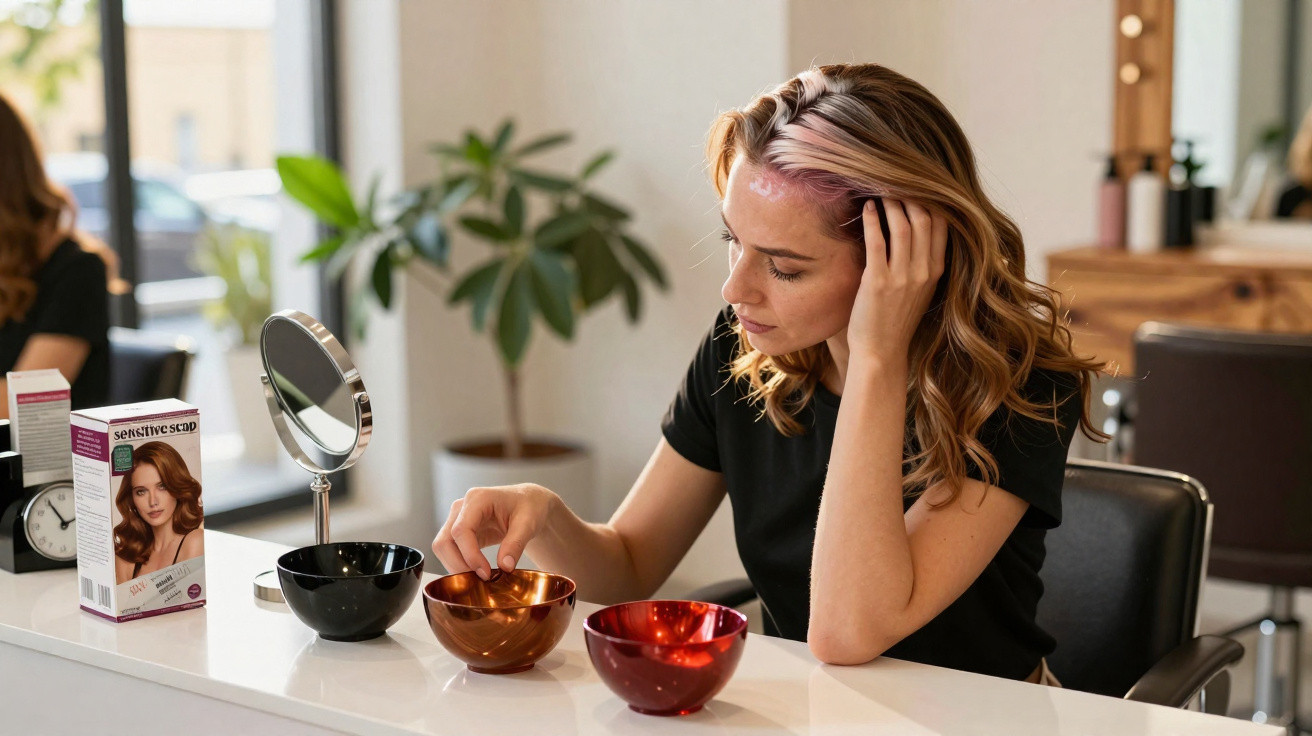
A girl in the salon chair scrolls through TikTok with one hand while gripping a venti iced latte in the other. Foils catch the neon like a suit of armour. It’s her “refresh” appointment - her third in eight weeks. The stylist chuckles, “You’re addicted to this chair,” and they both smile, half teasing, half serious.
A few seats away, another client flinches as the colour hits a scalp that’s already sore. She quips that the sting means it’s “working better.” The room carries that familiar mix of ammonia, coffee, and a faint whiff of denial.
No one is saying the question that sits between the mirrors and ring lights.
How often is too often?
When “just a touch-up” never really stops
Step into a packed salon on a Saturday and the mood is unmistakable: a steady, quiet urgency as people queue to become a slightly more edited version of themselves. Roots, glosses, toners, full colour, highlights layered over highlights. Reminders pile up in calendars - every three weeks, monthly, sometimes even every ten days.
Hairdressers call it “maintenance.” Clients label it “self-care.” Somewhere in the gap between those phrases, plenty of scalps are sending out tiny red warnings that nobody wants to acknowledge.
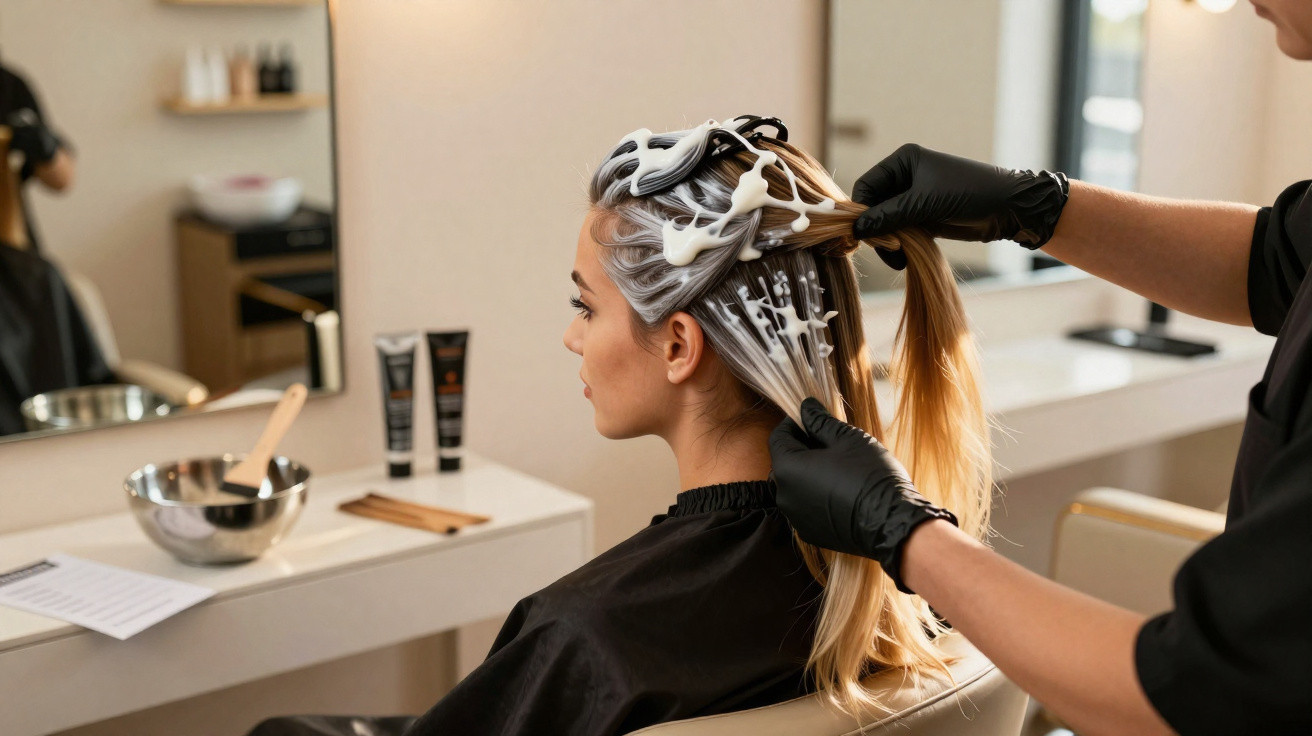
A London colourist I spoke with told me she has clients who lock in standing appointments every three weeks for full root touch-ups using permanent dye. Not a soft toner, but full oxidative colour applied to the same patch of scalp and hair again and again.
“Some of them started coming every few months,” she told me. “Then we pushed it closer and closer. Now they panic if they see four millimetres of grey.” She’s witnessed flaking, burning and even weeping areas covered up with calming serums and an uneasy laugh - and yet most of those clients still won’t extend the gap between appointments.
There’s no official diagnosis called “hair dye addiction”, but the pattern is easy to spot. It mirrors any loop of reward and anxiety: you notice roots, feel exposed, rush to cover them, feel relieved - then start hunting for the next flaw.
The chemistry doesn’t care about the story you tell yourself in the mirror. Permanent dyes rely on ammonia (or other alkalising agents) to lift the cuticle, alongside oxidisers such as hydrogen peroxide. Used too frequently, that combination can inflame the scalp barrier, set off dermatitis, and over time weaken follicles that are meant to last you for life. What feels like control can quietly turn into damage.
So, how often is “too often” for hair dye really?
The dermatologists I contacted broadly agreed on the same guidance: for permanent dye on the roots, a healthy scalp is usually safest (or “safe-ish”) with a 4 to 6 week interval. That’s roughly how long hair needs to grow so you can focus on new growth, rather than repeatedly saturating the same skin and the same strands.
Toners and glosses tend to be gentler. These are lighter, semi-permanent colours that generally sit on the outside of the cuticle rather than pushing deep inside it - which usually makes them easier on the scalp. Many people can do these every 6 to 8 weeks, and occasionally a touch sooner if hair is resilient and the scalp is calm. Problems start when permanent and semi-permanent services merge into one long chemical fog.
Most people know the moment: you catch yourself in unforgiving office lighting and all you can see are the greys along the parting. For some, that jolt of discomfort leads straight to an emergency root cover-up two weeks after a full dye. Then a gloss before a wedding. Then a colour correction because the tone shifted slightly.
A New York dermatologist told me about a client who coloured every two weeks for almost a year. At first it was mild itching she brushed off. Then it became burning. Then angry, red plaques spread across her scalp and along the hairline. By the time she finally stopped, there were small areas where hair simply wouldn’t grow back properly. No one in her beauty circle had ever said “pause” out loud.
If we’re honest, hardly anyone reads the boxed-dye leaflet and thinks, “I’ll follow the spacing and patch-test every single time.” Hair dye gets treated like make-up, not like a chemical procedure applied to living tissue.
The simple rule many trichologists repeat is this: putting permanent colour on the same area of scalp more than once every 4 weeks starts edging into riskier territory - particularly if you’re also stacking services such as bleaching, straightening, or tight extensions. There’s also the less-discussed problem of sensitisation: you can tolerate a product for years and then suddenly develop an allergy to an ingredient such as PPD (para‑phenylenediamine). Overuse isn’t the only cause, but each extra session can push the immune system a little nearer to that tipping point.
Listening to your scalp before it screams
A useful principle that health-minded stylists follow (often without making a fuss about it): build your colouring routine around your scalp, not your diary. Before booking another touch-up, take 30 seconds to check in. With clean fingers, lightly feel your scalp - especially at the hairline, behind the ears and at the nape.
Does the flaking look like dry, delicate skin rather than ordinary dandruff? Are there tiny scabs where you’ve been scratching? Do you notice stinging when you shampoo? Those are signals your barrier may be compromised. In that situation, the best “beauty hack” is bluntly straightforward: delay your next appointment. Swap harsh permanent dye for semi-permanent options or root sprays - at least for a month or two.
Stylists will tell you many of the biggest issues begin at home. People overlap boxed dye onto hair that’s already been processed. They pull colour through the lengths every single time “just to refresh”, rather than keeping it strictly to the roots. They hop between brands in search of the perfect shade, without giving the scalp any time to settle or recover.
In the salon, the trap is often emotional. The colourist wants you to leave thrilled. You want the change immediately. Saying “no, your scalp needs a break” can feel like letting someone down - or even losing them as a client. That’s part of why more stylists on TikTok are now posting unfiltered videos of chemical burns and breakage: a quiet pushback against the pressure to say yes to everything. It’s not about scaremongering. It’s about consent based on real information.
A veteran colourist summed it up plainly during our interview.
“If your head is burning and you still say, ‘Just push through, beauty is pain,’ that’s not beauty anymore. That’s self-harm with foils.”
If you’re trying to step off the hamster wheel of constant colouring, a few firm boundaries can help:
- Space permanent root dye to at least 4–6 weeks apart.
- Use semi-permanent glosses instead of full dye when possible.
- Switch to root powders or sprays between visits rather than extra chemical sessions.
- Never re-apply permanent dye across your entire scalp just for shine.
- Book a “scalp check” consultation with a dermatologist or trichologist if you notice persistent redness or feel burning.
The quiet line between care and compulsion
Hair colour can be genuinely uplifting. It can feel bold, defiant, expressive - even healing. The buzz when the cape comes off and you look sharper, more like yourself, is real. The trouble starts when that feeling becomes the only way you can tolerate your own reflection. When a visible root suddenly translates to “I look old,” “I look tired,” or “I look like me, and that’s not enough.”
By then, it isn’t only the colour tube doing the covering. It’s happening in your head as well.
There’s another, quieter narrative that doesn’t get as much attention: the woman who moved from permanent black dye every three weeks to a soft blend of her natural grey, with subtle highlights every three months. Or the man who quit aggressive box dyeing, let the salt-and-pepper come through, and realised that a great haircut and a scalp massage made him feel better than any jet-black shade ever did.
Stylists who see colouring as long-term care rather than a quick hit are starting to talk about “scalp longevity”. The point isn’t to be anti-dye. It’s to be pro-future-you. In ten, twenty, thirty years, you may want those follicles working properly - not scarred and worn out.
Next time a reminder pings on your phone, hold off for a beat before you tap “confirm.” Ask yourself one plain question: am I booking this because my scalp and hair can handle it, or because my anxiety can’t?
There’s no single, universal number for “too often.” There’s only a shifting line between what your hair can safely cope with and what your self-image is demanding right now. The skill is noticing the difference - and then being brave enough to extend the gap, even by a week or two, until your reflection doesn’t feel like an emergency every time roots appear again.
| Key point | Detail | Value for the reader |
|---|---|---|
| Safe-ish frequency for permanent dye | Every 4–6 weeks on roots, avoiding repeated overlap on the same scalp area | Provides a clear benchmark for booking colour appointments without overwhelming the skin |
| Warning signs from your scalp | Burning, redness, flaking, scabs, or itching that worsens after colouring | Helps you recognise early damage before it becomes long-term irritation or hair loss |
| Gentler in-between strategies | Semi-permanent glosses, root sprays, powders, and embracing some natural regrowth | Gives realistic ways to feel confident between appointments while protecting scalp health |
FAQ:
- How often can I safely dye my hair with permanent colour? Most dermatologists recommend waiting at least 4–6 weeks between permanent root touch-ups, targeting new growth rather than pulling dye through the full length.
- Is semi-permanent dye safer for my scalp? Semi-permanent formulas are usually kinder because they coat the hair instead of penetrating deeply, but frequent use can still irritate sensitive scalps - so spacing and patch-testing still matter.
- What are early signs that I’m colouring too often? Ongoing itching, burning during processing, redness around the hairline, unusual shedding, or flaky, sore patches can all indicate a struggling scalp barrier.
- Can hair dye cause permanent hair loss? In some cases, severe allergic reactions or repeated chemical irritation can damage follicles and lead to lasting thinning or patchy loss, especially if you keep colouring through pain.
- How can I stretch time between salon visits without hating my roots? Try tinted dry shampoo, root powders or sprays, change your parting, opt for softer grow-out-friendly shades, and ask your stylist about blending techniques rather than harsh lines of colour.

Comments
No comments yet. Be the first to comment!
Leave a Comment