
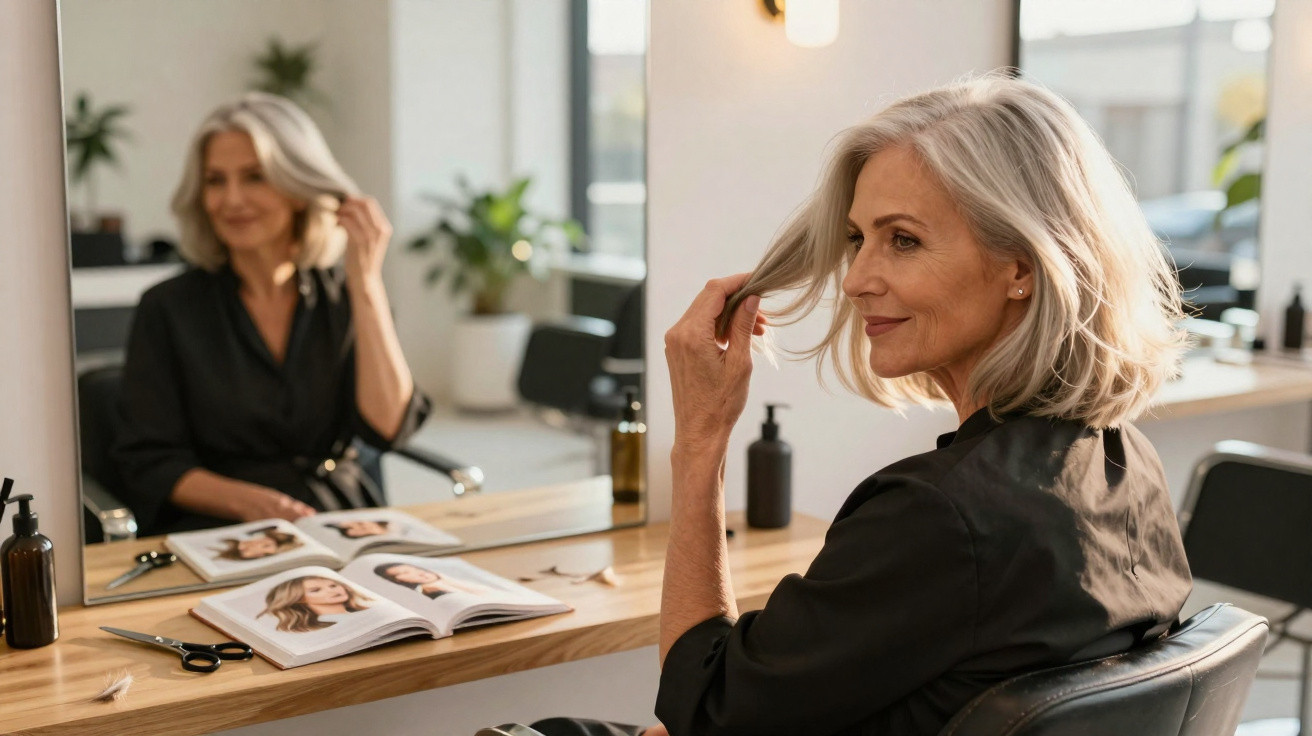
The hairdresser pinches a single silver strand between her fingertips and grins. “You’ve got great hair,” she says. In the chair, the woman arches an eyebrow - amused, but not entirely persuaded. To her, her hair feels weighed down and weary, as though it’s holding every year it has lived through. She’s craving lightness and flow: a cut that doesn’t announce, “I’m trying to look young,” but instead quietly says, “I’m still very much here.”
All around her, women of a similar age leaf through glossy magazines packed with models in their twenties. The styles on those pages don’t seem to belong with their own faces, their own histories, their own mornings - cups of tea, and grandchildren’s toys scattered across the floor. They’re looking for something different: a haircut that honours their age while setting their hair free.
One particular shape keeps reappearing in salon mirrors.
The airy layered bob: a quiet revolution after 60
Ask a skilled stylist what helps mature hair stay light and supple, and the same suggestion surfaces again and again: a layered bob that falls somewhere between the jaw and the collarbones. It’s short enough to take strain off the roots, yet long enough to keep a gentle softness around the face. It doesn’t plaster itself to the head. It lifts and moves.
On white hair, salt-and-pepper tones, or faded blonde, those fine layers create ripples of motion that catch the light as you turn. Your neck is on show, but not bared. Your jawline is outlined, but not made severe. Rather than battling thinning, it works with it. It’s not a dramatic chop - more a subtle tweak that changes the whole feel.
Imagine a Tuesday morning at a local salon. A client in her late sixties comes in with a long, straight ponytail she hasn’t really worn down for years. Loose, it knots easily, hangs limp, and takes constant blow-drying to look even vaguely polished. She’s nervous about cutting it; that length is tangled up with her identity.
Her stylist proposes an airy layered bob, landing just above the shoulders, with slight graduation through the back and a few lighter pieces to frame her face. Forty minutes later, she threads her fingers through her hair and laughs. Her head feels genuinely lighter. The ends flick softly instead of dropping dead straight. Walking out, she doesn’t look “younger” in any forced way - she looks alert, as though someone has opened a window.
There’s a straightforward reason this works. After 60, hair commonly loses density and elasticity. A long, one-length cut drags everything down, making the scalp more noticeable and highlighting flat patches. On the other hand, a short, blunt cut can sit like a helmet, sticking out rather than settling. The layered bob lives neatly between those extremes: it takes away the heavy bulk at the bottom so the roots have a chance to lift.
And the layers aren’t there to chase volume at any cost. Their job is to redistribute the hair so it can move. Done well, this cut follows your natural fall. Straight hair gains swing; wavy hair finds its shape; curly hair gets a more controlled spring. The secret is not cutting more, but cutting smarter.
How to ask for - and live with - this flexible cut
Everything begins with the consultation. Don’t just say “bob” and cross your fingers. Sit down, breathe, and tell your stylist three specific things: what your hair does when it air-dries, how much time you truly spend styling it, and which feature of your face you like best. That final point helps determine exactly where the face-framing layers should land.
Ask for a “slightly layered bob, between jaw and collarbones, with softness around the face and no harsh lines.” If you can, bring a photo - ideally of someone with similar texture. Be clear that you want movement rather than a sharp, geometric shape. If your hair is thick, a tiny undercut at the nape can help it sit closer to the neck; if your hair is finer, you’ll usually do better with invisible internal layers so the ends don’t look transparent.
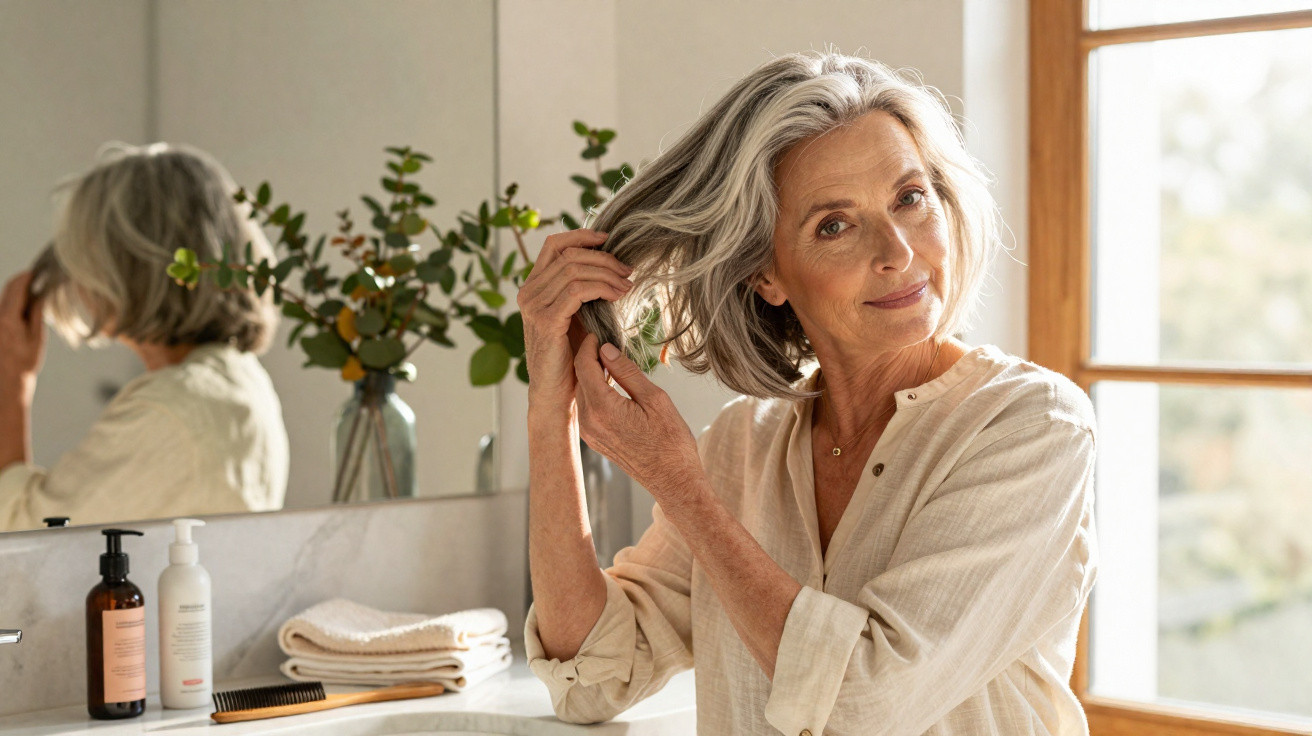
This haircut is adaptable, but it isn’t magic - it still benefits from a couple of easy at-home habits. On towel-damp hair, a light volumising spray at the roots plus a flexible cream through the mid-lengths is often plenty. Let it air-dry about 80%, then finish with a round brush or simply your fingers, lifting at the roots as you go. The aim isn’t flawless polish. It’s lift, air and swing.
Most of us know the cycle: you swear you’ll do a full blow-dry every morning… then by day three you’re back to a quick towel-dry. The truth is, hardly anyone keeps up a blowout every single day. This cut suits real life precisely because it doesn’t require that level of effort. On “lazy hair” days, you can tuck one side behind your ear, scrunch in a dab of styling cream, and still look purposeful - not forgotten.
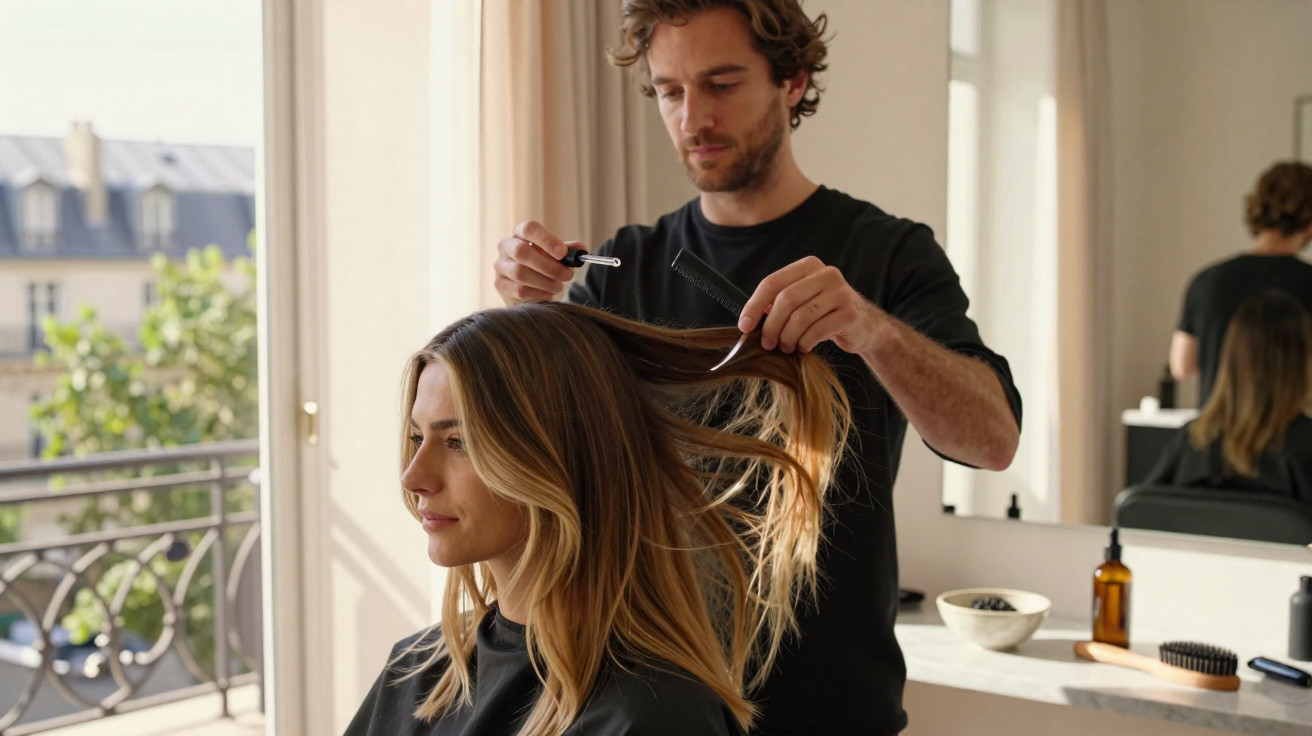
“Past 60, the best haircut is the one that forgives you,” smiles Claire, a Paris-based stylist who works mostly with women over 55. “Hair should be able to collapse and still look good. A soft layered bob falls back into place even after a nap or a walk in the wind.”
- Length sweet spot: Anywhere from mid-neck to just above the shoulders. Shorter brings lift; longer preserves softness.
- Type of layers: Fine, internal and face-framing - never choppy. The scissors should glide, not hack.
- Styling routine: Lightweight products, low heat, fingers or a medium round brush. Skip stiff hairspray.
- Salon rhythm: Book a trim every 6–8 weeks to keep the shape tidy and the ends buoyant.
- Colour bonus: Soft highlights or lowlights add depth, which can make hair look shinier and more flexible.
The deeper shift behind a “simple” haircut
Something shifts when a woman looks in the mirror and doesn’t instantly scan for what’s “wrong.” This sort of cut doesn’t shout makeover - it suggests ease. The hair looks suited to the life she actually leads: busy at times, gentle at others, and a world away from glossy adverts. That airy, flexible bob moves with her through it all, without fuss.
A lot of women describe an unexpected sense of freedom after snipping off those last heavy centimetres. It isn’t about chasing youth; it’s about letting their hair match their pace. In a way, the layered bob is an attitude: clean lines, soft edges, and movement built into the design. It’s not about looking younger. It’s about looking like yourself on a very good day - more often.
| Key point | Detail | Value for the reader |
|---|---|---|
| Ideal cut after 60 | Lightly layered bob, jaw to collarbone, with soft face framing | Keeps hair airy, modern, and easy to live with |
| Technique that creates movement | Internal layers and gentle graduation to remove weight, not length | Boosts flexibility without thinning the hair too much |
| Daily routine | Minimal products, low-heat styling, trims every 6–8 weeks | Saves time while keeping a polished, natural look |
FAQ:
- Question 1 What if my hair is very fine and thinning - will a layered bob make it look even weaker? Done right, no. The key is ultra-subtle layers that remove heaviness at the bottom without chopping into the length. A blunt-looking outline with soft internal layers gives lift at the roots and avoids see-through ends.
- Question 2 Can I wear this cut with my natural grey or white hair? Absolutely. This shape is beautiful on grey and white because the movement catches the light. A gloss treatment or very soft highlights can add dimension if your colour feels flat.
- Question 3 How do I explain “light and flexible” to my hairdresser without sounding vague? Mention that you want a bob that moves when you turn your head, with no heavy, straight line at the bottom, and that it should still look good air-dried. Use those exact words; professionals understand that language.
- Question 4 What if I have a bit of a double chin or a softer jawline? Ask for the front pieces to graze just below your chin and curve in slightly. This gently frames the area without hiding your neck, and the eye follows the vertical lines of the hair instead of staying on the jaw.
- Question 5 How often do I need to go back to the salon to keep the effect? Every 6–8 weeks is ideal to keep the layers balanced and the ends bouncy. Stretching to 10 weeks is possible, but past that the cut starts to lose its airy structure and can feel heavy again.



Comments
No comments yet. Be the first to comment!
Leave a Comment