
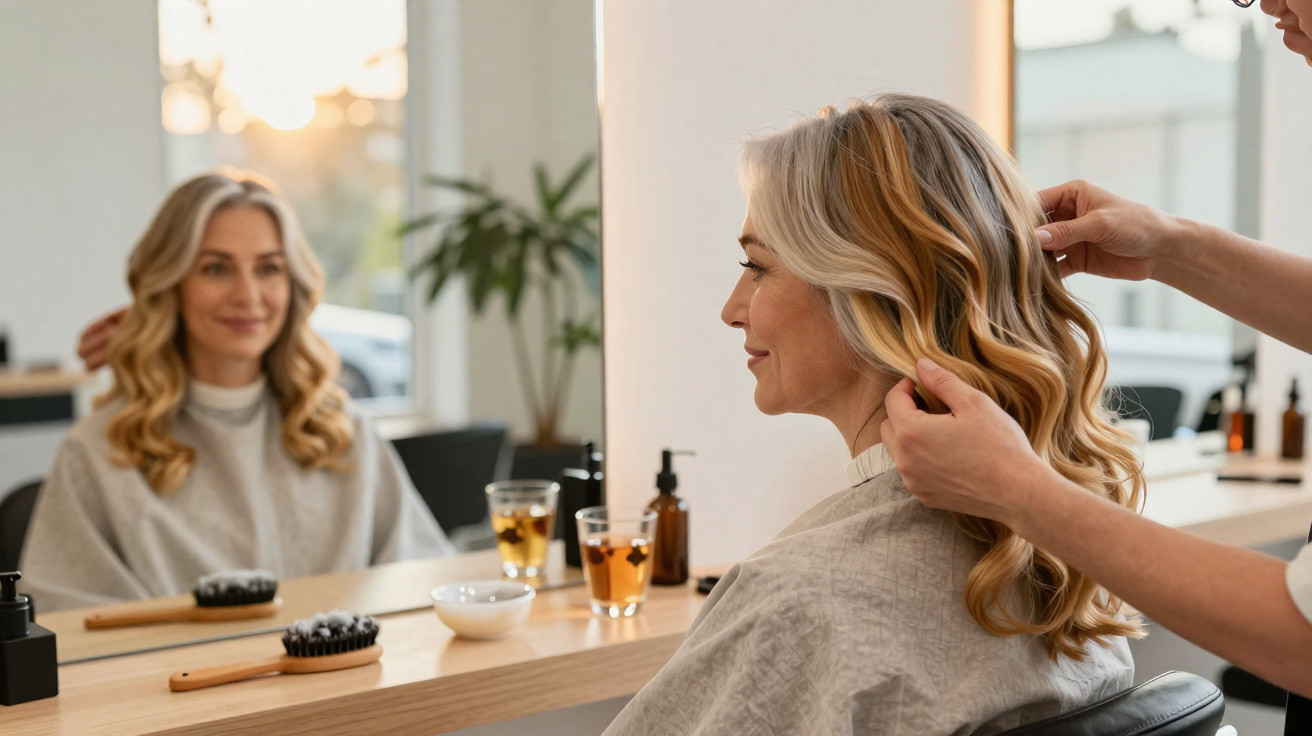
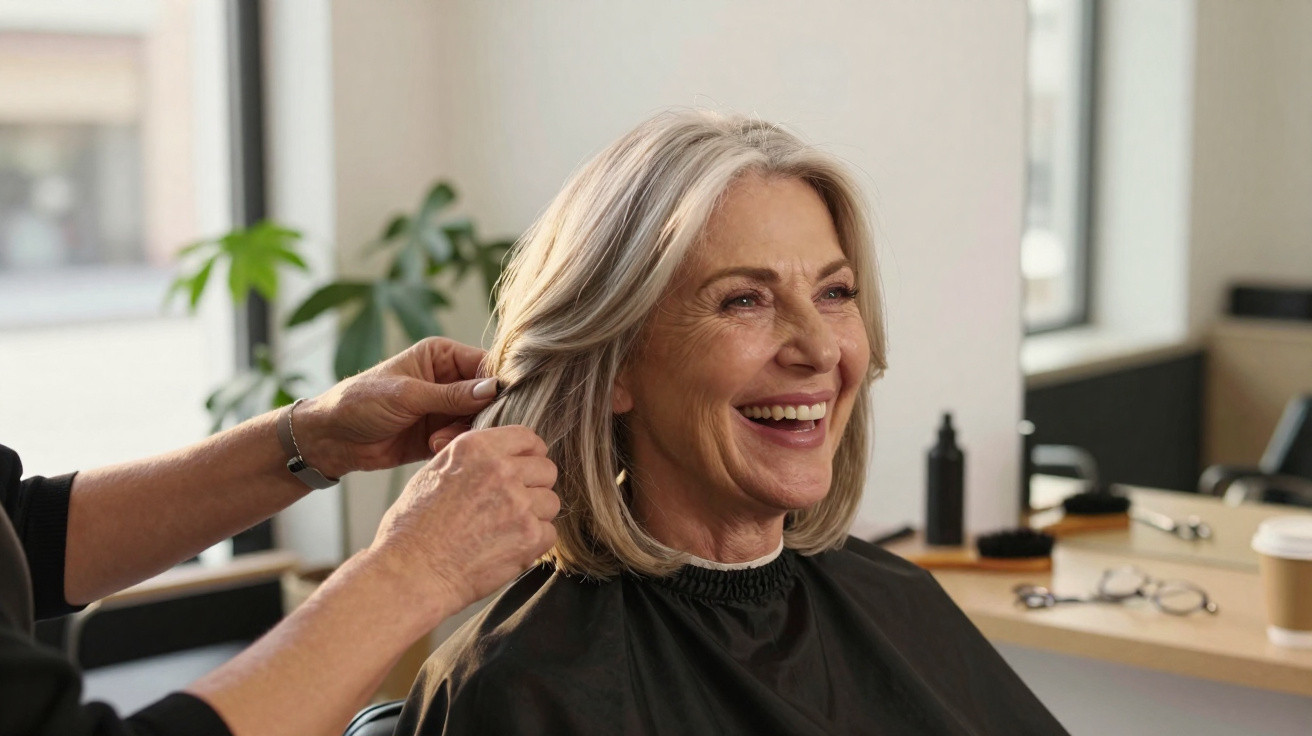
More women are turning up to colour appointments not asking for every silver strand to vanish, but for it to be softened, melted in and made genuinely flattering. The aim now is hair that reads as youthful and luminous, without looking “freshly dyed.”
The quiet move away from full coverage
For years, the unspoken rule was simple: the moment grey showed up, it had to be covered. Every. Single. Time. Root touch-ups became a diary fixture, as immovable as a dentist appointment. But plenty of women now describe that routine as dated, tiring and, oddly, a bit ageing.
Instead of hiding grey, the rising trend is to manage it cleverly, so it supports the face rather than fights it.
Colourists say the wording clients use has shifted. Rather than arriving with a box-dye shade and insisting, “make it all one colour”, people ask for softness, movement and dimension. The priority is to dial down the sharp divide between natural regrowth and previously coloured lengths.
That’s exactly where modern grey blending fits. Instead of laying down one dense, opaque shade, stylists use translucent toners and very fine highlights so that some natural silver is allowed to sit within the colour. The finish feels closer to lived-in, sun-kissed lightening than to heavy, uniform salon colour.
Why “you but brighter” beats “no grey at all”
It sounds counterintuitive, but a very dark, flat colour can make someone look older. It creates a severe frame around the face, which can draw attention to fine lines and dullness. When bright white roots start to show, the contrast can look even more stark.
By softening contrast, grey blending lets faces look fresher, not frozen in time.
Stylists often liken the effect to changing the lighting in a fitting room. Your features are the same, yet the right balance of brightness and depth makes everything appear smoother. Carefully placed lightness around the cheeks and eyes can lift the complexion, much like well-chosen concealer and blush.
Hair contouring explained
Many colourists now refer to “hair contouring”. Borrowed from make-up, it’s about positioning light and dark tones to subtly influence how the face is perceived.
- Brighter pieces around the hairline soften the jaw and make the eyes look clearer
- Slightly deeper tones beneath the crown create fullness and add dimension
- Natural grey is threaded through rather than blocked out, so the result looks deliberate
The finish isn’t a single, fixed shade but a gradient. Silver strands sit alongside beige, soft browns and champagne tones, forming a flattering halo instead of a solid, helmet-like block of dye.
What modern grey blending actually involves
“Grey blending” is an umbrella term for a set of gentle methods that colourists can combine and customise, depending on the amount of grey present and how bold the client wants to be.
| Technique | What it does | Best for |
|---|---|---|
| Demi-permanent glaze | Adds a sheer veil of colour that fades away gradually without a harsh line | Early greys, lacklustre lengths, cautious first-timers |
| Root shadow | Blurs the boundary between the natural root area and lighter lengths | Strong regrowth lines, previous highlights |
| Baby lights | Ultra-fine highlights designed to mimic natural sun lightening | High-contrast grey, finer hair |
| Lowlights | Brings back depth so grey looks integrated rather than uneven | Very pale, “washed out” grey or white hair |
Unlike permanent dyes, which can lift the cuticle more aggressively and deposit heavier pigment, these options typically rely on lower peroxide levels and gentler formulas. They fade in a way that appears intentional rather than neglected.
Many women can stretch appointments to eight or even twelve weeks, cutting both cost and emotional pressure.
The emotional shift: from battle to truce
For many women, the biggest change is psychological. Grey hair used to feel like a problem that needed constant correction. Miss a salon visit and the roots seemed to announce your age to the world. That way of thinking can be exhausting.
With blending, the expectation shifts. Regrowth becomes part of the look, provided it’s softened and brought into harmony. Women often say they feel lighter and less tied to the calendar. Some describe finally feeling like themselves again, rather than chasing the version of their hair they had ten years ago.
There’s a cultural current behind it, too. Social media has helped, with “grombre” (grey + ombre) hashtags making silver streaks and fully grey hair feel normal. Seeing well-known figures allow their hair to go naturally lighter on television and on red carpets has also offered quiet reassurance.
Who this trend suits best
Grey blending can be adapted to suit many hair types and preferences. Colourists say it tends to be especially effective for women in three broad categories:
- Those with 20–60% grey dispersed through the hair
- Those worn out by touch-ups every three or four weeks
- Those happy to look fresher rather than rigidly “younger”
Women with very dark natural hair often see the most dramatic improvement, because even a small amount of silver can stand out sharply. Soft highlights and translucent tints can significantly reduce that contrast.
That said, anyone who feels genuinely upset by any visible grey may still be more comfortable with traditional full coverage. Skilled colourists usually discuss both expectations and emotional comfort before mapping out a plan.
Everyday care that keeps blended grey looking intentional
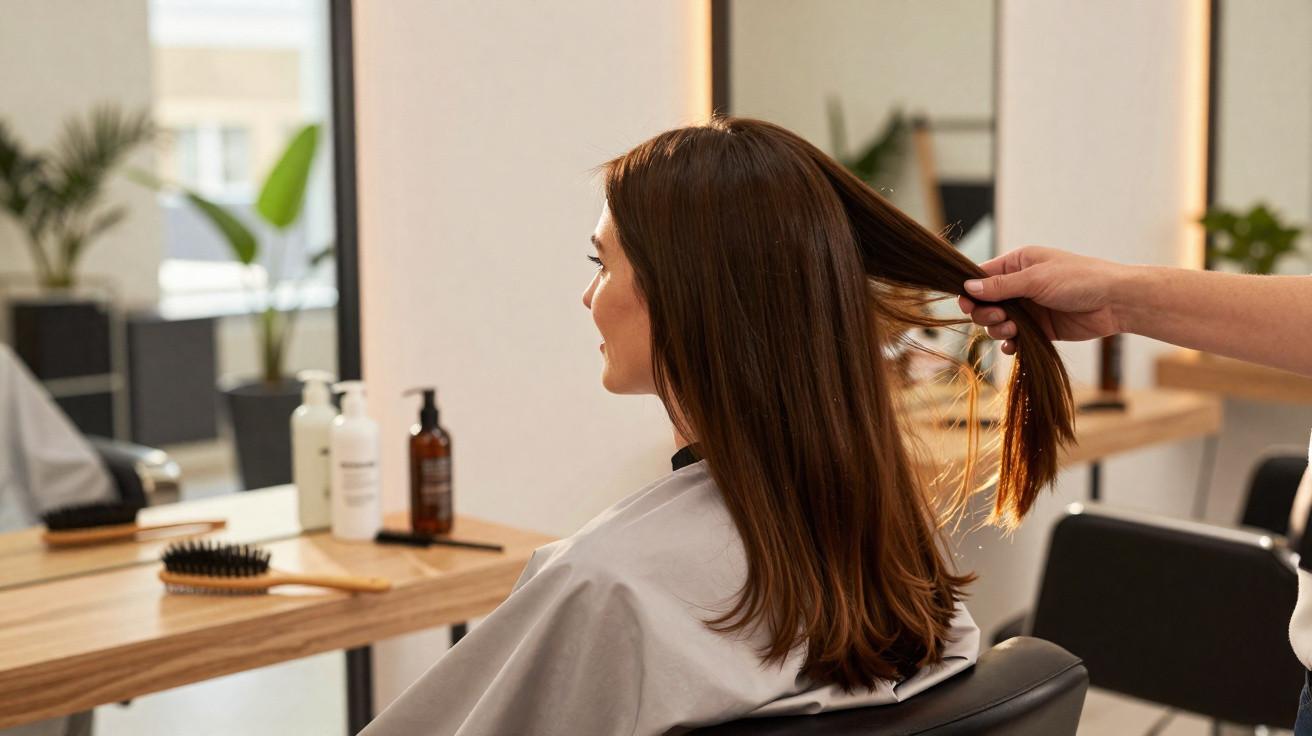
Once the salon work sets the foundation, day-to-day care determines how polished it looks week by week. The goal is to protect tone and maximise shine, as grey strands can be coarser and more porous.
Think of maintenance less as hiding roots and more as keeping the canvas bright and healthy.
- Use a purple or blue shampoo no more than once a week to neutralise yellow tones.
- On other washes, opt for gentle, sulphate-free shampoos to avoid stripping colour.
- Smooth a lightweight oil or serum through mid-lengths and ends for shine and softness.
- Keep heat styling to a minimum and always apply heat-protection spray.
- Book regular trims so the shape stays in step with the fresh, blended colour.
For special occasions, tinted root sprays or powders can quickly tone down strong silver at the parting, without returning to permanent colour.
Common missteps that age hair instead of refreshing it
Blending doesn’t automatically work if the choices are off. Certain habits can undo the flattering effect and leave hair looking older or duller.
- Choosing a shade several levels darker than your natural colour
- Repeatedly applying permanent box dye over the entire head
- Neglecting a proper cut and expecting colour alone to “fix” everything
- Overusing strong purple shampoo, which can leave hair looking greyed-out and flat
- Assuming one appointment can undo years of layered, overlapping dye
A useful guide: if you notice the colour before you notice the person, it’s probably too strong. The direction of travel now is understated refinement rather than high-drama transformation.
Practical questions to ask your colourist
If you’re considering the change, it can be hard to know what to ask for in that crucial first appointment. A few well-aimed questions can keep the consultation focused:
- “How much of my natural grey would you leave visible?”
- “Which parts of my face would you brighten with lighter pieces?”
- “Can we use demi-permanent formulas so the grow-out is softer?”
- “What will my hair look like in three months if I do nothing in between?”
It also helps to ask for photos of clients who started from a similar place. Many stylists keep before-and-after examples that show gradual transitions, not only dramatic colour overhauls.
Long-term benefits: cost, confidence and hair health
While an initial grey-blending session can take as much time as a standard colour appointment, the longer-term approach is often kinder to both your budget and your hair. Fewer touch-ups usually mean less chemical exposure overall, which can translate into stronger strands and reduced breakage.
For some women, the biggest gain is not financial but emotional: they feel more honest in their own skin, yet still polished.
There are smaller, cumulative benefits too. With less processing, hair often styles more easily and reflects light more evenly. Skin can also look more even-toned when framed by softer, multi-tonal shades rather than a single dark block.
For anyone thinking about a change this year, grey blending sits neatly between “going fully natural” and staying locked into strict, rootless colour. It can help you look younger in a believable way-not by pretending grey never turned up, but by letting it work quietly in your favour.


Comments
No comments yet. Be the first to comment!
Leave a Comment