
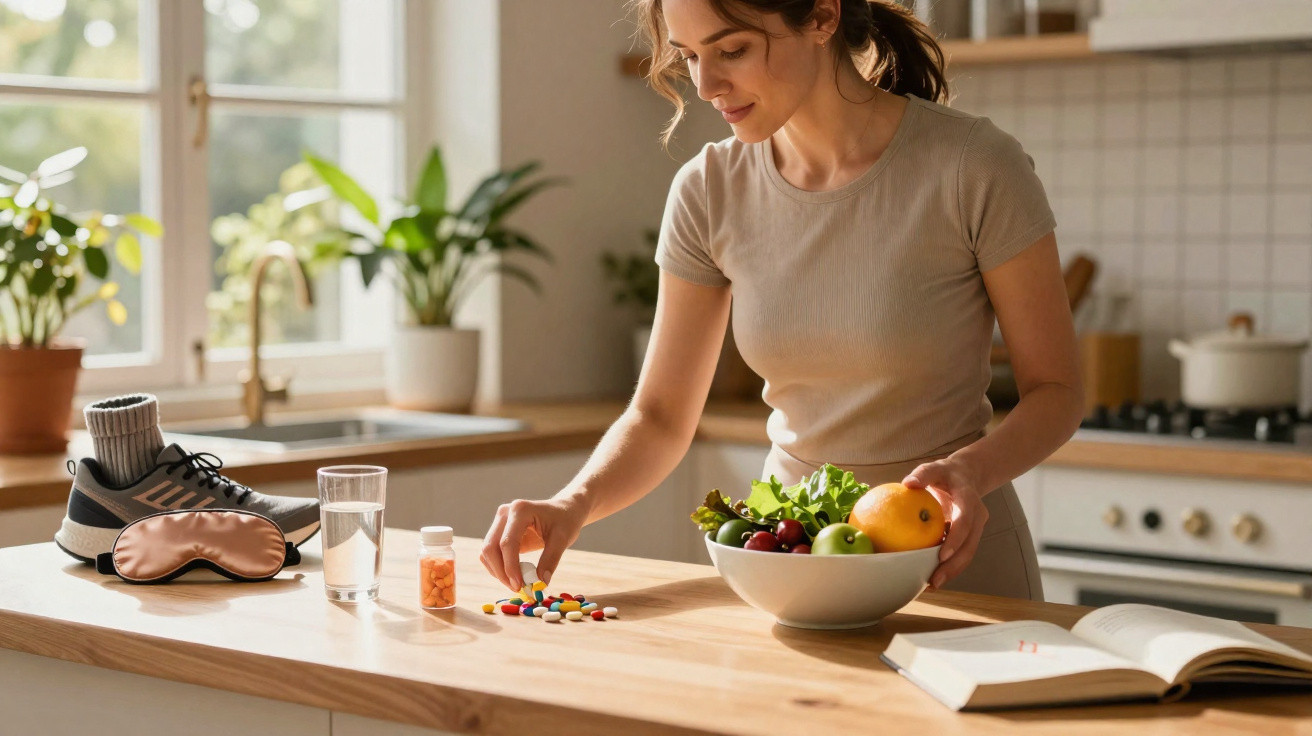
Anti-ageing boosters, anti-wrinkle pills and “Longevity” drinks: the market for food supplements is booming, especially among people over 40. Adverts often promise fewer wrinkles, more energy and even a longer life. But can any supplement genuinely slow biological ageing - or are we mostly paying for an expensive placebo?
What does biological age actually mean?
The age on your passport simply shows how long you have been alive. Biological age, by contrast, reflects how “old” your body really is. One 60-year-old might be as physically capable as a typical 50-year-old - or, equally, more like a 75-year-old.
Researchers estimate biological age using, among other things:
- Blood results (inflammation markers, blood sugar, blood lipids)
- Blood pressure and the condition of the blood vessels
- Muscle mass and strength
- Memory performance and reaction time
- DNA changes, such as so-called epigenetic clocks
Biological ageing is not fate. Lifestyle, illness, and also nutrient intake can make the internal clock tick faster or slower.
This is exactly where food supplements come in: they are intended to provide building blocks that studies have linked to healthy ageing or a longer lifespan.
Which food supplements are considered “anti-ageing” candidates?
In the longevity space, certain substances keep reappearing. The hype is huge - and the evidence varies widely.
Vitamins and minerals: fundamentals, not miracle cures
Many older adults have genuine deficiencies, particularly vitamin D, vitamin B12 and sometimes magnesium or folic acid. Reasons include less sunlight, changes in diet, or poorer absorption in the gut.
- Vitamin D: important for bones, muscles and the immune system. Low levels are associated with a higher risk of death and weaker immune defence.
- Vitamin B12: crucial for the nervous system and blood formation. Deficiency can contribute to fatigue, concentration problems and nerve damage.
- Magnesium: involved in muscle function, heart rhythm and metabolism.
If there is a clear deficiency, correcting it may slow biological ageing indirectly - not through magical rejuvenation, but by preventing damage that would otherwise develop.
Food supplements do not replace a healthy diet, but they can “plug gaps” that might otherwise make you unwell over time.
Omega-3 fatty acids: lubrication for heart and brain
Omega-3 fatty acids from fish oil or algae oil are a long-standing favourite in prevention. Studies suggest they can dampen inflammation and may reduce the risk of cardiovascular disease.
Some research has even linked omega-3s with markers of biological ageing: telomeres - the protective caps on chromosomes - appear to shorten more slowly when blood omega-3 levels are high. Findings are not consistent across all studies, but the overall direction looks encouraging.
Coenzyme Q10: energy for cells
Coenzyme Q10 is found in mitochondria, the cell’s “power plants”. The body’s own levels decline with age. Some studies report that Q10 supplements can ease fatigue, support heart function and reduce oxidative stress.
Calling this a true “slowing of ageing” would be an overstatement. Still, improved energy production may help people feel younger and more resilient in everyday life.
Trending compounds: resveratrol, NAD+ boosters, spermidine
At the moment, three substances dominate longevity discussions:
- Resveratrol (for example from grape skins): animal studies suggest benefits for lifespan and metabolism. In humans, strong long-term studies are still lacking.
- NAD+ boosters such as NR (nicotinamide riboside) or NMN: these aim to increase a molecule important for cell repair and energy production. Early studies show effects on metabolism and muscle strength, but the impact on actual biological age remains unclear.
- Spermidine: found in wheat germ and soya. It activates cellular recycling processes (autophagy). Some studies suggest that regular intake is associated with a lower risk of death.
Many trending compounds have exciting lab and animal data, but humans are not oversized mice. How well this translates is often still uncertain.
What do studies say about the impact on biological ageing?
For a product to be a genuine “ageing brake”, it needs to do more than improve skin appearance or reduce wrinkles. What matters are hard outcomes: disease risk, day-to-day function, mortality - as well as modern markers of biological age.
Current approaches, for instance, use epigenetic clocks - patterns of DNA methylation in blood. Some supplement studies report slight improvements in these clocks, such as with certain combinations of vitamins and plant compounds. However, the effects are usually small and the participant numbers limited.
Evidence is far more robust when supplements correct a documented deficiency. Raising very low vitamin D levels, for example, reduces the risk of falls and fractures and probably also cardiovascular events. In practical terms, that slows health decline - and therefore functional ageing.
Risks and limits: when capsules do more harm than good
Food supplements are often assumed to be harmless, but that is not always the case. Overdosing can be an issue especially with fat-soluble vitamins such as A, D, E and K. Very high doses of vitamin A, for example, are linked with liver damage and birth defects, and extremely high vitamin D intake can be associated with kidney stones and heart rhythm disturbances.
Plant extracts can also affect blood pressure and clotting, or interact with medicines. Anyone taking blood thinners, statins, diabetes medication or heart drugs should discuss any new supplement with their doctor.
“Natural” origin does not protect you from side effects. The body does not distinguish between an extract from a tin and an ingredient from a plant.
Another issue is marketing: many products make sweeping promises that the science does not support. Phrases like “rejuvenates your cells” or “extends your lifespan” are very difficult to prove in real-world settings.
Lifestyle beats tablets: what really slows ageing
If you want to slow ageing, three factors are unavoidable: movement, sleep and diet. Many studies focus on precisely these areas.
Movement as a natural fountain of youth
Regular exercise influences several systems at once: less belly fat, better circulation, steadier blood sugar, stronger muscles and a clearer mind. Research indicates that physically active people often appear biologically several years “younger” than same-age sofa regulars.
Even brisk walking on five days a week, combined with light strength training, can produce measurable effects.
Sleep - an underestimated anti-ageing tool
Poor sleep raises stress hormones, promotes inflammation and makes cravings more likely. Multiple long-term studies show that people with chronic sleep deprivation age faster biologically.
Using fewer screens in the evening, keeping consistent bedtimes, and making the bedroom cool and dark does more for healthy ageing than many fashionable supplements.
Diet: less ultra-processed, more real food
A diet rich in vegetables, fruit, pulses, nuts, wholegrains and healthy fats lowers inflammation markers and protects blood vessels. Patterns such as Mediterranean-style eating or more plant-focused approaches appear particularly beneficial.
Supplements can make sense within this context - for example omega-3 or vitamin D when fish is rare and sunlight is limited.
How to use food supplements sensibly
To avoid falling into a pill trap, a few basic rules help:
- Get blood tests, before using high doses.
- Top up with purpose, rather than taking 20 different products at the same time.
- Check product quality: certifications, transparent labelling and realistic dosages.
- Involve a doctor or nutrition professional, especially if you have existing conditions.
- Monitor effects critically: keep a diary and don’t chase every new trend.
Food supplements can be one part of an anti-ageing strategy, but they do not replace the main levers: exercise, sleep, stress reduction and a sensible diet.
Anyone aiming to slow biological ageing therefore has several tools at their disposal. Capsules can help when used thoughtfully and selectively - but the real “medicine” is still the day-to-day life we live.




Comments
No comments yet. Be the first to comment!
Leave a Comment