
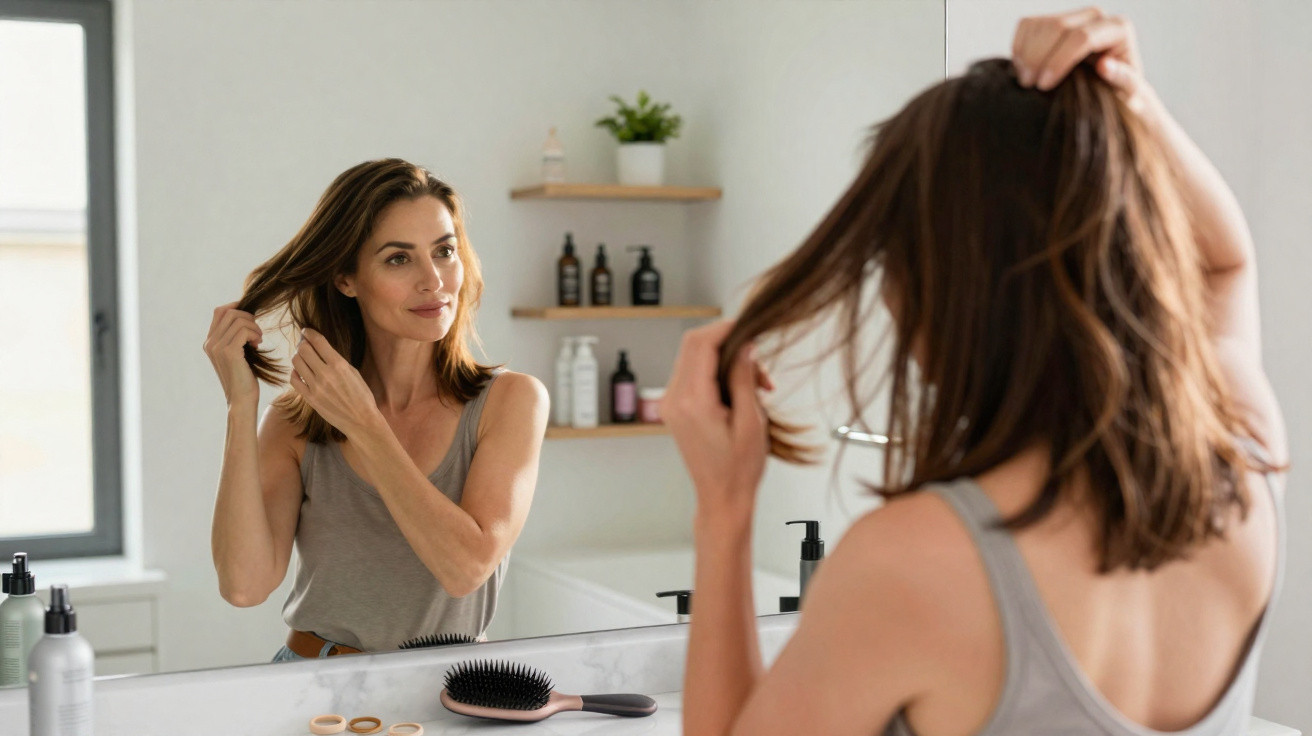
Many people notice it first thing in the morning in the mirror: the face looks tired, the chin seems less defined, and the neck a little softer. Before you start thinking about expensive treatments, it’s worth checking a far simpler lever - how your hair is positioned. Professional hairdressers swear by three tied-back styles that can visibly tighten the look of the face and make you appear fresher.
Why the right hairstyle can make the face look tighter
The effect isn’t a magic trick - it’s straightforward mechanics. When hair is deliberately pulled upwards and back, the skin at the temples and around the brows picks up some of that tension. Fine lines soften slightly, the gaze looks more open, and the eye area appears clearer.
"If you shift volume to the crown, you draw the focus upwards - the face automatically looks longer and tighter."
With the forehead uncovered, more light hits the upper half of the face. Dark circles and shadows look less harsh. At the same time, the face appears more elongated - which is especially helpful if:
- your skin has lost firmness,
- the jaw area is starting to droop slightly,
- cheeks and the neck are becoming softer.
To achieve this, hairdressers often work with very clean, close-to-the-head roots. Using a firm brush - often boar bristles - they sweep the hair at the roots up towards the crown, then set it with gel, wax, or hairspray. It echoes the trend for ultra-sleek ponytails and updos that almost sculpt the contours.
Important warning: tight, yes - pain, no
Professional stylists stress that you should feel some tension, but it should never hurt. Overly tight styles can cause issues over time:
- Head and neck pain: pressure at the temples and the back of the head can irritate the muscles.
- Breakage: finer hair is more likely to snap where it’s under repeated strain.
- Hair loss from pulling: the technical term is “traction alopecia” - often most noticeable at the temples.
To reduce the risk, experts recommend a few simple rules:
- Change the direction/position of the pull regularly (tie it high one day, mid-height the next, then lower).
- Use elastic bobbles with a fabric covering.
- Undo the style by evening at the latest, brush out gently, and massage the scalp with your fingertips.
The 3 best lifting hairstyles after 50
1. High ponytail for an instant-awake effect
The high ponytail is the classic among lifting hairstyles. Its strength: it’s quick, practical for everyday wear, and rarely looks overdone.
For the strongest “lift”, hairdressers use a simple guide: place the bobble where an imaginary line from the chin, past the outer corner of the eye, up to the crown would land. That diagonal axis visually pulls the face upwards.
"The higher the ponytail, the stronger the upward pull - and the younger the jawline and gaze appear."
What matters most:
- Comb the sides and temples smoothly towards the bobble.
- Press down flyaways with a touch of gel to make the crow’s-feet area look calmer.
- Keep the ponytail length itself slightly looser so it doesn’t resemble a severe ballet look.
This version particularly suits:
- round or oval faces,
- women with mid-length to long hair,
- anyone who wants to look fresher fast without spending ages styling.
What to avoid: a low ponytail sitting at the nape can, for many people, emphasise the impression of a sagging chin. If you tend towards softer contours, the higher option is usually more flattering.
2. High twisted bun for sharper-looking contours
The second option is a high, twisted bun. Start by tying a very high ponytail, then twist the lengths and wrap them around the bobble. Secure with hairpins and it can hold for several hours.
Because of the twist, you create a firm “anchor point” that can make the face feel noticeably tighter. At the same time, the gathered volume sits right at the top of the head, which brings two additional effects:
- cheeks look slimmer,
- the jawline appears more clearly defined.
"A high bun draws the eye upwards, shows off the neck, and slims the whole silhouette."
This is particularly useful for women who are bothered by fine lines or creasing on the neck. An exposed nape also encourages a more upright posture. If you don’t want the result to feel too strict, lightly pulling out a few softer strands at the hairline can make it look more romantic.
3. High half-up style for a softer lift
If the full pull of a high ponytail feels like too much, a high half-up style is a good alternative. Only the hair on the crown is tied back, while the lower lengths are left down.
Step by step:
- Section a curved line from ear to ear across the crown.
- Brush the top section back tightly and fix it high.
- Let the lower hair fall naturally or add a gentle wave.
The result: the upper face - brows and lids - appears subtly lifted, while the loose lengths soften the jaw area and can help disguise a less firm-looking neck.
"The combination of tension on top and flowing lengths below gives a lifting feel without harshness."
This option works well if:
- your hair is on the fine side and a full ponytail would look too flat,
- you want a softer frame around the face,
- you like a modern look but don’t want to appear “severely styled”.
Which hairstyle suits which hair type?
| Hair type | Recommended lifting hairstyle | Hairdresser’s tip |
|---|---|---|
| Fine, straight hair | High half-up style or high ponytail | Prep the roots with volume spray; don’t pull the bobble too tight. |
| Thick, straight hair | High bun or sleek ponytail | Fix securely, but use padded bobbles. |
| Wavy or curly hair | Half-up style, letting curls fall intentionally | Keep curls defined; smooth the roots with gel. |
| Fine, slightly brittle hair | Only occasional tightly tied styles | Schedule regular breaks, conditioning treatments, and scalp massages. |
Tools and products that boost the lifting effect
With just a few aids, you can noticeably increase the visual tightening effect:
- Smoothing brush: a natural-bristle brush lays hair especially close at the roots.
- Light gel or wax: keeps flyaways under control without making hair look stiff or greasy.
- Flexible-hold hairspray: locks in the tension but still lets you adjust strands.
- Fabric-covered bobbles: distribute pressure better and protect the hair fibre.
A useful extra: if you often wear tighter styles, treat lengths and ends regularly with moisture - for example with masks or leave-in products.
More than just looks: what your scalp gets out of it
Tied-back styles can tempt you to keep hair in the same position for hours. Variety is valuable for the scalp. Releasing the hair regularly and then massaging with your fingertips helps stimulate circulation, which supports the roots.
If you have sensitive temples or you’re already noticing thinning, it’s especially important to pay attention. In that case, it’s better to:
- wear truly tight styles only on special occasions,
- switch to looser options for everyday life,
- avoid putting maximum tension on the hairline and temples day after day.
For many women over 50, the right hairstyle becomes a small daily beauty hack: with a few quick steps, you can highlight contours, open up the eyes, and look fresher. It’s not a substitute for medical procedures - but it is a fast, doable way to make your overall appearance look visibly more youthful.

Comments
No comments yet. Be the first to comment!
Leave a Comment