
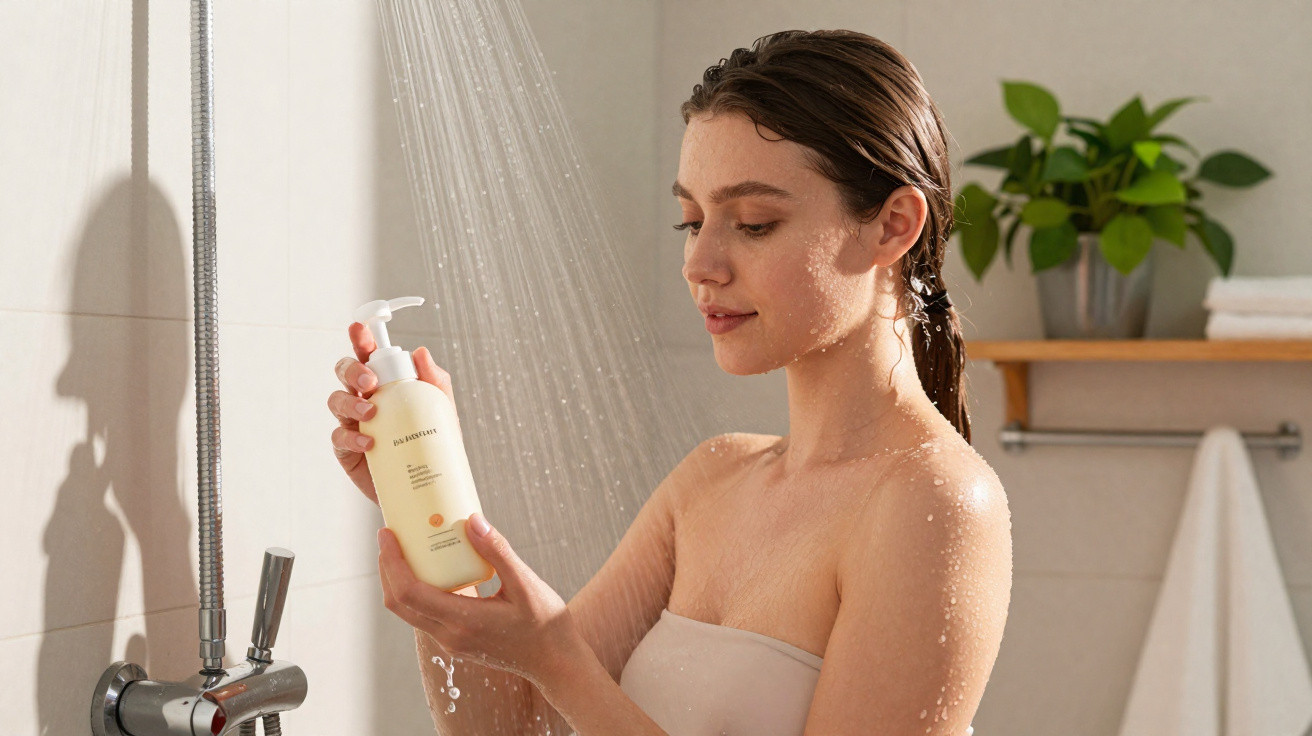
It’s early in the morning. Half-asleep, you step into the shower and feel the hot water rinse away whatever the night has left behind. Steam hangs in the air. You nudge the temperature control a little further towards hot, because “hot” somehow feels cleaner than “lukewarm”. You reach for the shower gel and work it into your skin until it turns faintly pink. For a moment you think: “That feels properly fresh.”
A few minutes later, as you dry off, you notice the tightness. On your shins. Your upper arms. Your face. A slight sting. A restless prickling. And suddenly you’re wondering why a shower-supposed to do you good-has left you feeling as if your skin has somehow become thinner. That’s where the real story begins.
The invisible mistake in the shower
We don’t like to admit it, but most of us shower like we’re in an advert: lots of foam, lots of heat, lots of scrubbing. For a brief moment it feels glamorous-like a tiny spa break squeezed in between emails, children and appointments. Quietly, though, the bill arrives: your skin pays for it. In just a few minutes, a hot shower can strip away what your body has spent all day building-its natural protective film of oils and moisture. You step out clean, yes, but also irritated. Your skin is telling you: “That was too much.”
Picture a typical morning in a shared house kitchen. Someone wanders in wrapped in a towel, still steaming, complaining about dry patches across their back. Someone else flicks their hair out of their face and says they have to try yet another body lotion “because none of them lasts long enough”. These conversations are familiar-half joking, half desperate. Dermatologists say a large share of the population regularly struggles with dry or sensitive skin-some studies put it at over 50%. And yet we keep turning the tap hotter and reaching for shower gels that smell like “ocean breeze” but behave more like washing-up liquid.
The underlying logic is brutally simple: hot water dissolves fats. Your skin is covered by a microscopically thin layer of lipids-natural oils and sweat-that locks moisture in and helps keep germs out. Add a strongly foaming shower gel and its surfactants start to attack that layer. They bind to oils and wash them away. For a moment, it feels “squeaky clean”, almost like glass after you’ve polished it. That’s exactly the issue. When skin feels squeaky, its barrier has usually been stripped back.
What we celebrate as “properly clean” is often, in reality, a micro-injury to our skin.
How to shower without drying out your skin
The most effective fix starts with an unglamorous word: lukewarm. Not lukewarm as in “boring”, but lukewarm as in “respectful to your skin”. If your bathroom mirror doesn’t fog up instantly, you’re probably in the right range.
And you almost certainly need less shower gel than you think. For everyday washing, a small amount-about the size of a hazelnut for your upper body-is enough. Arms, legs, armpits, intimate area, feet-yes. But you don’t need to lather every square centimetre of skin, every day. Water alone already removes a lot.
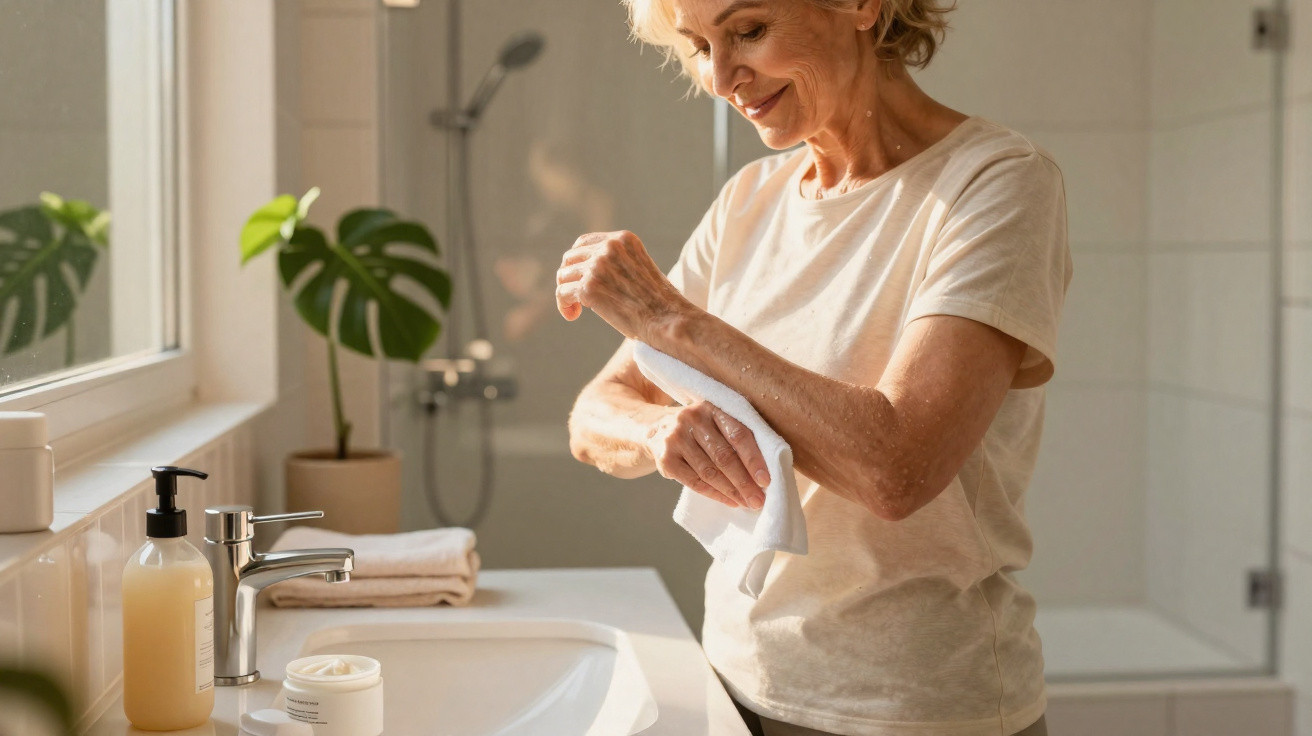
After showering, pat yourself dry briefly with a towel rather than rubbing. Within the first five minutes, apply a gentle, low-fragrance body lotion or a light oil. That’s the “window” when skin takes up moisture most effectively.
Let’s be honest: almost nobody manages this perfectly every day. We get home tired, jump under the water, crank it up hot because we want to “switch off”, and forget everything we’ve ever heard about the skin barrier. Still, it’s worth practising a different kind of routine-one that looks less heroic, but works better long term.
For instance: have a full “comfort shower” with all the extras twice a week, and keep the other days short and gentle. Less shower gel, less time, softer water. And exfoliating scrubs? At most once a week-better still, every ten days. “Scrub until it shines” sounds like self-care, but it’s often closer to self-sabotage.
A dermatologist I spoke to put it plainly:
“Most people clean their home more thoroughly than their skin. They do everything in one go instead of asking: what can this surface actually tolerate?”
A few habits help almost every skin type-and they’re surprisingly straightforward:
- Keep showers to a maximum of 5–10 minutes, especially in winter.
- Choose a mild, skin-neutral pH shower gel without harsh fragrance ingredients.
- Avoid extremely hot water; stick to “comfortably warm”.
- Dry skin gently-don’t “rub it dry”.
- Apply a moisturising product within 5 minutes of showering.
What your shower says about how you treat yourself
It sounds a bit dramatic, but how we shower quietly reveals something about how we live. If, every morning, you turn the temperature right up while half asleep and scrub away anything that resembles “day” or “night”, you’re sending your body a clear message: function first, feelings later. Your skin then protests in its own quiet way-dryness, redness, tiny cracks we dismiss as “normal”. Many people frantically try to counter it with creams, without changing the source of the problem: the few minutes under the shower stream. Real care starts there-not with an expensive serum, and not with the latest hyped product from an advert.
It may be worth treating your next shower as a small experiment. Less heat, less foam, less friction. In return, more attention: how does your skin feel immediately afterwards? Is it still tight 10 minutes later? Do certain areas itch? From that quiet stocktake, a small, steady routine can emerge.
Yes, it’s unremarkable. No glow filter. No “miracle in three days”. But plenty of people say that after a few weeks of this restrained, gentler showering, their skin settles down: fewer red patches, less need for “SOS creams”.
In the end it comes down to one simple truth: skin isn’t wallpaper you repaint every day. It’s an organ that responds-every time-to temperature, chemistry and friction. We can carry on as we are and wonder why lotions only help briefly. Or we can start in the shower and be a bit kinder. Not heroic, not perfect-just a few degrees cooler, a little less foam, and a little more respect for the thin film that protects us.
| Key point | Detail | Benefit for the reader |
|---|---|---|
| Water temperature | Lukewarm rather than very hot water protects the skin’s lipid layer | Less tightness, a more stable skin barrier over time |
| Shower habits | Shorter showers, less shower gel, lather only “sweaty zones” | Less dehydration, reduced need for intensive aftercare |
| After showering | Gentle drying and applying mild skincare soon after | Moisture is sealed in more effectively; skin looks smoother and calmer |
FAQ:
- How often should you really shower? For most people, showering every 1–2 days on normal days is enough, while washing armpits, intimate area and feet daily; after sport or heavy sweating, of course, more often.
- Do you always need to lather your whole body with shower gel? No. For many, it’s sufficient to wash the “sweat and odour zones” with shower gel; the rest is cleaned well enough by water and a light residual foam.
- Is cold showering better for your skin? Cooler water is gentler on the skin barrier, but ice-cold showers aren’t necessary; comfortably lukewarm to slightly cool is perfectly adequate for most skin types.
- Which shower gel dries out skin the least? Mild, pH skin-neutral products without strong fragrance or “intense cleansing” claims on the packaging are usually more skin-friendly than heavily foaming options.
- Do I need to moisturise after every shower? If your skin tends to be dry or sensitive, daily moisturising after showering helps retain moisture-if your skin is very oily, you may be able to stretch the interval a bit.


Comments
No comments yet. Be the first to comment!
Leave a Comment