
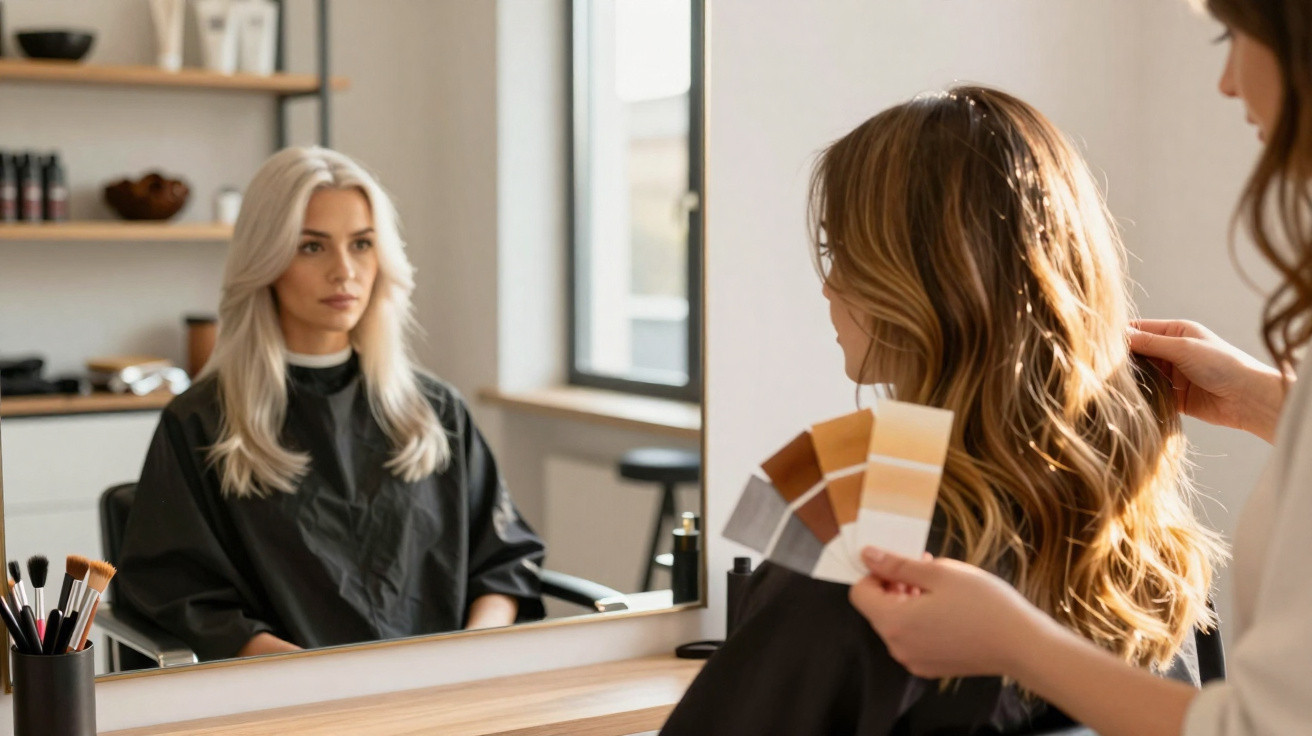
In spring, many dark-haired women dream of a dramatic blonde transformation - but one on-trend shade can make facial features look harsh and tired.
The cold months are done, the sun is showing its face again - and for many women that brings an urge to change. Chunky jumpers are packed away, wardrobes turn lighter, and suddenly you want your hair to “glow” too. On Instagram and elsewhere, images of icy-blonde manes are everywhere. And that’s exactly where the season’s biggest hairdresser trap lies for brunettes.
The dream of a full overhaul: why extreme blonde feels so tempting
If your natural hair is dark, you’ll know the feeling: at some point, a tiny trim just isn’t enough. You want something unmistakably different - a fresh chapter, a new look, a clear signal to the outside world. Very light, cool blonde often sits right at the top of that wish list, because in photos it reads as modern, expensive and striking.
Social media pushes that fantasy even further. Filters erase redness, while lighting and editing make skin, hair and make-up look perfectly balanced. In real life, hardly anyone is sat in the office or on the Tube with a ring light and a professional make-up artist.
“What looks like a Hollywood makeover on TikTok can quickly resemble a rough night in daylight - especially on brunettes.”
That’s why it pays to think twice before you tell your stylist: “Make me really light!”
Contrast shock: how very light blonde can suddenly harden facial features
Stylists often talk about “contrast balance” - in simple terms, how strongly your hair colour, eyes and brows differ from each other. Many brunettes have dark brows and lashes, with eyes that are naturally well-defined. Add an almost-white or icy blonde on top, and you create an abrupt break.
The result: your expression can look less soft and approachable, and more severe - or permanently surprised. Attention can stick to the eyebrows, even if they’ve been shaped and styled professionally.
There’s another visual effect around the face too. Extremely light, cool hair frames your features like a spotlight. Lines appear more pronounced and the overall impression becomes more angular. Where warm chocolate brown or hazelnut brown tends to soften and flatter, icy blonde can sketch a much sharper outline.
“Instead of ‘summer freshness’, you can quickly end up with a strict, slightly hardened look - especially with strong facial features.”
When your complexion suffers: why cool blonde can look flat on many brunette types
The biggest stumbling block is how the colour plays against your skin. Many dark-haired people have warm undertones - golden, slightly olive, or Mediterranean. For those undertones, a cool, ashy blonde is rarely the most natural match.
When a very cool, ashy or silvery blonde meets warmer skin, the colour nuances can cancel each other out - and not in a helpful way. The face can lose brightness and appear flat, sometimes even slightly greyish or greenish depending on the light.
You’ll recognise the comments: “You look a bit tired,” “Are you feeling ill?” - said right after an expensive salon appointment. The goal was to look fresher, yet the effect flips in the opposite direction.
The instant “older” effect: how cool blonde emphasises fine lines and dark circles
As we age, many faces become less forgiving of the wrong hair shade. Extremely light, cool blonde can make fine lines, dehydration creases and under-eye shadows stand out much more.
The reason is simple: if there’s no warmth in the hair, the face loses a visual “soft-focus” effect. Light, cool colour lifts every shadow area. Under the eyes, bluish or violet tones show up faster, and smile lines at the outer corners become more obvious.
“Light, cool hair works like a spotlight from above: it makes everything three-dimensional pop more - including what you’d rather disguise.”
If you’re already dealing with dehydration lines, mild rosacea or very thin skin, it’s worth being particularly cautious with heavily bleached, cool blonde.
The hidden downside: what radical lightening does to your hair
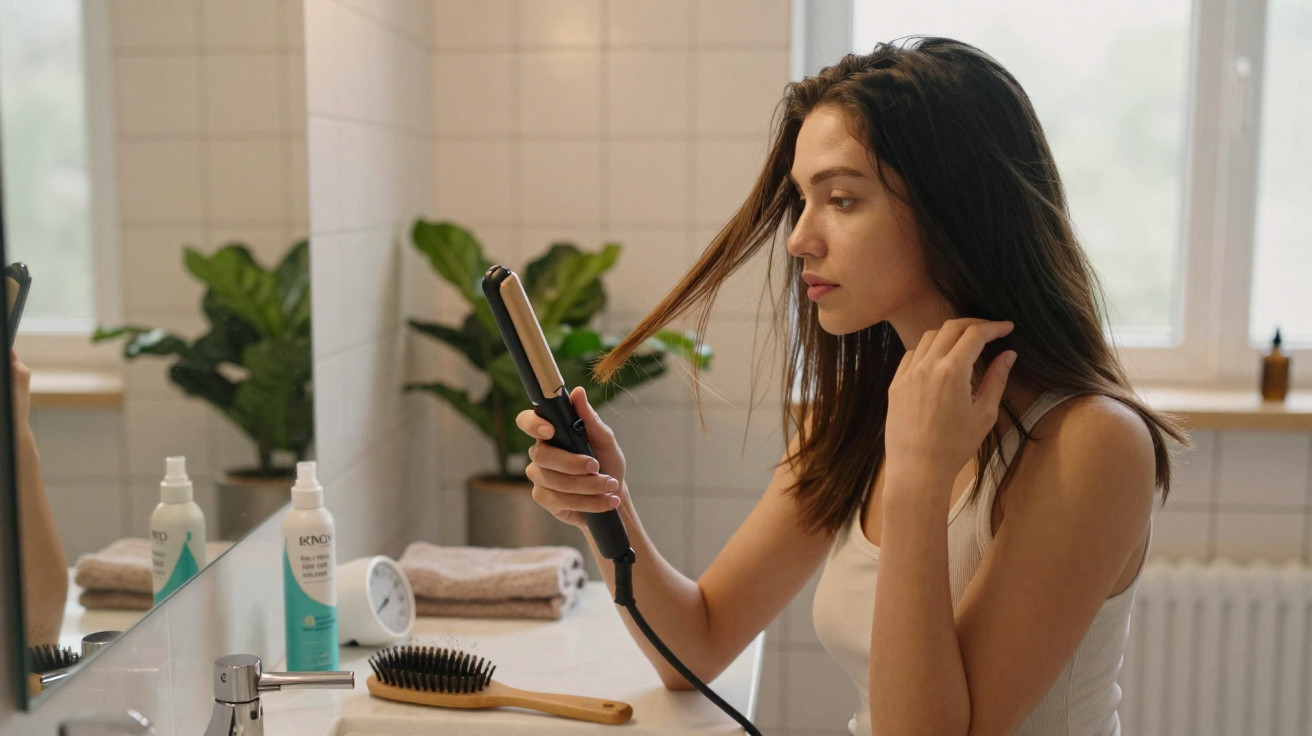
Beyond how it looks, intense bleaching can seriously compromise hair structure - especially when you’re naturally dark-haired. To reach a very light result, a stylist has to lift multiple layers of pigment out of the hair. That process is drying, and it can leave the fibre brittle and rough.
Many people recognise the aftermath: hair feels straw-like, loses shine and no longer falls nicely. A salon blow-dry right after your appointment can mask it, but at home the reality often shows quickly.
- Hair becomes harder to comb and snaps more easily.
- Ends split sooner and start to look frayed.
- Shine disappears, and the blonde can look dull or patchy.
- Styling takes longer, and heat damage increases.
Then there’s the upkeep. With a brunette natural base, dark regrowth appears fast. After 2–3 weeks it can already look “grown out”; by 6 weeks you often get the harsh “helmet effect”, with a clear line between roots and lengths.
Smarter colouring: which blonde shades actually flatter brunette types
The good news: you don’t have to give up lighter effects entirely. If you’re naturally dark, you’ll usually look better with softer transitions and warmer tones than with an all-over, icy blonde.
Gentle brightness instead of block blonde
For brunettes, hairdressers often choose techniques that bring lightness into the hair in a controlled way:
- Bronde: a blend of brown and blonde where the base stays dark, while selected sections are lifted.
- Balayage: a freehand technique that places fine lighter pieces for a sun-kissed finish.
- A gradient with soft roots: the roots remain deeper, with the lengths moving gradually into a lighter, warmer blonde.
These approaches add movement, make hair look more lively, and are far kinder to your complexion than a uniform platinum head of hair.
Why warm tones often create more glow
Instead of ashy or silver, brunettes often find these shades look noticeably more harmonious:
- Honey blonde
- Caramel
- Hazelnut tones
- Golden or coppery reflections
These colours echo warm undertones in the skin and reflect them back. The complexion can appear plumper, fresher - almost lightly sun-kissed. Small irregularities are more likely to be softened visually, rather than highlighted.
“Bringing warm reflections into your hair is like placing a soft-focus filter over your face - without any actual filter.”
How to talk to your hairdresser so a colour disaster doesn’t happen
A lot of mistakes happen because clients show one photo and say, “That’s what I want.” A far better approach is a three-step conversation:
- Explain your starting point: natural hair colour, skin undertone, and your usual make-up routine.
- Describe the effect, not the exact shade: say “I want to look fresher, softer, warmer” instead of “I want this platinum.”
- Be honest about time and maintenance: how often can you realistically make it to the salon?
A strong colourist will then guide you towards a shade that suits your features, rather than copying a trend look exactly. If you’re clear from the start that touching up every four weeks isn’t realistic, you’ll avoid colour goals that don’t fit your life.
When cool blonde can still work
There are brunette types who genuinely suit very light, cool blonde - often women with very fair, porcelain-like skin and naturally low contrast in their features. In those cases, a clean, icy tone can make the eyes stand out and read as a deliberate style statement.
However, it usually requires:
- very precise colour analysis
- a consistent care routine with hydrating and repairing products
- willingness to book frequent salon appointments
If you can’t commit to those points - or you’re unsure about shade selection - you’ll usually be safer with warm, soft gradations. Skin tends to look more awake, facial expression more relaxed, and hair remains healthier in the long run.




Comments
No comments yet. Be the first to comment!
Leave a Comment