
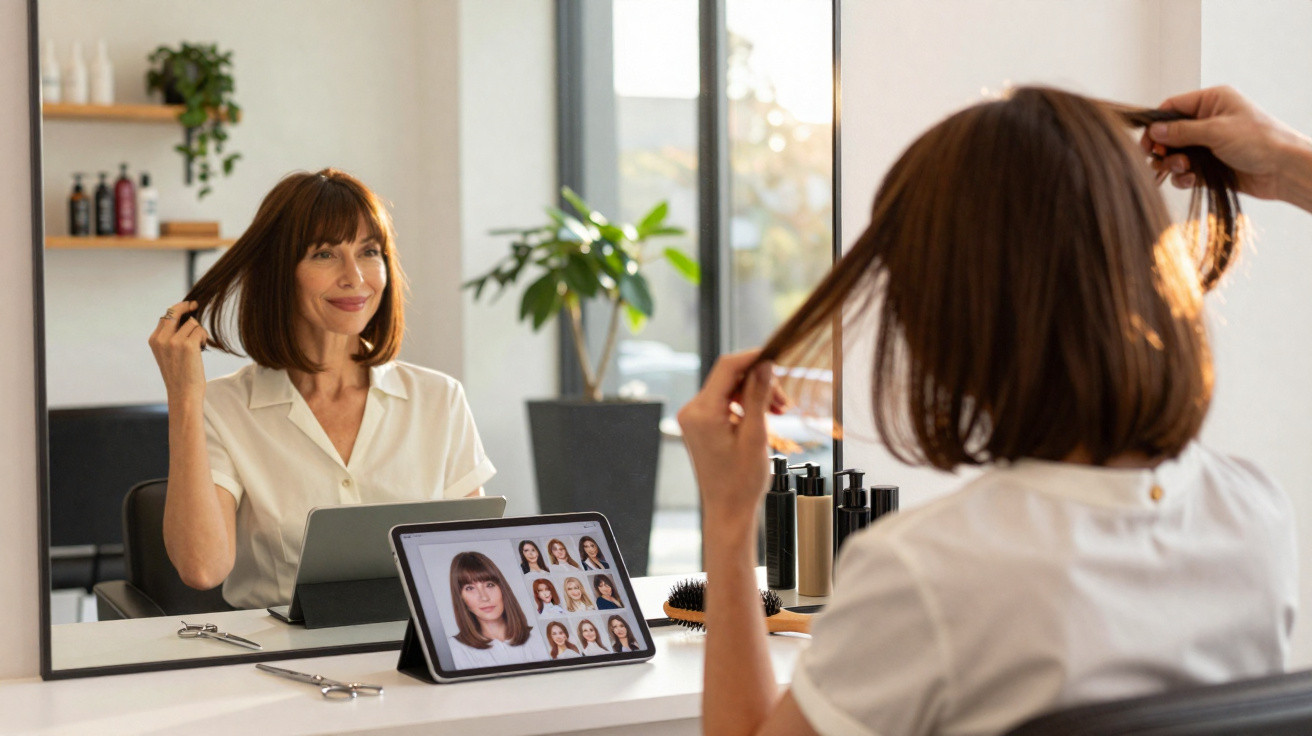
Finer hair, softer jawlines, deeper lines: reaching 50 can alter your face more than you might anticipate.
Plenty of women arrive at midlife and suddenly feel that the haircut they’ve relied on for years now looks limp, harsher, or just not quite right. Yet a well-chosen cut can quietly brighten the whole look: it can lift the face, make the eyes appear more open and bring a fresher feel - without surgery, filters or a dramatic colour overhaul.
Why your haircut matters even more after 50
From about 50 onwards, hair commonly loses density and becomes finer. At the same time, the facial oval tends to relax, cheekbones can sit differently, and lines around the eyes and mouth often become more pronounced.
A style that was perfect at 35 may start to pull the face down by 55. The aim isn’t to “cover up” age, but to rebalance proportions as they shift.
A flattering cut after 50 refines the jawline, adds lift around the temples and draws the eye towards the eyes and cheekbones.
Hair experts speaking to the US outlet Shefinds consistently circle back to the same essentials: take a little length off, introduce movement, and work with your natural texture rather than against it. Heavy, poker-straight curtains of hair can make features look older, while soft layers, airy fringes and well-shaped cuts tend to have the opposite effect.
The most rejuvenating haircuts after 50
Long layered bob with curtain fringe
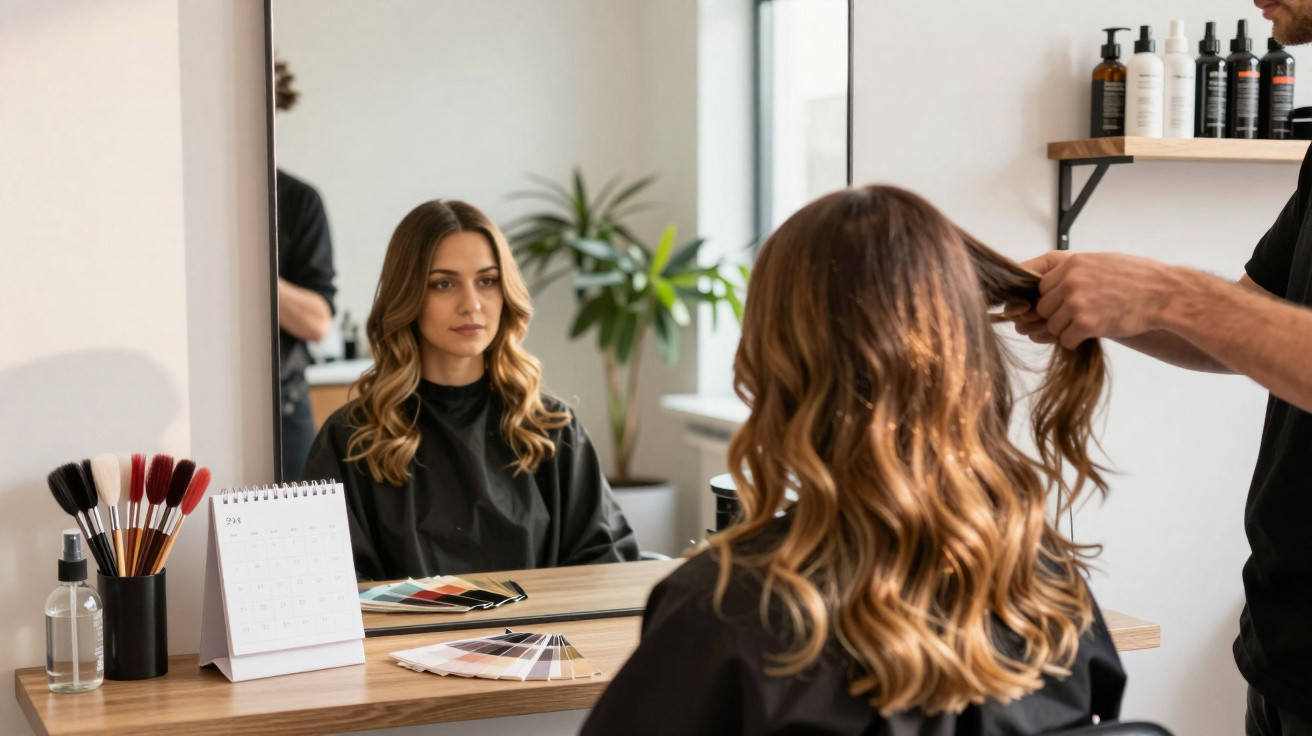
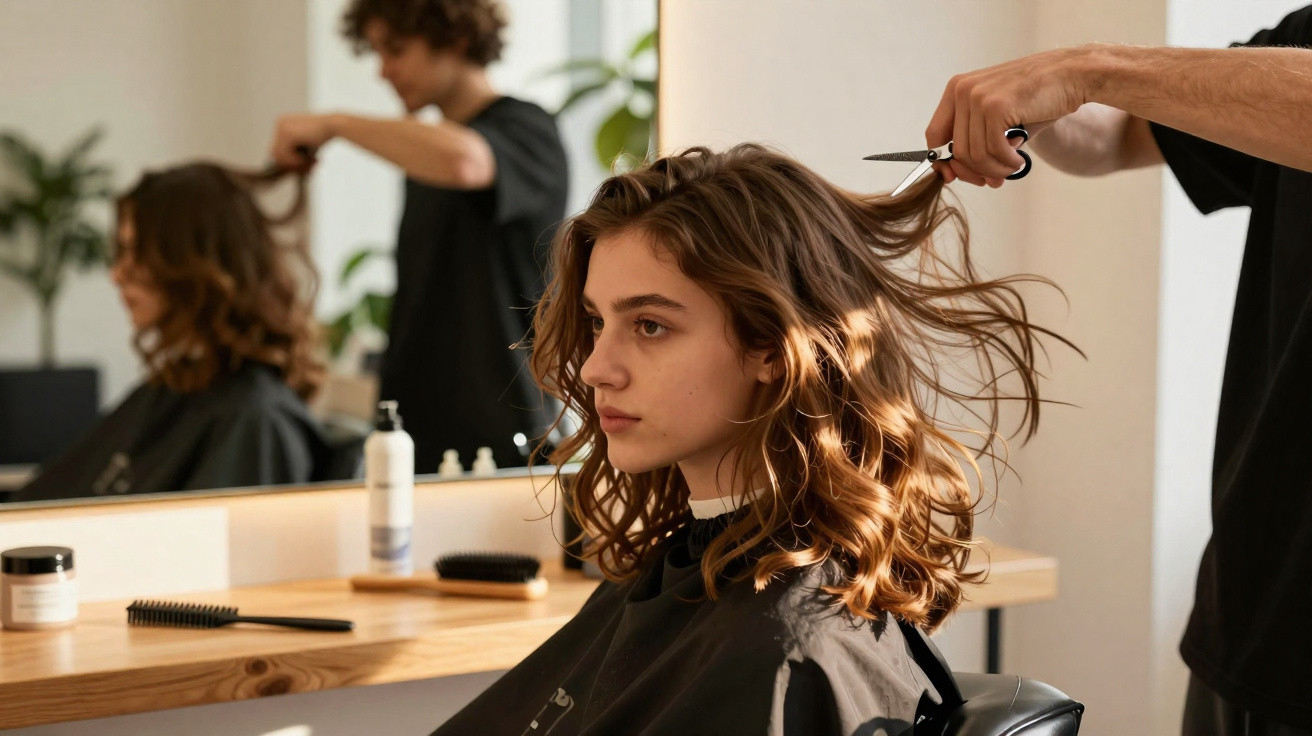
The long bob - the “lob” - continues to be a go-to for women over 50 because it’s remarkably forgiving. With thoughtful layers and a curtain fringe, it can behave a bit like soft-focus lighting.
- The length falls between the collarbone and shoulders, which visually lengthens the neck.
- Layers placed around the cheeks and jawline give a gentle lifting effect.
- A curtain fringe grazes the brows and sweeps outwards, spotlighting the eyes.
Hairdressers typically suggest keeping the ends lightly textured rather than sharply blunt. Strong, straight lines can make the face look more severe, whereas a feathered edge allows the hair to move and bounce as you walk.
A curtain fringe that falls to cheek level can make the face appear slimmer and gently veil forehead lines without looking heavy.
This option works best on straight to softly wavy hair. If your hair is fine, a small number of “invisible” face-framing layers can add the impression of fullness without making the ends look sparse.
The “mob”: medium bob with smart structure
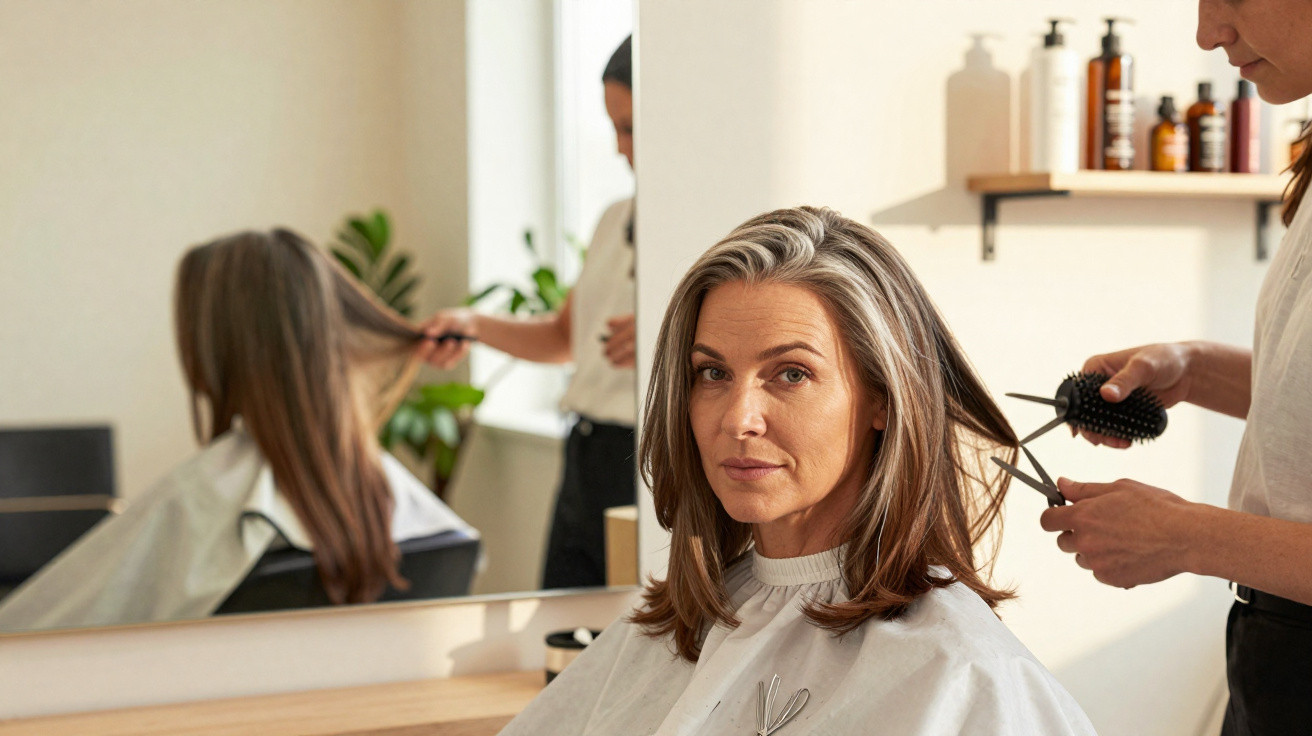
The “mob”, or medium bob, sits somewhere between the chin and the collarbone. It’s longer than a classic bob, yet still short enough to read as clean, current and intentional.
Why stylists love it for 50+ women:
- It can be cut on an angle to echo and flatter the jawline.
- Gentle layering at the temples and crown builds volume in areas that often thin.
- It’s long enough to tuck behind the ears, which can instantly make the profile look more lifted.
Texture at the front helps soften marionette lines and redirects attention to the eyes and cheekbones. Many hairdressers finish a mob with a subtle bend rather than a full curl; that small wave breaks up harsher facial lines and can soften the look of any hollowness through the cheeks.
The bixie: between pixie and bob
Sitting neatly between a pixie and a short bob, the “bixie” has become a favourite for women who want a noticeable refresh, but don’t want to go extremely short.
What defines a bixie:
| Feature | Effect on the face |
|---|---|
| Shorter back and sides | Reveals the neck and sharpens the jawline |
| Longer, layered top | Adds height and volume, lifting the face visually |
| Soft fringe or side-swept front | Frames the eyes and softens forehead lines |
Stylists rate it highly because it can be tailored to the individual. You can wear it undone and tousled for an easy, relaxed finish, or smooth it for a sleeker, more defined look. Either way, the natural movement built into the cut stops it looking stiff or dated.
Shorter cuts with texture tend to project energy and confidence, two qualities people often read as “younger” at a glance.
Layering: the quiet anti‑ageing trick
If you remember the choppy, overly thinned cuts of the 90s, the idea of layers might feel risky. Today’s layering is different: it’s intentional, subtle and designed around the face.
Done well, layers:
- Break up heavy sections of hair that visually pull the face downward.
- Add airy movement that mirrors the curve of the cheekbones.
- Make fine hair look denser and lift the roots.
- Soften the appearance of lines by adding texture around them.
On longer hair, the most flattering layers tend to begin around the cheekbones and collarbones rather than high at the crown, so the ends keep their fullness. With shorter styles, layers are shaped around the temples and nape to keep the silhouette light instead of boxy.
Short and mid-length cuts in motion
Once skin loses some elasticity, movement in the hair becomes even more flattering. Very straight, rigid hair can emphasise sagging, while soft texture creates contrast and gives the impression of lift.
Stylists often recommend:
- A softly layered bob with ends flicked slightly outwards for a “mini facelift” effect.
- A pixie with a longer, tousled top for an easy, modern shape.
- A lob with natural waves or light bends created with a wide-barrel tong.
The goal is not a big blow‑dry that collapses by lunchtime, but lived‑in movement that survives rain, wind and busy days.
Many women over 50 also want styles that don’t rely on constant heat styling. Cuts that sit properly with a little mousse and air-drying are both kinder to more fragile hair and far more realistic to keep up.
Choosing the right anti‑ageing cut for your face and lifestyle
There isn’t one universal haircut for every woman over 50. The most rejuvenating option depends on your face shape, hair texture and how much time you’re genuinely willing to spend styling.
Some guiding ideas:
- Round faces: Try a longer bob or mob that sits below the chin, with vertical layers and a curtain fringe to stretch the face visually.
- Square or strong jawlines: Ask for soft, wispy layers around the jaw and cheeks, and avoid razor‑sharp blunt cuts that highlight angles.
- Long faces: A shorter bob with volume at the sides and a fringe can balance proportions.
- Fine hair: Go for layered bobs, mobs or bixies with light texturising; avoid ultra‑long lengths that thin out at the ends.
- Thick or wavy hair: Internal layering can remove bulk and create a controlled, flattering shape.
When you book in, say you’re looking for “soft anti‑ageing structure” rather than simply asking for “layers”. That wording encourages your stylist to think about lift and face-framing, not just adding volume by thinning.
Practical tips to make an age-defying cut last
Even the best cut can start to look lacklustre quickly if the hair is dehydrated or brittle. After 50, hormonal changes can affect sebum production, often leaving the lengths drier.
A few simple habits support both style and hair health:
- Use a lightweight volumising spray at the roots rather than heavy serums through the top.
- Apply nourishing masks mainly from mid‑lengths to ends so you don’t flatten the crown.
- Reduce daily heat styling; when you do use heat, keep temperatures lower and apply a heat protectant.
- Trim every 6–8 weeks for short cuts, 8–10 for bobs and lobs, so the silhouette stays sharp.
Healthy, slightly shiny hair instantly looks younger, regardless of length or colour.
Understanding a few key terms before your salon visit
Salon terminology can feel like another language, making it harder to ask for exactly what you want. A quick recap helps:
- Curtain fringe: A centre‑ or off‑centre fringe that parts and sweeps towards the temples, longer at the sides than in the middle.
- Texturising: Cutting techniques used to remove weight and add movement without obviously “chunky” layers.
- Lob: A long bob, typically between shoulders and collarbones.
- Face-framing layers: Graduated shorter pieces around the face, designed to highlight eyes and cheekbones.
Taking a couple of reference photos that clearly show the length and fringe can be useful, but avoid asking a stylist to replicate another person exactly. Instead, explain what you like: softness around the face, lift at the crown, or easy texture.
It also helps to think about your real routine before you commit. If you swim often or travel regularly, a wash-and-go bixie or mob may be the better fit; if you enjoy spending ten minutes with a brush and tong in the morning, a wavy lob could suit you. Ultimately, the most “youthful” haircut is the one you can wear comfortably - and enjoy - day after day.


Comments
No comments yet. Be the first to comment!
Leave a Comment