

The bathroom mirror has steamed up, your towel keeps sliding off your head, and the hairdryer is glaring at you like a small, whiny opponent. You check the time: seven minutes until you truly, definitely need to be out of the door. Your hair is still dripping, your arm aches in advance at the thought of holding the dryer up, and that annoying front section is already preparing to misbehave. You know the ending: a hot, damp neck, roots that never quite dry, and a ponytail that only partly disguises the mess.
Some people seem to “wake up like this.” The rest of us are bargaining with moisture in the air.
There’s a reason an increasing number of hair pros quietly point people towards the same haircut - especially anyone determined to stop blow-drying every day.
And it isn’t the style you’re probably picturing.
The low‑maintenance haircut hair pros secretly love
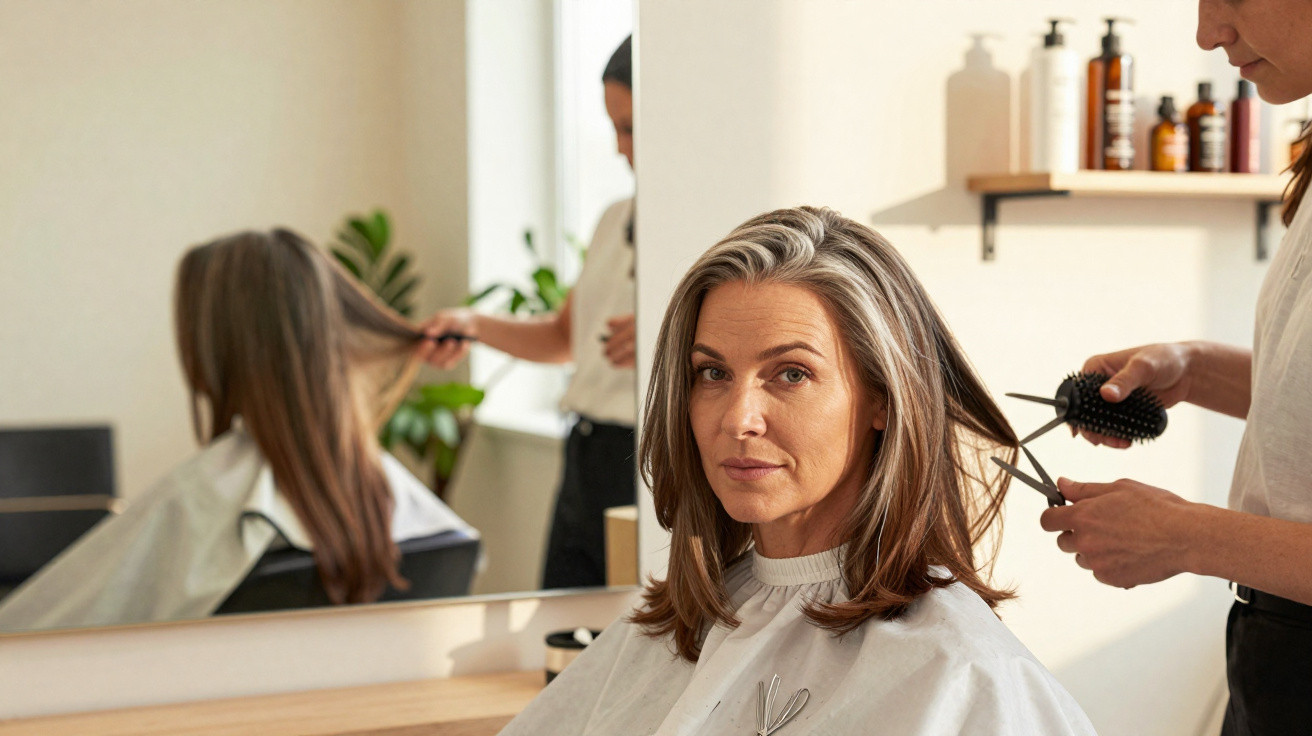
Hairdressers love to say, “Your cut should do the work for you.” If you can’t stand blow-drying, that isn’t a cute line - it’s practical advice. The shape they recommend again and again is a collarbone-length bob with gentle layers: not cropped, not long, but with built-in movement.
So why does it work? When it’s wet, it looks straightforward. As it air-dries, it naturally bends, tucks and settles, rather than dropping like a heavy sheet. It’s long enough to read as feminine or androgynous, and short enough to dry fast without a wrestling match.
Listen in at a packed salon and you’ll hear familiar praise. One London stylist calls it “the commuter cut.” A Paris colourist insists nearly every new mum ends up with it sooner or later.
Picture the kind of off-duty celebrity hair that looks neat without looking “done”: that shoulder-skimming length, a few barely noticeable layers, and just enough texture. No round-brush performance, no 45-minute routine - just a quick scrunch and you’re finished.
A nurse I spoke to said she reclaimed 20 minutes from her mornings simply by swapping long, weighty waves for this air-dry bob. “I literally shower, towel, coffee, car,” she laughed. “My hair catches up on its own.”
The reasoning is simple. Long hair clings to water and weight. Very short cuts, meanwhile, reveal every cowlick and swirl. That middle ground around the collarbone lets gravity help rather than hinder. Subtle layers break up density so it doesn’t dry flat at the roots and balloon out at the ends.
When the cut’s structure matches your natural texture, air-drying stops feeling like a risk and becomes a plan.
That’s why so many professionals say this: if you dread your hairdryer, reconsider your length before you buy yet another product.
How to cut and care for hair you’ll never blow-dry
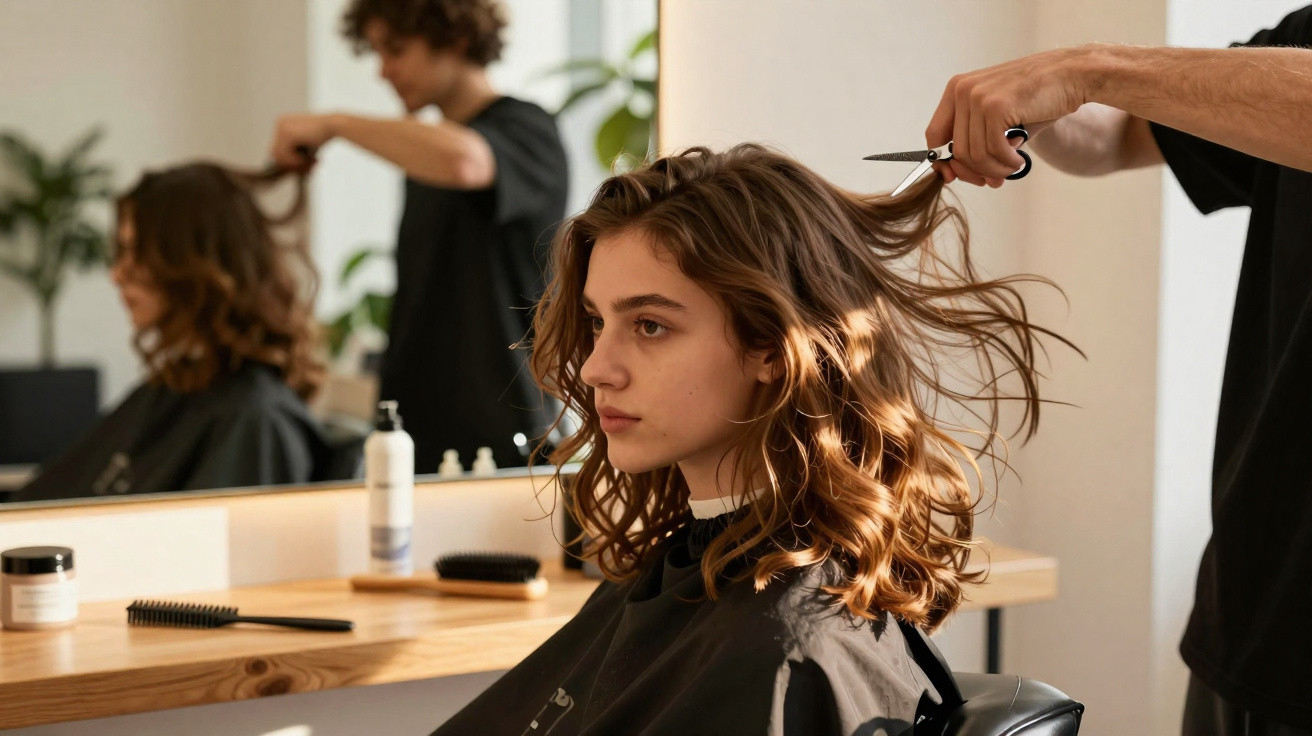
Technique matters just as much as where it hits on your body. Stylists who focus on low-effort hair often cut with the hair damp - sometimes even close to dry - so they can see the real pattern of your waves, curls or straight strands.
They typically keep the perimeter blunt at collarbone level, then add soft, almost invisible layers through the interior and around the face, rather than carving choppy steps into the surface. The outline stays crisp, but you still get movement, so it won’t dry into a triangle or separate into chunky sections.
Their favourite finishing detail for committed air-driers: a light bit of texture through the ends (not the mid-lengths), so any frizz reads as deliberate rather than accidental.
The biggest trap with this sort of cut is expecting it to behave like a salon blowout with absolutely no input. “Air-dry friendly” isn’t “do nothing”. It’s about doing the small things that count.
You’ll hear the same guidance from stylist after stylist: don’t scrub your hair with a towel like you’re shining cutlery. Instead, squeeze and blot, then detangle carefully with a wide-toothed comb while it’s still soaking wet. Work a light cream or leave-in through mid-lengths and ends, then leave it alone. Let the cut - and gravity - take over.
Let’s be realistic: hardly anyone manages this perfectly every day. But doing it most of the time is enough to shift your “I didn’t bother” hair into “I actually woke up like this.”
“People think they need more heat,” says Sofia, a New York stylist who specialises in air-dried cuts. “What they really need is a haircut that respects their real-life habits. If you hate blow-drying, your stylist should know that before they pick up the scissors.”
- Ask for a collarbone-length bob with soft, internal layers, not choppy steps on the surface.
- Request bevelled or lightly textured ends so the hair curves and shifts as it dries.
- Mention that you mostly air-dry so your stylist cuts for your natural fall, not an imaginary blowout.
- Take photos of hair that looks good slightly messy, not only perfectly styled red-carpet looks.
- Stick to a five-minute routine: gentle towel blot, detangle, one product, then hands off.
Living with a blow‑dryer-free haircut
Once you move to a cut designed for air-drying, mornings can feel oddly…quiet. The hairdryer’s whine vanishes and you notice other sounds instead: the kettle, the children, the radio, your own thoughts. For some people, it’s a surprise to realise how much of their routine revolved around one appliance.
You may also find your texture shifts. As heat damage grows out, curls can reappear that you didn’t realise you had. Straighter hair often settles into a soft bend at the ends. On hectic days you can twist it into a low bun while it’s damp, then let it down later and it somehow looks like you made an effort you never actually spent.
This cut doesn’t demand you reinvent yourself. It simply fits the life you already live. On days you fancy styling, it cooperates with a quick wave iron, a sleek pass with straighteners, or a deep side part plus a clip. When you can’t be bothered, it still lands in “good enough” territory on its own.
We all know that moment: you catch yourself in a shop window and think, I actually look put together, and I didn’t earn it. That’s the quiet magic hair pros mean when they steer blow-dry haters towards this length.
Over time, you start forming small, personal rituals around lower-maintenance hair. Maybe you air-dry as you head to work, feeling the cool air at your neck instead of the blast of a dryer. Maybe you swap 15 minutes of styling for 15 minutes sitting down, coffee in hand, letting your hair simply be.
You might even find yourself recommending it to friends - the haircut that rescued your mornings, the stylist who finally listened when you said, “I hate blow-drying,” and didn’t try to sell you a diffuser instead.
Hair will probably always be emotional territory - tangled up with identity, age and mood - but a collarbone-length, air-dry bob offers something quietly radical: one less everyday fight.
| Key point | Detail | Value for the reader |
|---|---|---|
| Air-dry friendly length | Collarbone bob with soft, internal layers | Faster drying time and a shape that falls into place |
| Cutting technique | Cut on damp/near-dry hair, bevelled ends, minimal surface layers | Respects natural texture and reduces styling effort |
| Simple routine | Gentle towel blot, wide-tooth comb, light cream, hands off | Predictable air-dry results without daily blow-drying |
FAQ:
- Question 1 Will this cut work if my hair is very thick?
- Answer 1 Yes - provided your stylist reduces bulk from within the cut rather than thinning out the surface. Ask for internal layers and weight removal at the back so it dries with movement instead of turning into a dense block.
- Question 2 What if my hair is fine and flat?
- Answer 2 A collarbone bob can make fine hair appear fuller because it removes the weight that pulls it down. Light layering paired with a blunt perimeter creates the impression of density, and air-drying with a touch of mousse at the roots helps maintain lift.
- Question 3 Do I need special products for air-drying?
- Answer 3 You don’t need a whole shelf - just one or two essentials: a lightweight leave-in conditioner or cream to manage frizz, and possibly a salt spray or texture spray if you prefer a messier finish. The cut should do most of the heavy lifting; product simply gives it a gentle push.
- Question 4 How often should I trim this style?
- Answer 4 Every 8–12 weeks is typically enough. Because it sits around the collarbone, it grows out neatly. Regular trims keep the ends bevelled and the internal layers balanced so it continues to air-dry well.
- Question 5 Can I still blow-dry it for special occasions?
- Answer 5 Absolutely. This cut is flexible: it air-dries well for busy days and can look polished quickly when you do style it. A rough dry with your head upside down and a fast brush-through is usually enough to look “done.”




Comments
No comments yet. Be the first to comment!
Leave a Comment