
The salon was already buzzing when she stepped inside: a tidy trench coat, silver roots showing precisely one centimetre, and the measured gait of someone preparing for disappointing news. Her stylist welcomed her with the familiar patter - “We’ll do something really youthful today, take ten years off, you’ll see.” She returned a courteous smile, yet her grip tightened around her handbag. Nearby, women in their 60s and 70s sat in rows facing the mirrors, wrapped in plastic capes like armour, studying photos of twenty-something influencers taped to the frames.
Some would walk out radiant.
Some would leave looking slightly… like they were wearing a part.
Because the gap between a “fresh cut” and a “desperate attempt to hide age” can be knife-edge thin.
The brutal truth: not every “youthful” cut looks young after 60
Hairdressers all have their list of supposed anti-ageing miracles: the ultra-short pixie, the rigid bob with a heavy fringe, the aggressively layered shag. Online - especially on Instagram - these styles are marketed like instant rejuvenation elixirs. But on real women, with real texture and real life behind them, the results are not always so glossy.
Some of these cuts genuinely flatter.
Others practically announce, “I’m trying so hard to look 38,” and somehow manage to make you look 68… and a bit drained.
Consider the notorious “helmet bob”. In theory, it reads as sleek and modern. On a 63-year-old with fine features and slightly thinning hair, it can become a hard casing, set like a mould. One Parisian stylist, speaking privately, calls it “the retirement-newsreader haircut”. Even so, salons keep recommending it, because it photographs beautifully and is straightforward to replicate.
Then there’s the spiky pixie: pushed up with gel to the heavens and often coloured a flat, inky black. On TikTok it comes across as bold. On a woman juggling grandchildren and a dodgy knee, it can land more like a concert costume that never got packed away. The issue isn’t how short it is. It’s what the mirror reveals: the urge to rewind time rather than live in it.
What makes a hairstyle feel older after 60 isn’t simply the number of centimetres removed. It’s the mismatch between the person and the hair. When a cut battles your natural texture, your day-to-day routine, or even how you dress, it feels inauthentic. That’s when people mutter “she’s trying too hard,” and “desperate” slips in quietly.
At that age, hair carries an entire biography: wellbeing, tiredness, hormones, even the impact of medication. A severe, so-called “anti-age” cut can spotlight every delicate detail instead of softening it. The looks that truly read as youthful are very rarely the ones being loudly sold as “anti-age” on salon posters.
The ranking: from subtly fresh to visibly forced
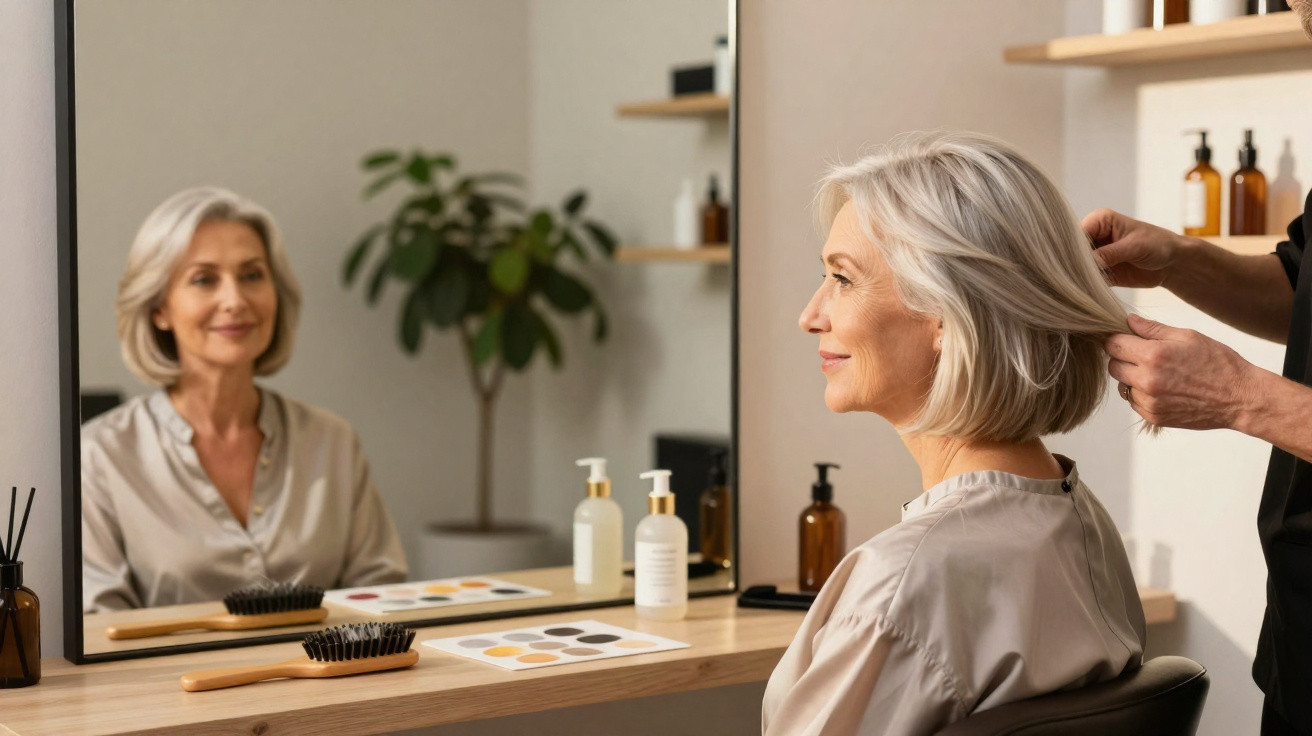
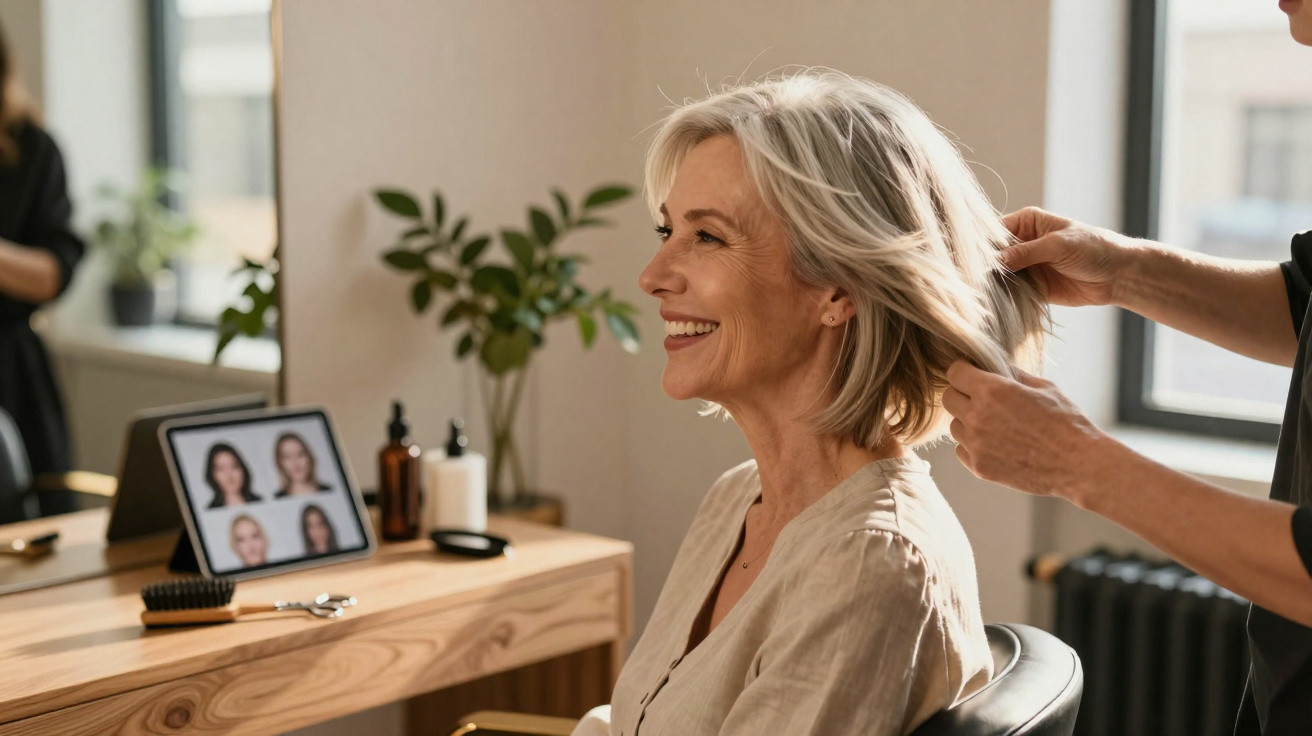
Speak to colourists and skilled cutters when they’re being candid, and they’ll admit it: the most youthful cuts after 60 are often the least showy. Top of their unspoken ranking is typically a soft, mid-length shape that falls just above the shoulders, with gentle movement and airy ends. It doesn’t insist you’re 35. It simply makes 62 look calm, current, and comfortable.
Second place tends to go to the slightly grown-out pixie - not clipped hard at the nape - with longer pieces around the face. When it follows the hair’s natural growth pattern instead of fighting it, it creates that effortless “I woke up like this” feel that money never quite guarantees.
Lower down the ranking, the requests get harder. Many stylists quietly dread hearing, “Do something that takes at least ten years off,” especially when it’s paired with a torn-out picture from a 1998 magazine. The biggest culprits? The sharp, angular bob paired with a thick, straight fringe on a lined forehead - it draws a horizontal slash right where expression lives. Or very long, poker-straight hair dyed a single dark brown, clinging to the jawline and visually pulling the face down.
One London stylist described a client who demanded a Kardashian-style XXL mane at 67, extensions included. Three months later she returned in tears after major breakage. The hair hadn’t made her look younger; it had made her look fragile. The emotional cost outweighed the financial one.
So why do “youthful” cuts so often go wrong? Because they chase an idea of youth that doesn’t match real bodies over 60. Skin is usually softer in tone, bone structure can appear more prominent, and hair density is rarely what it once was. A blunt, weighty bob on thinning hair can reveal the scalp. A dark, single-note colour can look harsh against a paler neck - like a frame that overwhelms the picture.
The cuts that genuinely take years off tend to rely on softness, light and motion: wispy edges rather than heavy lines, subtle layers rather than chunky steps, nuanced colour rather than a solid block. The irony is that the less a cut shouts “anti-age,” the fresher it often looks. And let’s be truthful: hardly anyone maintains a perfect routine daily - a shape that still looks good with a lazy blow-dry is, in itself, remarkably youthful.
How to avoid the “desperate” trap in your next salon visit
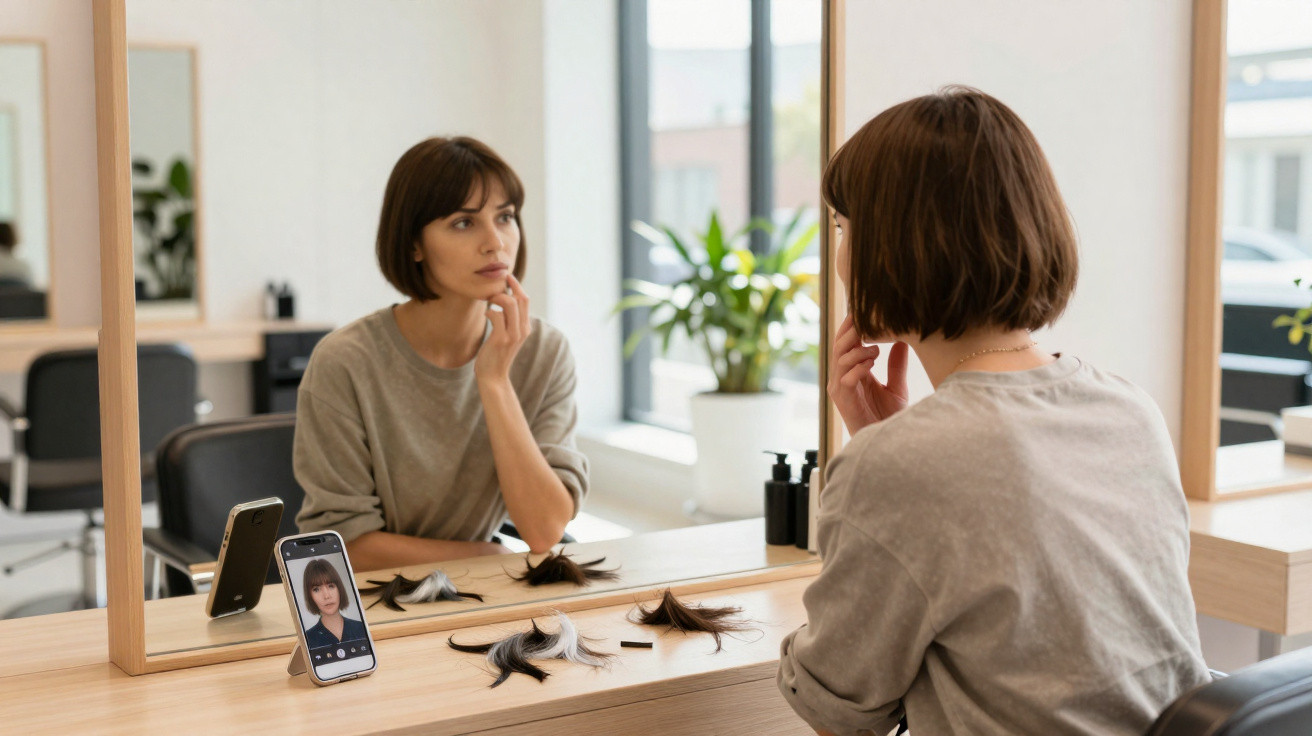
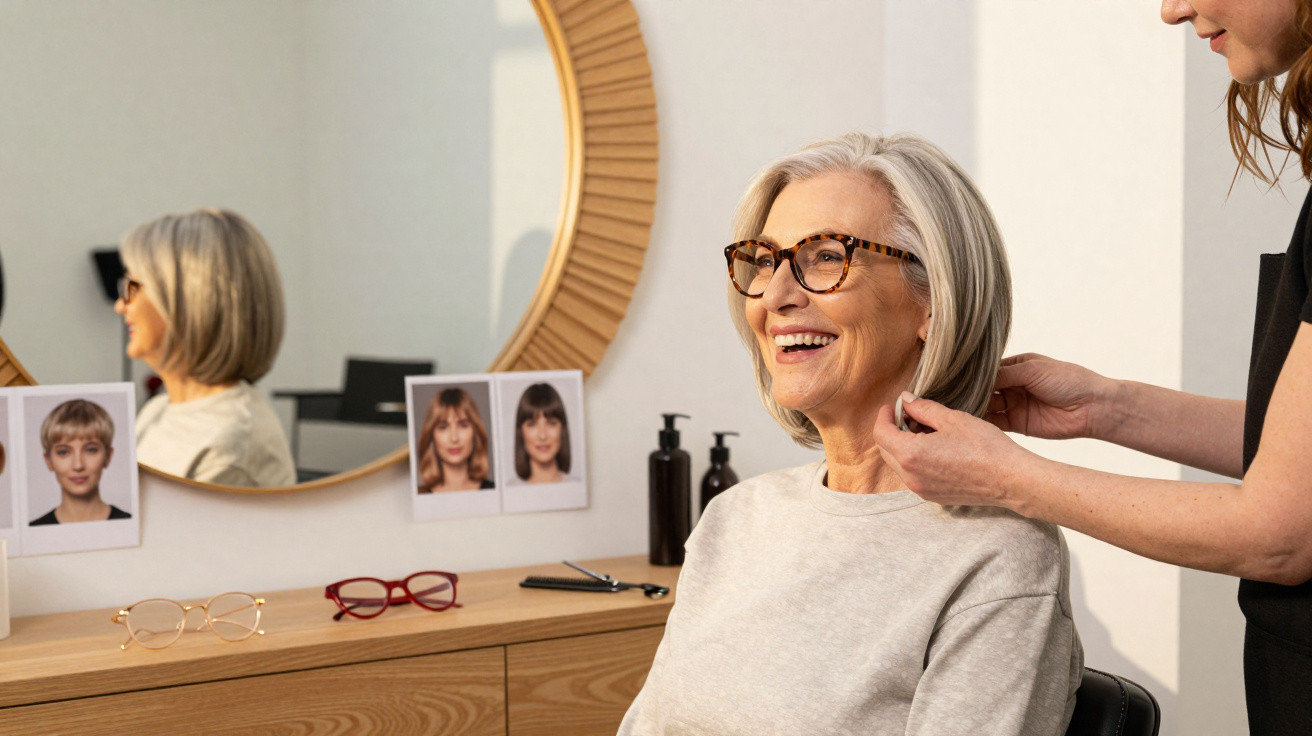
The safest approach begins before the scissors come out: turn up with reference photos… of women your own age. Not your daughter’s Pinterest board, and not a 2005 red-carpet moment. Pick faces with a few lines, a bit of texture, and hair that looks lived-in. Then mark what you actually like: softness at the nape, a fringe that doesn’t split the forehead in two, a gentle, believable colour.
Next, ask a question with real limits built in: “What version of this actually works with my hair density and how much time I realistically spend on it?” That single sentence eliminates fantasy cuts immediately.
A frequent mistake is assuming shorter automatically equals younger. With thick, wavy hair, taking it all off can create a triangle effect - bulky at the sides and flat on top. With very fine hair, an ultra-short crop can expose areas you’d rather keep in shadow. Another trap is clinging to a fringe that was charming at 30 but, at 64, sits awkwardly and needs constant styling just to behave.
There’s also the emotional pressure. Plenty of women reach 60 with the conviction, “I must not let myself go.” That thought can drive extreme cuts, punishing colour schedules, and never-ending anxiety about roots. A kinder, more useful question is: “What cut would make me look well-rested on a bad day?” That is often the one that quietly takes years off.
“After 60, the most youthful haircut is the one that looks like it belongs to your life, not like you borrowed it from your granddaughter,” confided a Milan stylist who works mostly with women over 55.
- Cuts that usually flatter: Soft bobs at the jaw or collarbone, airy layered lobs, relaxed grown-out pixies with movement at the crown and face-framing pieces.
- Cuts that often age the face: Stiff, geometric bobs with a heavy fringe, ultra-dark one-tone colours, very long limp lengths that drag features downward.
- Questions to ask your stylist: How will this look in three months? What happens if I let it air dry? Which part of my face will this cut highlight the most?
- Maintenance reality check: Can I style this in under ten minutes? Can I live with my natural texture most days? Do I really want salon colour every four weeks?
Living with your age instead of fighting it hair-first
Something changes when hair after 60 stops being treated like a battlefield and starts being seen as a living fabric that has travelled the whole road with you. The aim shifts: not to erase time, but to arrange it beautifully. A few carefully placed lighter strands around the face can lift the eyes more gently than any “ten years younger” makeover. A fringe that softly skims the eyebrows can blur lines without locking expression.
The most compelling women I met while reporting this didn’t look younger than their age. They looked fully present within it. Their hair made easy sense alongside their clothes, their gestures, their laughter. It didn’t yell “anti-age”; it quietly said, “I’m still here, fully.” That kind of youthful doesn’t fit neatly into a brutal haircut ranking - but you recognise it the moment it enters a room.
| Key point | Detail | Value for the reader |
|---|---|---|
| Soft structure beats hard lines | Gentle layers, light movement, and airy ends tend to flatter mature faces more than rigid, geometric cuts. | Helps you choose a cut that reads “fresh” rather than “forced.” |
| Length isn’t the real issue | Both short and mid-length can be youthful if they respect texture, density, and lifestyle. | Avoids drastic chops driven by fear of “looking old.” |
| Questions matter more than photos | Asking about maintenance, grow-out, and face highlighting leads to better decisions than copying celebrity looks. | Gives you a concrete script for your next salon visit. |
FAQ:
- Question 1 Is it true that women over 60 should always go short? Not at all. Many look fantastic with mid-length hair around the collarbone. The key is avoiding heavy, dragging lengths and working with your natural volume.
- Question 2 Does grey hair automatically make me look older? Not necessarily. A well-cut shape and a luminous grey, with depth at the roots and brightness at the front, can look modern and strong, even more so than flat artificial brown.
- Question 3 Which fringe works best after 60? Soft, slightly wispy fringes that blend into the sides tend to be kinder than thick, straight lines. They blur the forehead without cutting the face in half.
- Question 4 How often should I change my cut after 60? If you love it, you don’t need constant reinvention. A small update every 2–3 years - a bit more movement, a new length - keeps things current without drama.
- Question 5 Can I still wear a bold, edgy cut at my age? Yes, if it matches your style and energy. The problem isn’t boldness, it’s disguise. When the cut aligns with who you are, it looks powerful, not desperate.
Comments
No comments yet. Be the first to comment!
Leave a Comment