
The woman staring back from the mirror might be 46, might be 52 - she’s no longer certain. Under the unforgiving bathroom light, the silver at her temples looks sharper than it did beneath the softer glow of the sitting-room lamp. A half-used box of permanent dye perches on the sink, and the familiar chemical tang is already in the air: ammonia mixed with a twinge of regret.
She stops. With fingers still marked by colour, she scrolls on her phone and lands - again - on videos of women “ditching the dye” in favour of some quietly persuasive, plant-based alternative. Henna. Indigo. Tea. Oils. Her thumb hovers. After two decades of battling the greys, she catches herself wondering what her hair would look like if she simply let it be.
Somewhere in that pause, something begins to change.
A slow rebellion against the dye aisle
A walk down a supermarket beauty aisle tells its own story: a thin, biting scent of chemicals, and row upon row of boxes promising “youthful radiance in 10 minutes.” For years, the script was straightforward. Pick a shade, hide the grey, repeat every three to four weeks - no debate.
Now, however, those boxes increasingly share shelf space with herbal powders, plant-based colour kits and understated claims like “no ammonia, no PPD, no resorcinol.” The wording can feel almost like a belated apology for years of stinging scalps and towels ruined by dye.
Dermatologists say the change is tangible. A 2023 consumer survey from a European cosmetics group reported that searches for “natural grey hair solutions” rose by more than 200% over two years. On TikTok and Instagram, women document “silver journeys” not as a failure to keep up appearances, but as a deliberate lifestyle choice.
A French colourist in Paris tells me that about half of her new clients now arrive with bags of powdered plants from organic shops, asking - sometimes sheepishly - whether they can use those instead of their usual box dye. She agrees it can work, but adds a caveat: the rules are different.
The reasons are, in many cases, refreshingly practical. People have had enough of itchy scalps and hair that turns brittle and straw-like within days of colouring. Some experience outright allergic reactions to traditional dyes, particularly formulas containing PPD, a well-known irritant. Others are worn down by the treadmill of upkeep - roots, bookings, and the steady drip of cost.
Beneath it all sits a quieter cultural shift: grey is increasingly seen not as a defect to erase at any price, but as a tone and texture that can be softened, enhanced or gently blended - using plants and patience rather than pure chemistry.
Plants are stepping up where bottles used to rule
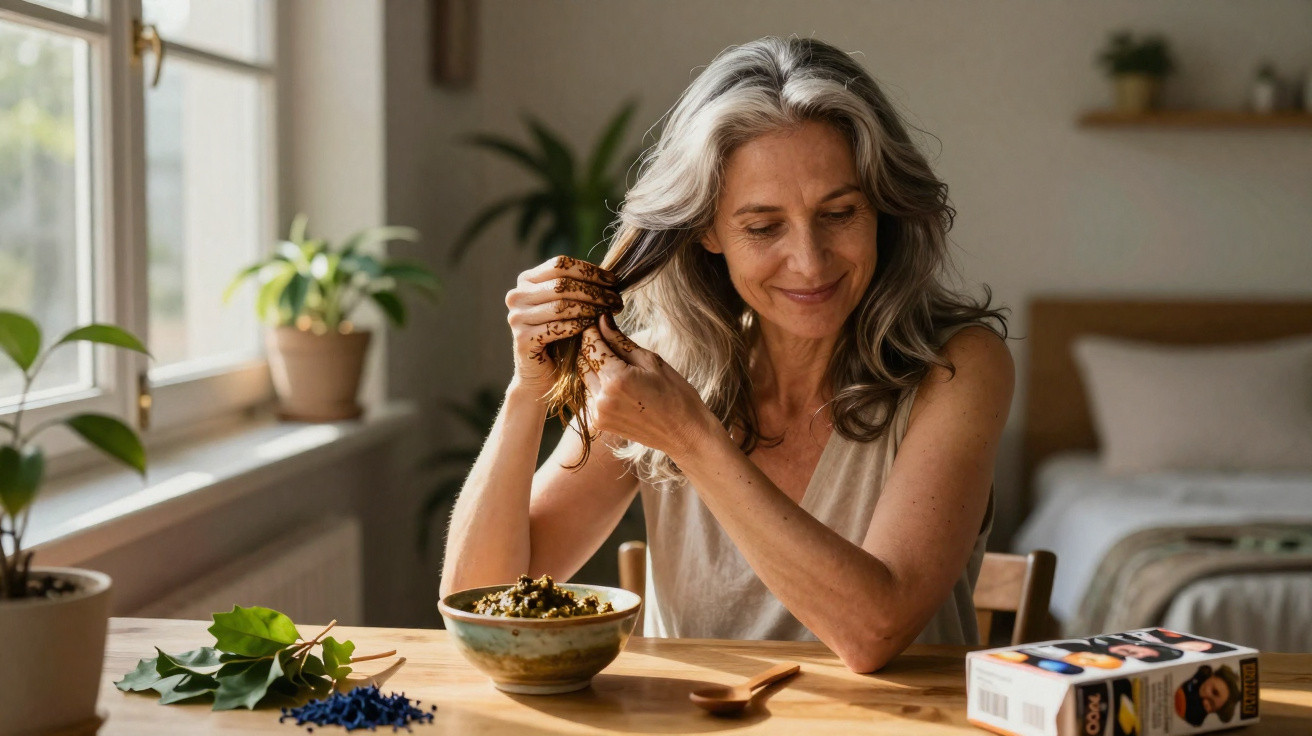
At the centre of this movement is something both ancient and oddly unglamorous: henna. Not the jet-black, mystery blends many people remember from the 1990s, but pure, body-art quality henna leaf, ground fine and mixed with warm water or herbal tea. Used alone, henna tends to turn grey hair coppery, auburn or warmly red.
When paired with indigo (another plant powder) at the right ratio, it can push the result towards brown, and in some cases close to black depending on the base colour. The downside is the process: it’s slow and it’s messy - paste, shower caps, and two to four hours on the sofa with an old towel over your shoulders.
Alongside that are gentler options that sound as if they belong in your grandmother’s kitchen. Rinses made from black tea or coffee can subtly deepen very pale greys and boost shine. Infusions of sage and rosemary are often used as leave-in tonics that gradually enrich cooler tones over several weeks, particularly when the hair isn’t fully white.
Some companies have started packaging these plant infusions as ready-to-use sprays, selling them as “grey blending mists” rather than full coverage colour. The promise is not total concealment. Instead, they soften the boundary between pigmented hair and silver, so roots feel less stark and regrowth becomes easier to live with.
Trichologists note that the mechanism is not the same as permanent dye, which forces open the cuticle and drives synthetic pigment into the hair shaft. Many plant-based approaches sit more like a translucent veil around the hair, intensifying with repeated applications. That’s why natural grey-hair solutions often look more nuanced and less “helmet-like.”
The trade-off is predictability. You can’t rely on a box to deliver a precise shade every time, because hair absorbs plant colour differently from one person to the next. That’s where the magic can be - and also where perfectionists start to sweat.
How to shift from chemical dyes to natural grey helpers
The first realistic move rarely begins in the bathroom; it starts with planning and a willingness to wait. Many experts who help women step away from permanent dyes advise lengthening the gap between colouring sessions before doing anything else. If you currently colour every three weeks, try stretching to four, then five.
During that growing-out period, tinted conditioners, root touch-up powders and plant-based glosses can help soften the contrast. Once you have around three to four centimetres of natural regrowth, henna or herbal blends have something authentic to work with. Without that, you’re essentially layering plants over artificial pigment, and the outcome can be unpredictable.
A common sticking point is expectation. Many people assume their first natural application will produce magazine-ready hair in a single afternoon. That’s rarely what happens. The initial session may look uneven, or simply lightly tinted rather than fully blended - especially if your greys cluster in one area.
Colourists experienced in natural techniques often encourage a “build it up” approach: three to four sessions, spaced one to two weeks apart, gradually deepening and evening the tone. In reality, few people maintain perfect timing - life intervenes. Still, those who persist for a month or two often say their hair feels thicker, shinier and, oddly, more like their own than it has in years.
“Traditional dyes gave my client one thing very well: uniformity,” says London-based colorist Emma Hayes. “What plants give her is character. Her greys don’t disappear; they shift. They catch the light differently. And suddenly she looks like herself, not like a photo from ten years ago she’s been trying to photocopy forever.”
- Do a strand test first
Try henna or any herbal blend on a hidden section before committing. Your past dye history matters more than what the packaging promises. - Choose quality over shortcuts
Opt for pure plant powders with no metallic salts or added dyes. Cheap henna bricks can react badly with older chemical colour. - Hydrate like it’s your job
Natural colour still needs proper care. Oils, masks and gentle shampoos help keep new silver-warm tones reflective rather than flat. - Accept the “in-between” phase
For a while, your hair may look neither fully grey nor fully coloured. Keep scarves, clips and low buns in mind for those days. - Talk to a pro who knows plants
Not every hairdresser works with henna or herbal colour. If possible, find someone with experience - at least for the first transition session.
Grey hair, new rules
What’s edging out traditional dye isn’t only a new product; it’s a new way of relating to ageing and to your reflection. People experimenting with natural grey solutions often describe a strange blend of exposure and relief. The first time they see a true silver shimmer alongside a soft herbal tint, something settles into place.
Instead of being a “problem” to fix, their hair becomes something to revise thoughtfully - line by line - rather than trying to erase the whole chapter. It’s a quiet but potent emotional reframing. Many recognise the moment when a hard stripe of dark dye against pale roots stops feeling like “maintenance” and starts to resemble denial.
This approach won’t suit everyone. Plenty of people will happily stay with conventional dyes, and that’s entirely fine. Others will choose to go fully silver, abruptly - no plants, no glosses, no blending, just the unfiltered truth.
Between those endpoints sits a growing middle option: plant-based blends, tea rinses and gentle glosses that respect new whites while easing the shock. It asks for patience rather than panic, and for ritual rather than speed. It can even change the conversation - friends swapping rosemary-rinse recipes instead of arguing over which box number covers best.
If you’re curious, you don’t need to declare a dramatic hair “journey” online or ceremonially bin your dye in the garden. You can simply let the next appointment slide, brew a pot of black tea and watch what it does. You can live with the in-between colour for a few mornings, not just one rushed evening.
You might decide you can’t stand it and return to what you know. Or you may find that a slow, plant-tinted blend of silver with brown or gold feels unexpectedly in step with the life you lead now. For once, the choice is less about battling time - and more about deciding how you want to show it.
| Key point | Detail | Value for the reader |
|---|---|---|
| Natural grey solutions build gradually | Henna, indigo and herbal rinses layer colour across several sessions rather than producing instant, uniform coverage | Helps set realistic expectations and prevents frustration after the first attempt |
| Transition needs a strategy | Extending dye cycles, using root-blurring products and preparing for an “in-between” phase makes the change feel gentler | Lowers stress and reduces stark regrowth lines |
| Quality products and advice matter | Pure plant powders, plus guidance from a professional familiar with herbs, reduce the chance of odd tones or adverse reactions | Supports healthier hair and outcomes closer to what you’re aiming for |
FAQ:
- Question 1 Can natural methods genuinely cover grey, or do they only add a light tint?
- Question 2 How long does henna or herbal colour last on grey hair?
- Question 3 Can I switch straight from chemical dye to henna without a break?
- Question 4 Will plant-based colour damage my hair or alter its texture?
- Question 5 What if I try natural grey blending and then decide I want my old colour back?



Comments
No comments yet. Be the first to comment!
Leave a Comment