

At first, it feels like the best idea you’ve had in ages.
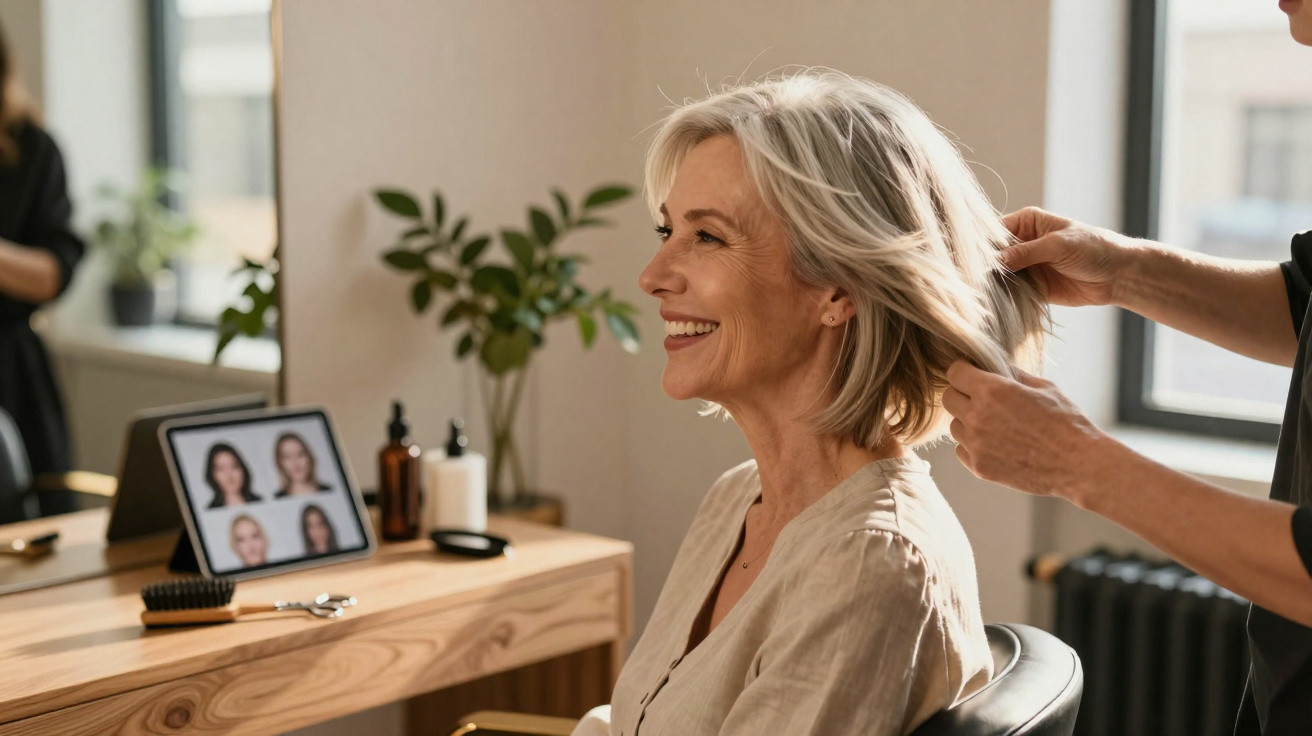
You’re in the salon with the cape fastened snugly at your neck, flicking through photo after photo of the same haircut every woman on Instagram appears to have gone for this year: the cool “French bob”. The crisp, blunt lob. The curtain-bang shag that makes every influencer look as if she’s just stepped out of a Paris hotel. The stylist smiles and nods, genuinely keen. You feel brave - almost lighter - imagining those centimetres of hair hitting the floor.
Three months on, you’re in your bathroom under that unforgiving yellow light, hair half-dry and half-frizzy, wondering why it suddenly looks… off.
There’s a reason this storyline keeps playing out for women in their 30s.
Far too often.
The trendy haircut that looks perfect online… and wildly different in your real life
The issue usually doesn’t begin in the salon chair.
It begins on your phone. You see the cut everywhere: neat chin-length bobs that sit perfectly, effortless wolf cuts, arched fringes that somehow carve cheekbones out of nowhere. On the commute, between two emails, or during a sleepless night, your brain quietly files it away as, “Maybe I should do that too.”
On social media, those styles are presented at their absolute best: freshly blow-dried, lit by flattering daylight, filtered just enough to soften the awkward realities.
In a 10-second clip, every face looks as if it was “meant” for that haircut.
So you start to believe yours is, too.
Consider Lauren, 34 - a project manager with one toddler, one dog, and zero spare mornings.
She saved at least twenty photos of short, wavy bobs before she booked in. The stylist was delighted, Lauren was delighted, and the first selfie delivered a hit of pure dopamine. “New hair, new me,” she posted, with a little flame emoji. For the first week, she committed fully: round brush, texturising spray, a careful parting. Her bob looked exactly like the Pinterest board promised.
By week four, a heatwave arrived.
Using a hairdryer at 7:15 a.m. felt like punishment, her waves turned into a triangle by lunchtime, and the back of her hair stayed flat no matter what she tried. By month three, Lauren had quietly started saving “cute grow-out hairstyles” and “how to hide a haircut you hate” to a secret board.
There’s a straightforward reason this is so common in your 30s.
Your day-to-day life doesn’t run the way it did at 22 - but the haircuts that go viral still assume you’ve got endless time and energy to style them. Your hair texture may not even be the same after pregnancy, stress, or hormonal shifts. Your diary is tighter, your sleep more fragile, and you’ve got less patience for long mirror sessions.
Trendy cuts are built for the moment - not for the reality of month three.
That small gap between fantasy and routine slowly turns into regret once the novelty wears off and the upkeep starts demanding attention.
From “love at first cut” to “why did I do this?” in three months
There is a way to avoid hitting that three-month wall.
Before you agree to the scissors, you need one slightly unglamorous, genuinely life-saving step: a brutally honest lifestyle check. Ask yourself - out loud if you have to - how many minutes a day you will realistically give this haircut. Not on a perfect morning. On an exhausted Tuesday when the alarm didn’t go off.
If the style you want only looks right with a round brush, mousse, heat protectant, straighteners and carefully placed hairspray, you’re taking on a part-time job.
Most women in their 30s are already overworked by life.
In the salon, when a stylist asks, “How much time do you spend on your hair?”, many women answer with the version they wish were true.
“About 15–20 minutes,” they’ll say - thinking of that one Sunday in April when they actually did a full blowout. Realistically, almost nobody does that every day.
So the stylist offers the trendy cut in the version that requires daily effort to match the photo. You agree, convinced you’ll keep it up this time. Then normal life resumes: the school run, Teams calls, laundry, the mental load. The haircut that was meant to make you feel freer starts demanding your compliance every morning.
That’s when the regret starts whispering.
Yes, hair grows - but for three to six months you’re bargaining with your reflection. Your bob flicks outwards at precisely the worst length. Your fringe sits in your eyes, but isn’t long enough to tuck away. You twist, clip, disguise, moan.
A stylist I spoke to summed it up in one sentence:
“Trendy cuts don’t fail on day one, they fail on the days when nobody has time to style them.”
Underneath it all, something gentler is happening.
It wasn’t only hair. It was hope - a quiet desire to feel new, sharp, noticed again. When the reality doesn’t deliver what you imagined, it isn’t only the fringe that upsets you.
It’s the little piece of hope that feels like it got trimmed away, too.
How to choose a haircut you won’t hate by the time the seasons change
One approach can change everything: give the style a visual and mental test-drive before you cut.
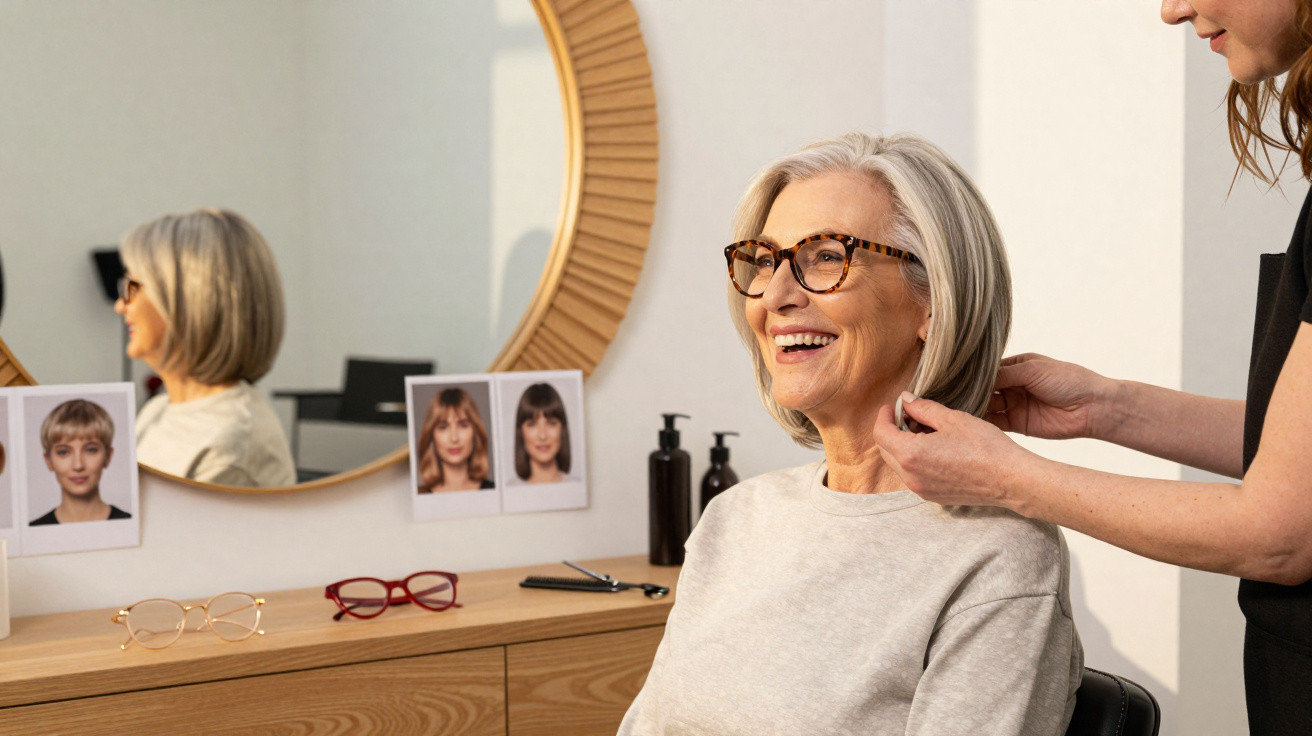
Save three photos - not twenty - of the haircut you want. Then find three more photos of women with a similar face shape, hair texture and age who are actually living with that cut, not simply posing in ideal conditions. Look for real-life contexts: at the gym, driving, holding a child, wearing glasses.
Next, picture your messiest weekday.
Put that haircut on your head in that exact chaos. If you can’t imagine still liking it with a scruffy ponytail, oily roots, or under harsh office lighting, it may be too delicate for your real life.
There’s also the question many people hesitate to ask a stylist: “What will this look like in three months when I don’t come back on time?”
Ask it anyway. A good stylist will use their hands to show you how the shape will sit as it grows. They’ll warn you if your chosen fringe becomes a heavy curtain after eight weeks, or if that micro-bob will hit a “mushroom” phase long before it reaches your shoulders.
If the response feels vague - or strangely optimistic - take a step back.
You aren’t choosing just today’s haircut. You’re choosing three versions of it: freshly done, mid-growth, and “I’m overdue for my next appointment”.
There’s real relief in choosing realism over aspiration.
As one woman told me:
“I finally admitted I’m not the kind of person who will use three products and two tools every morning. Once I said that out loud at the salon, the haircut we chose was less ‘wow’ on Instagram, but I like it every single weekday. That’s worth more.”
For lots of women in their 30s, the best hair decisions come from a few practical questions:
- How does my hair behave when I do nothing to it?
- What do I quietly resent about my current routine?
- When do I feel most like myself: hair up, hair down, or half-tied?
- Which part of my face do I genuinely enjoy highlighting?
- How often am I prepared to book trims and actually show up?
The trend that survives the algorithm is the one that still feels like you on a rainy Monday.
Maybe the regret isn’t really about the haircut at all
When you really listen to women who dislike that trendy cut a few months later, the conversation often stops being about hair.
They mention turning 30, or 35, or nearly 40. A break-up. A promotion that didn’t feel as satisfying as expected. A baby that changed their body and their time. Amid all that emotional noise, a haircut can become the easiest place to pin a bigger change.
You cut your hair because you want something to shift.
The trouble is when the only thing that changes is the length - while everything else stays exactly the same.
That may be why the disappointment bites so hard when the bob looks flat by month three.
You didn’t just lose inches; you placed a bet on hope. Some part of you expected the new outline of your face to redraw the rest of your life. When that doesn’t happen, the simplest thing to say is, “I regret this haircut.” It’s easier than admitting, “I’m not sure who I’m becoming in my 30s.”
Sometimes the kindest option is to hold both truths at once.
Yes, this particular trendy cut didn’t suit your daily reality.
And yes, the urge to change your hair may also have been a quiet message that something deeper in your life needs attention.
That isn’t failure - it’s information.
Next time you feel the sudden need to screenshot a celebrity fringe, pause and ask what you’re really looking for: a lighter head, or a lighter schedule? A new look, or a firmer boundary? Hair grows back - even after a cut you wish you’d never had.
The real win might be walking into the salon not trying to become someone else, but asking for a haircut that honours the woman you already are.
| Key point | Detail | Value for the reader |
|---|---|---|
| Trendy cuts need daily styling | Most viral hairstyles are shown fully blow-dried and finished, not as they look in everyday life | Helps you decide whether the look fits your actual routine, not just your fantasy |
| Three-month reality check | Every cut goes through stages: freshly done, mid-growth, and overdue for a trim | Reduces regret by making you think beyond day one in the salon |
| Emotional layer behind the scissors | In your 30s, haircuts can mirror deeper life changes or identity questions | Encourages you to notice what your urge to change your hair is really trying to tell you |
FAQ:
- How do I know if a trendy haircut suits my face? Look for photos of people with a similar face shape and hair texture to yours, then ask your stylist to honestly map the length and volume on your features with their hands before cutting.
- Can I “test” a haircut before committing? Yes: try virtual try-on apps, tuck and pin your hair to mimic shorter lengths, or ask for a softer, longer version of the trend first so you can refine it later.
- Why does my hair look great at the salon but not at home? Stylists use professional tools, strong blow-drying techniques, and products you may not have the time or skill to recreate every day under your bathroom lighting.
- How often should I trim a bob or lob to avoid the awkward phase? Usually every 6–10 weeks, depending on how quickly your hair grows and how sharp the shape is; beyond that, the cut often loses structure and volume.
- What if I already regret my trendy haircut? Talk to your stylist about a “grow-out plan”: soft layers, face-framing pieces, or a micro-trim strategy can turn the in-between stage into a style rather than a punishment.



Comments
No comments yet. Be the first to comment!
Leave a Comment