
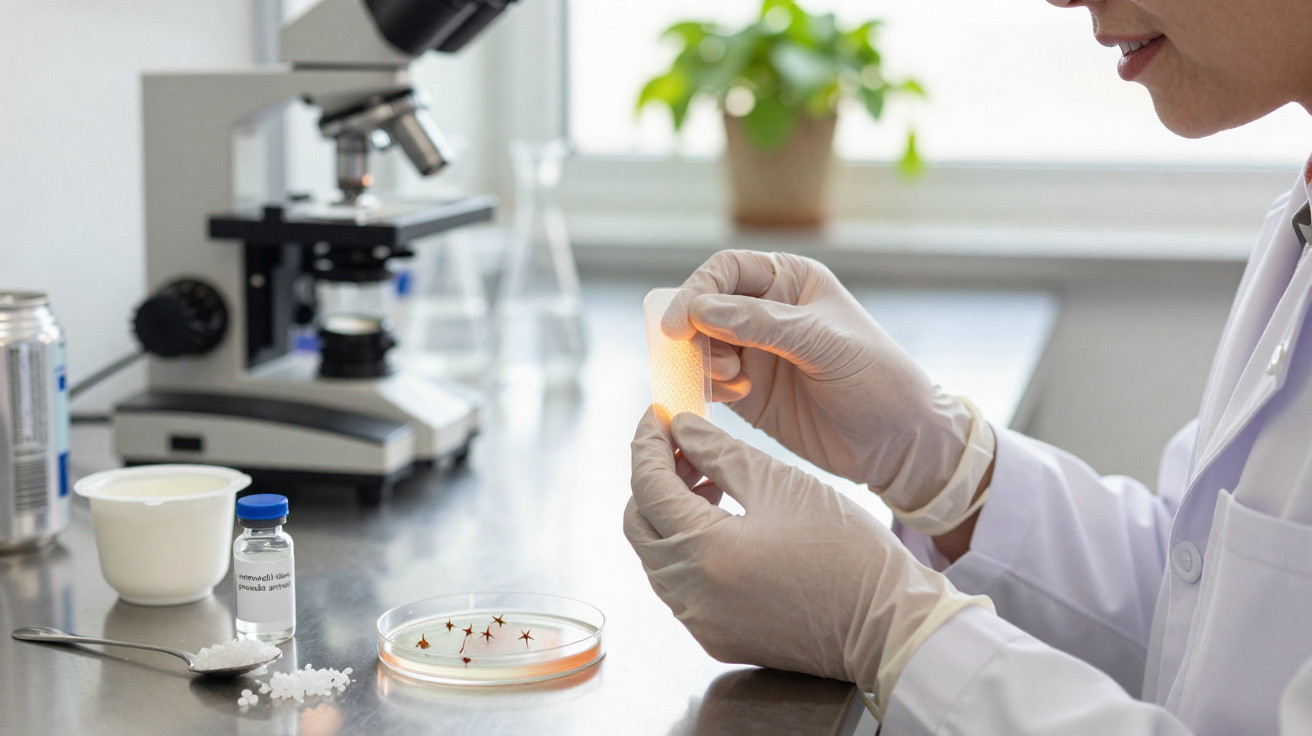
Researchers are investigating a plant extract best known for sweetening diet foods and drinks, and early findings in animals suggest it might enhance one of the few established options for treating baldness.
From fizzy drinks to follicles
At the heart of the study is stevia, a naturally sweet plant traditionally used by Indigenous communities in South America, especially in Bolivia and Paraguay. Today, manufacturers add it to fizzy drinks, yoghurts and ice creams to reduce sugar while maintaining sweetness.
Stevia has already prompted heated debate about how much is sensible to consume, and that argument is still unresolved. This new work, however, considers an entirely different question: not what stevia does to diet and weight, but whether one of its compounds could be useful for hair.
Published on 7 October 2025 in Advanced Healthcare Materials, the research centres on stevioside, one of stevia’s naturally occurring molecules. Rather than using it as a sweetener, the scientists turned it into part of a miniature medical device intended to tackle androgenetic alopecia - the common male and female pattern baldness.
In bald mice, a 35‑day treatment containing a stevia derivative led to hair regrowth on roughly two‑thirds of the previously bare scalp.
To create a balding-like patch, the researchers shaved areas of the animals’ skin and then chemically damaged them to imitate a hairless region. After a little over a month of treatment, those once-smooth patches reached about 67.5% hair coverage.
How a blood pressure pill became a hair ally
The significance is easier to grasp with the backstory of minoxidil. First developed in the 1970s as a medicine for high blood pressure, it drew attention when clinicians observed an unexpected effect: some patients began to grow thicker hair, including on the scalp.
Drug companies soon repositioned minoxidil as a topical foam or lotion for hair loss. It remains one of the few broadly approved treatments for pattern baldness and is sold over the counter in many places.
Its main limitation is delivery. When spread on as a liquid or foam, minoxidil may not move through the skin deeply enough - or reliably enough - to reach where it is needed. Some users get only small improvements, while others see almost none. Many also stop because the treatment typically has to be applied daily for months or years.
The new research does not replace minoxidil; it tries to help the drug get where it needs to go and stay there for longer.
Stevia’s hidden role: tiny needles made from sweetness
The study’s central idea is a patch covered in microscopic needles. These dissolvable microneedles are made from stevioside and filled with minoxidil. When pressed onto the scalp, they pierce only the upper skin layers, without reaching deeper nerves or blood vessels.
As the microneedles slowly dissolve, they deliver minoxidil into the region where hair follicles sit, instead of leaving much of the medication on the surface.
What the new patch is designed to do
- Deliver minoxidil directly into the scalp through dissolving microneedles
- Release the drug slowly over time for longer-lasting action
- Reduce the need for daily messy applications of liquid or foam
- Contain a plant-based, biodegradable material instead of metal or plastic
In the study, combining a well-known hair-loss medicine with a stevia-derived microneedle patch produced stronger regrowth in mice than minoxidil alone. The patches treated with the new approach showed thicker, more even hair across the test areas.
The stevia-based microneedles functioned as a “booster system”, enhancing skin absorption of minoxidil and stretching out its activity over days rather than hours.
Why mouse data doesn’t guarantee human hair
As with many attention-grabbing baldness stories, important cautions apply. So far, the work has only been carried out in mice, not in people. Mouse skin is thinner, their hair cycles move faster, and medicines can behave differently in their bodies.
Human pattern baldness is also shaped by hormones, genetics and ageing. While the model used in the research reproduces aspects of hair loss, it cannot capture the full complexity of human follicles.
The authors emphasise that much more evidence is required before anyone considers using stevia-based patches on the scalp. Safety questions need thorough answers: how the scalp responds, whether repeated exposure leads to irritation or allergy, and what effects (if any) occur elsewhere in the body as the material dissolves.
For now, the study offers a proof of concept: plant-derived microneedles can carry a known hair drug deeper into the scalp and improve its effect in animals.
What this could mean for future baldness treatments
Even if this precise patch never appears in pharmacies, the underlying approach could influence how hair-loss medicines are delivered. If microneedles can place drugs closer to follicles safely, it may be possible to use lower doses and reduce side effects beyond the scalp.
Current options for pattern baldness remain limited, including:
- Topical minoxidil – applied to the scalp once or twice daily; works for some, not all.
- Finasteride tablets – typically prescribed for men; can have sexual and hormonal side effects.
- Hair transplant surgery – effective but expensive, invasive and not suitable for everyone.
- Laser caps and devices – marketed widely, but evidence is mixed and often industry-funded.
A lightly invasive patch using dissolving microneedles could sit between daily topical products and surgical interventions. Depending on how long the patch can keep releasing medication, it might be used every few days or perhaps every few weeks.
Questions people with hair loss are likely to ask
Will drinking stevia sodas make hair grow?
In brief, no. The encouraging findings come from minoxidil delivered via microneedles made from a purified stevia compound and applied directly to the scalp. Consuming stevia in foods or drinks does not target hair follicles in the same manner.
Dose, chemical form and delivery route are crucial. What you eat or drink passes through digestion, is broken down, and circulates around the whole body. The experimental patch avoids the digestive system and acts locally on the skin.
Could this help women as well as men?
Androgenetic alopecia affects men and women, although the pattern differs. Women more commonly develop diffuse thinning rather than a clearly receding hairline. Because women already use minoxidil, any method that improves how well it reaches the follicle area could, in principle, matter for both sexes.
To confirm that, human trials would have to enrol both men and women and assess differences in outcomes, side effects and preferred dosing schedules.
Understanding some key terms
| Term | What it means |
|---|---|
| Androgenetic alopecia | Common hereditary hair loss influenced by hormones, often called male or female pattern baldness. |
| Minoxidil | A drug initially used for high blood pressure, later adopted as a topical treatment for hair thinning. |
| Microneedle patch | A small patch covered in microscopic needles that painlessly penetrate the upper skin layers to deliver drugs. |
| Stevioside | One of the sweet-tasting molecules naturally present in the stevia plant, used here as a material for microneedles. |
Risks, unknowns and what comes next
Any technology that punctures skin - even gently - raises issues around infection, inflammation and long-term tolerance. Because the stevia-derived needles dissolve, it avoids concerns about fragments snapping off and remaining under the skin, but repeated treatment in the same areas still needs careful assessment.
Cost is another uncertainty. If manufacturing is complicated or depends on high-purity plant compounds, the patch could end up costing more than existing lotions and foams. That might limit access unless insurers or public health services decide it provides clear advantages.
There is a psychological dimension too. People experiencing hair loss are often targeted by dubious products that promise far more than they can deliver. A plant-based, “high-tech” patch could be easily over-promoted long before robust evidence in humans is available.
For anyone tempted by early headlines, the safest course is to treat this as an intriguing early-stage technique, not a guaranteed cure sitting in the drinks aisle.
Practical scenarios if the patch eventually works
If future trials in humans show the approach is safe and beneficial, dermatologists could use stevia-based microneedle patches alongside established treatments. Someone in their 30s noticing thinning at the crown might be offered patches every couple of weeks, with standard topical minoxidil used between appointments.
People who dislike the greasy feel of lotions or struggle to keep up with daily applications might prefer patch-only schedules supervised by a clinic. With slow release, drug levels may fluctuate less, which could translate into more consistent maintenance.
The same microneedle strategy could also be adapted for other medicines - from anti-inflammatory agents for scalp conditions to experimental compounds aimed at hair-follicle signalling pathways.
For the moment, stevia’s unexpected appearance in hair research is a reminder that improving how an existing medicine is delivered can be nearly as compelling as discovering an entirely new drug.






Comments
No comments yet. Be the first to comment!
Leave a Comment