
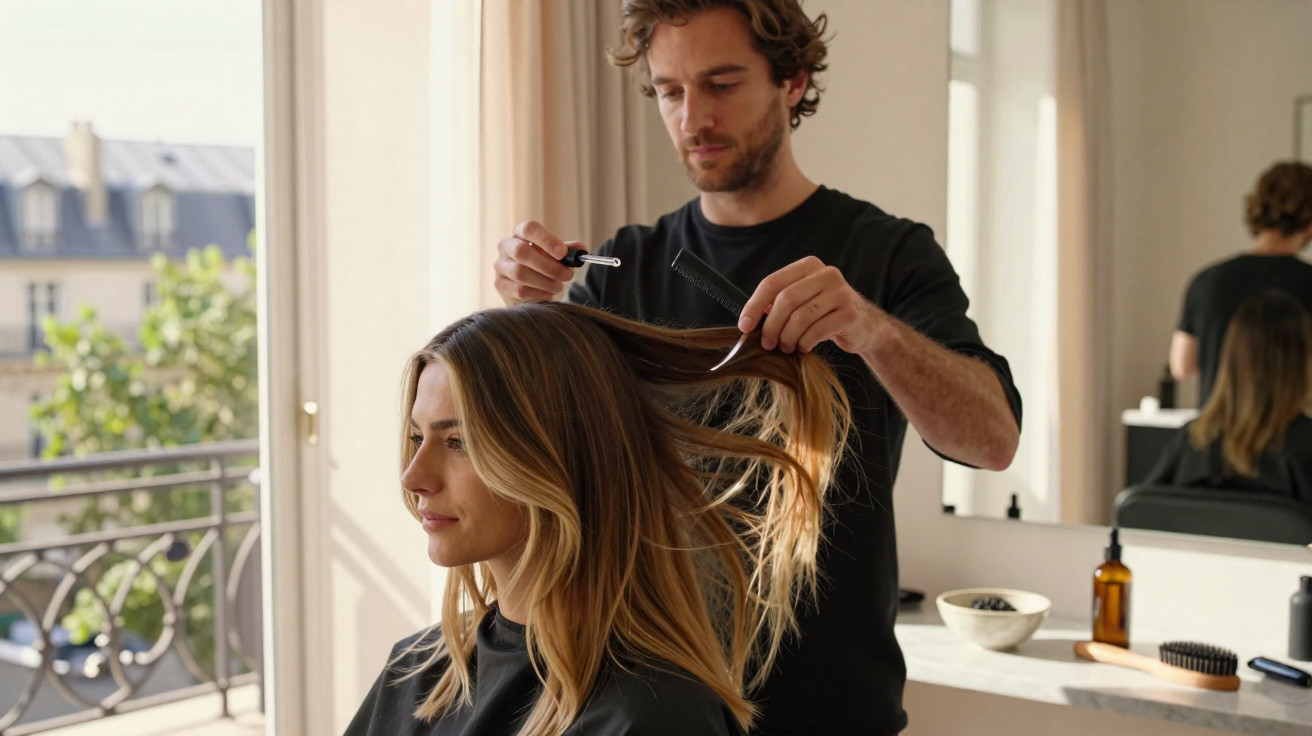
On a grey Thursday in Paris, in the short lull between two downpours, the salon door on rue de Courcelles swings open. A young woman slips inside, gripping her umbrella as though it might save her. Her roots look darker than she thought they would. Her last highlights were “just before summer”. It’s February. She checks her reflection, then flicks her eyes to the appointment book on the reception desk. The same worry written on so many faces sits on hers too: “Do I really have to come back this often?”
Behind the chair, Stéphane Macquaire smiles as if he already knows the whole story. He’s watched this moment play out countless times: the guilt, the cost, the time pressure - and the private hope that there must be a way to push appointments further apart without ending up with hair that turns yellow or looks striped.
There is.
The Paris colourist who hates “striped hair”
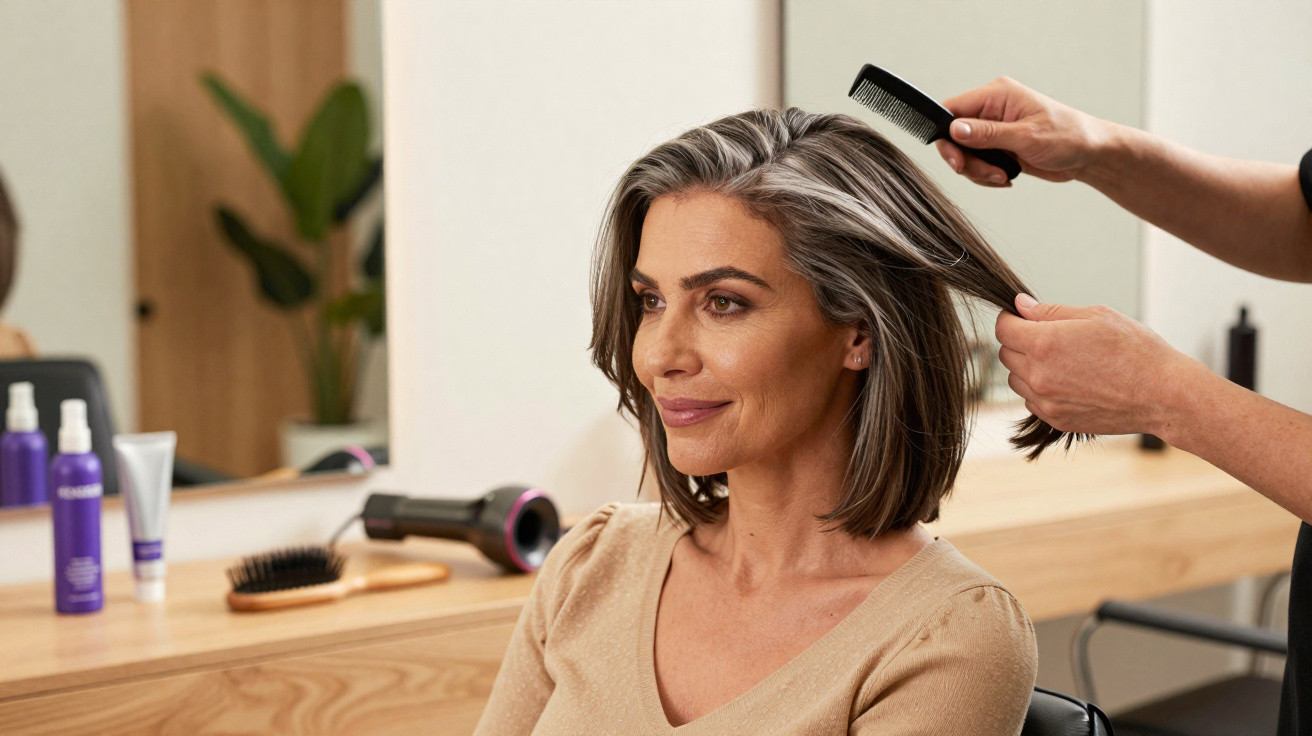
From the pavement, Stéphane’s salon doesn’t shout luxury. There’s no neon branding and no gilded armchairs - just wide windows, soft light, and the steady background hum of blow-dryers mixed with Parisian chat. Yet once you’re inside, one principle seems to govern everything: colour that grows out well. Not merely “nice when you walk out”, but still flattering at week six, week eight, week twelve.
He has a particular fondness for working women who arrive between meetings, laptop still unzipped in their bag. They sit, exhale, and admit: “I can’t keep coming every six weeks, I just can’t.” He doesn’t scoff. Instead, he tweaks the chair height, looks closely at the hairline, asks how they actually live with their hair, and then shifts the plan. Because in reality, making highlights last longer starts well before the next booking. It begins the moment you sit down and describe what your routine truly allows.
Take Léa, 36, a communications manager in the 9th arrondissement. On her first visit, her hair looked like three different chapters: white regrowth at the roots, orange through the mid-lengths, platinum at the ends. Three salons in a single year. Three approaches, three sets of promises, and no consistency. She’d concluded her “hair grows too fast”. Stéphane wasn’t convinced.
Rather than repeating full-head highlights, he moved her to a soft balayage concentrated around the face and across the top layer. Less foil, more subtlety, and a slightly deeper tone close to the roots. Two hours later she walked out saying: “I don’t even see where my natural color starts.” She didn’t feel the urge to return for four months - not because she was hiding anything, but because she genuinely didn’t need to. That four-month pause wasn’t luck. It was design.
Under the salon lighting, the reasoning is obvious. Highlights that demand a retouch every six weeks are often too high-contrast, too pale, and too even from root to end. Your eye catches the hard “line” where natural colour begins, and after a month that line becomes impossible to ignore. But when the colour is softened, when the roots are gently blended, and when the chosen shade sits only one or two levels lighter than the base, the border vanishes. Instead of a harsh break, you get a gradient.
Making appointments further apart isn’t about enduring bad roots for longer; it’s about creating colour that stays attractive for longer. That’s where Stéphane operates more like a planner than a simple colourist. Less can achieve more. Softer can look stronger. And the real luxury isn’t the precise blonde - it’s a schedule that fits your life.
The backstage secret: micro-adjustments and daily rituals
It starts in the consultation, with the same straight question every time: “Honestly, how often can you realistically come back?” Some answer eight weeks. Others say six months. From that point, the technique is chosen to match the rhythm: a root shadow for anyone who wants to stretch things out; fewer foils, placed a little away from the scalp; warmer, more forgiving tones for those who don’t want to pay for toners every month.
He also assesses how the hair behaves. If it’s fine and fragile, he keeps the highlights lighter and more diffused so the regrowth doesn’t announce itself. With thicker hair, he builds dimension and allows more of the natural colour to sit between foils. It’s almost like landscaping: leaving untouched areas so everything matures gracefully. That kind of planning - done in ten minutes - can easily buy you an extra four to six weeks of calm between appointments.
Then comes the part clients rarely want to hear: what happens at home. Parisian hard water, overheated flats, and everyday blow-drying steadily wear colour down. Brassiness shows up faster. Shine fades. The exact same highlights, without any care, can look “tired” after four weeks. With a small routine, they can look “fresh” for twice as long.
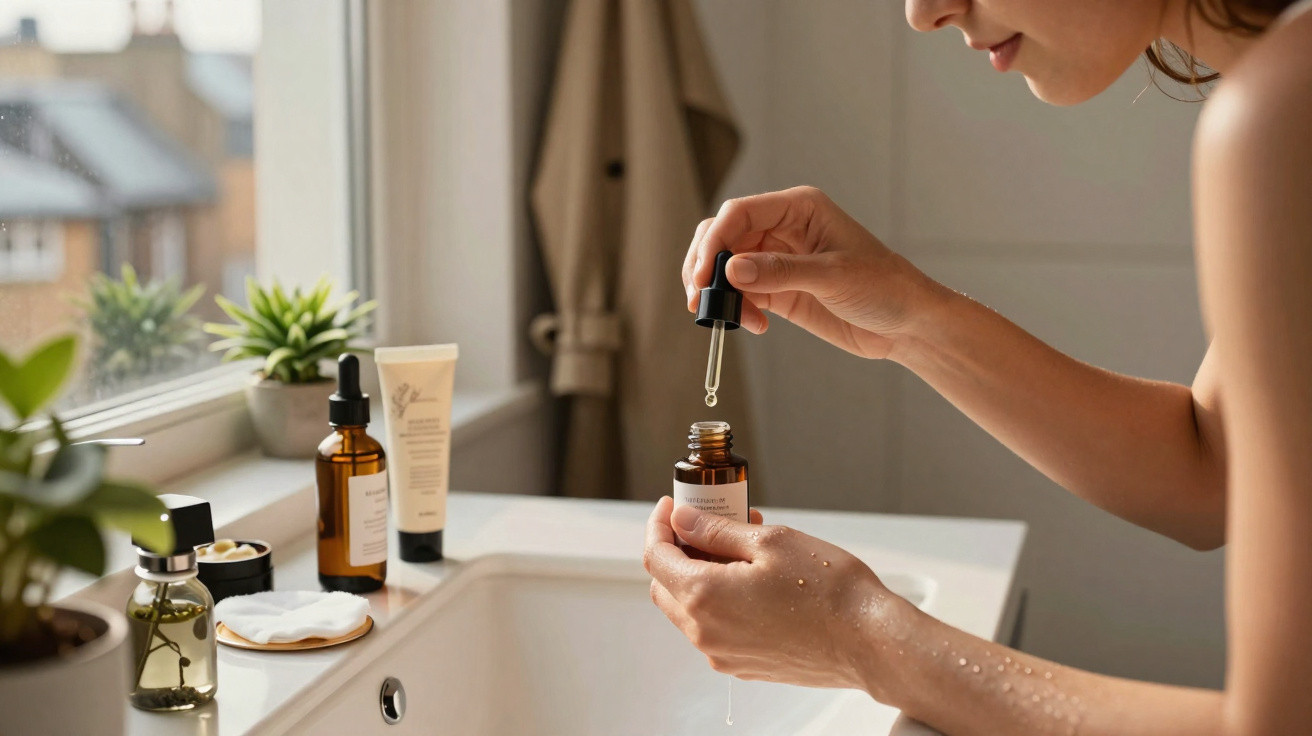
And, realistically, nobody follows a perfect regimen daily - the ten-minute mask, the cool rinse, the full spa ritual. That’s Pinterest. Real life is washing your hair at midnight because you’ve got a 9 a.m. meeting. So Stéphane pares it back: one good sulphate-free shampoo, one nourishing mask once a week, and a purple or blue shampoo every 10–15 days - not more. No lectures, no shame. Just small habits that protect the time you’ve paid for.
When he explains it, it doesn’t sound like a list of rules so much as the voice of someone who understands rushed mornings.
“Women are exhausted,” he says quietly. “I don’t want hair that demands a personal assistant. I want hair that forgives you when you skip a treatment. So I build that forgiveness into the color.”
He’ll often jot a simple “survival kit” on a scrap of paper and tuck it into the client’s bag:
- One gentle, colour-safe shampoo to slow fading
- One nourishing mask, 5 minutes once a week, no more
- One soft purple shampoo every 10–15 days to cool brassiness
- Heat protection before any blow-dryer or straightener
- A salon toner every 8–10 weeks for those who like ultra-cool blondes
Nothing excessive. Nothing that requires an entirely new bathroom shelf. Just enough to extend highlights by a month or two, without turning your shower into a laboratory.
Learning to live with hair that changes slowly
What lingers after you leave Stéphane’s chair isn’t only the shade - it’s an unfamiliar permission slip: the idea that your hair can pass through “in-between” stages without you feeling scruffy or careless. In week one it’s glassy and polished. By week four it’s softer, more lived-in. By week eight it can look like natural, sun-kissed strands. And it’s only around week twelve that you start thinking: “Okay, it’s time.”
There’s a quiet relief in that shift. Your diary stops revolving around regrowth. You no longer book emergency slots “because of a dinner” or a last-minute meeting. You learn to pull your hair into a low bun when it feels a bit flat, switch your parting, and accept that some mornings the mirror won’t reflect the same version of you that the salon lights did - and that’s perfectly fine.
For many of Stéphane’s regulars, the true trick isn’t a miracle product or some secret hand movement with a brush. It’s matching expectations to reality. Hair grows. Tones evolve. Life doesn’t pause for highlights. Once you make peace with that, spacing appointments out stops feeling like deprivation and starts feeling like a plan. You choose a pace that respects your budget, your energy, and your time. You choose a colourist who asks about your constraints before recommending a technique. After that, it’s simply nuance and patience - two things that, in Paris, often age better than a too-bright blonde.
| Key point | Detail | Value for the reader |
|---|---|---|
| Adapt technique to rhythm | Balayage, root shadow, softer contrast for those who come less often | Fewer “urgent” appointments, colour that grows out gracefully |
| Simplified home care | Gentle shampoo, weekly mask, occasional purple shampoo, heat protection | Highlights stay shiny and fresh longer, less brassiness, more control |
| Accept the in-between phase | Colour designed to stay pretty at 4, 8, 12 weeks, not just on day one | Less stress about roots, more freedom in your schedule and budget |
FAQ:
- How many weeks can I realistically stretch between highlight appointments? For most of Stéphane’s clients, the sweet spot is 10–14 weeks with a well-planned balayage or soft highlights and basic home care.
- Do I have to use purple shampoo every week? No. Every 10–15 days is often enough, otherwise hair can turn dull or slightly violet, especially if it’s porous.
- Can I stretch appointments if I like a very cool, icy blonde? Yes, but you may need a quick toner or gloss every 8–10 weeks to refresh the tone without redoing all the highlights.
- My roots bother me after only four weeks, what can I do? Ask your colourist for a softer root shadow, less contrast, or a slightly deeper blonde so the demarcation is less visible.
- Is it better to do fewer but stronger highlights to last longer? No, heavy, very light highlights grow out with a strong line. Softer, more diffused colour usually ages better and lets you wait longer between visits.

Comments
No comments yet. Be the first to comment!
Leave a Comment