
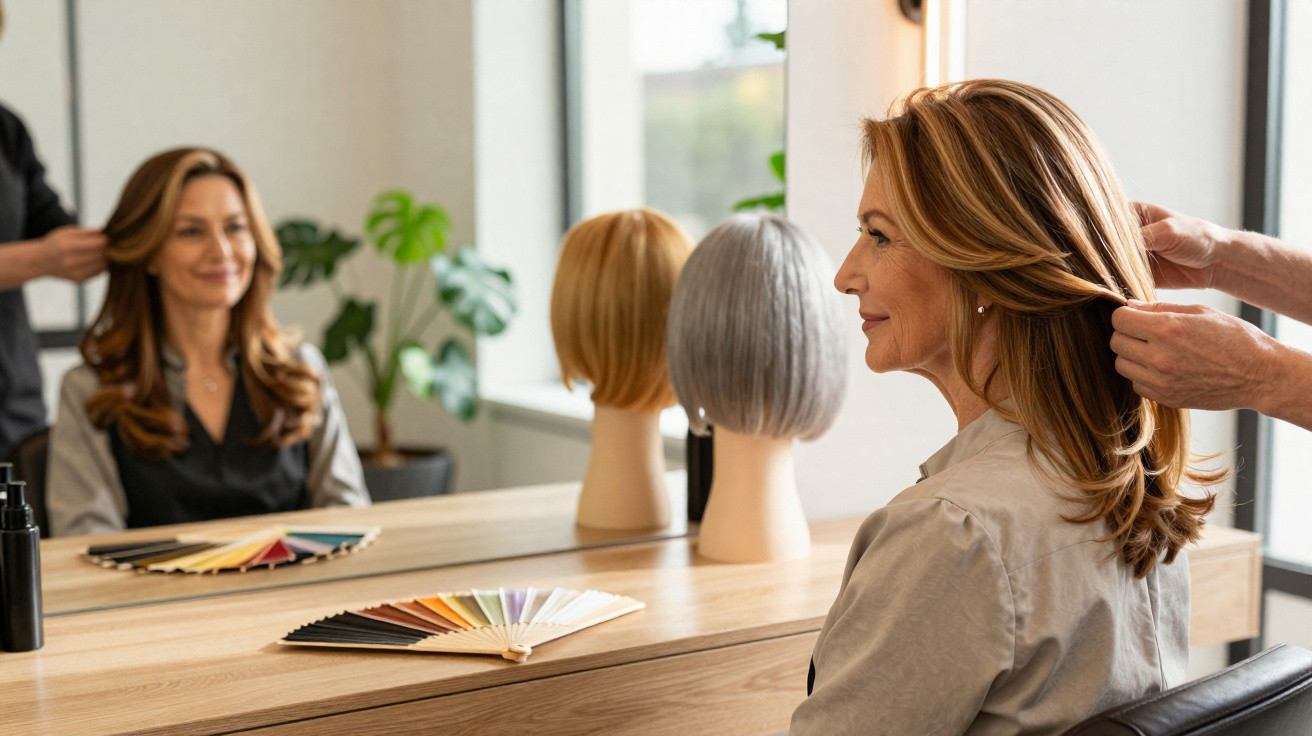
Some women want nothing more than to disguise their grey hairs after their 60th birthday - and end up, unintentionally, with a finish that makes them look noticeably older.
The right hair colour can soften the look of fine lines, make the complexion appear brighter and give the face more lift. The wrong shade, however, can mercilessly highlight every passing year. In salons, professional hairdressers see the same missteps time and again once clients hit 60 - and three colouring choices crop up especially often.
Why hair colour matters so much over 60
As the years go by, it’s not only the hair that changes, but the skin as well. The complexion often looks a little duller, facial contours can soften, and pigmentation and wrinkles become more noticeable. Shades you wore for decades can suddenly stop working.
A colour that looked fantastic at 40 can look harsh, severe and “old-fashioned” at 65 - even if the cut stays exactly the same.
On top of that, hair tends to become drier, finer and more brittle. Overly aggressive formulas or colours that are too dark can draw even more attention to these texture issues. That’s why modern colouring is less about blanket coverage and more about bringing light back towards the face.
Mistake 1: Very dark shades such as black and deep brown
A salon classic: a client who desperately wants to make white or grey hair disappear reaches for black or a very deep brown. At first glance it seems like the most reliable, full-coverage option. In practice, it often produces the opposite of what they were hoping for.
- The contrast between lighter skin and very dark hair becomes stark
- Fine lines and deeper creases around the mouth and nose appear more pronounced
- The overall expression can look stricter - sometimes even tired or grumpy
- Even slight shadows under the eyes stand out more
There’s another catch: many at-home dyes develop darker than the box suggests. Leave it on a little too long and you can quickly end up with the “helmet look” - a uniformly dark block of colour with no movement or dimension.
That’s why many stylists advise choosing a target shade that’s one level lighter than you used to wear. If you’d still prefer to stay in a darker family, these options are usually more flattering:
- Medium brown instead of black
- A warm chocolate brown with fine highlights
- Soft, cool browns with a slightly translucent finish
Over 60, going half to a full shade lighter is almost always more flattering because it visually brightens the complexion instead of overwhelming it.
Mistake 2: Extreme blondes - from brassy yellow to icy platinum
The second major blunder sits at the opposite end of the spectrum: ultra-light blondes. Many people expect heavy lightening to look softer and more youthful. That can work - but only if the tone is spot on, which becomes particularly tricky with mature hair.
A yellow tinge looks unkempt
A bright blonde with obvious yellow undertones can quickly make hair look straw-like and poorly maintained. It can come across as though the wearer hasn’t been to the hairdresser in months - even if they were there last week. Against mature skin that may be slightly redder or a little uneven, that effect can be amplified.
Ice blonde removes warmth from the face
Very pale, cool blonde - often marketed as “polar blonde” or “platinum blonde” - can drain the complexion. Small areas of redness, visible capillaries and minor unevenness tend to look stronger because the hair colour pulls warmth out of the overall look. The face can appear paler than it actually is.
At this stage, an experienced colourist usually opts for more measured changes:
- Only one to two shades lighter than the natural colour
- Gentle gold or honey tones for added depth
- Fine highlights rather than full-head bleaching
Especially for naturally fair clients, a few carefully placed light-reflecting pieces are often enough to make the face look fresher. If your make-up suddenly has to be much heavier so the colour doesn’t look “off”, the change was usually too drastic.
Mistake 3: Completely flat, one-note colour with no dimension
The third colouring choice that can quickly read as an “older” look seems, at first, fairly harmless: a single, uniform shade pulled from roots to ends, with no variation, shading or reflective tones.
Monochrome hair colours without nuance can make hair look flat, thin and lifeless - exactly what many people over 60 are trying to avoid.
Block colour like this can:
- Make the hairstyle appear flatter and finer
- Emphasise every wrinkle more strongly
- Give the face a harder outline
Even a handful of highlights, or a root area that’s just slightly deeper, can add fullness visually. That interplay of light and shadow suggests volume and shifts attention away from lines and fine creases.
Techniques hairdressers recommend over 60
Many salons favour softer methods for clients over 60 - approaches that respect the natural base and simply refine it. Commonly used techniques include:
- Balayage: Freehand highlights designed to look like sun-lightened hair
- Ombré: A gentle gradient from slightly darker roots to lighter lengths and ends
- Hairline contouring: Strategically placed lighter pieces around the face to bring certain areas forward
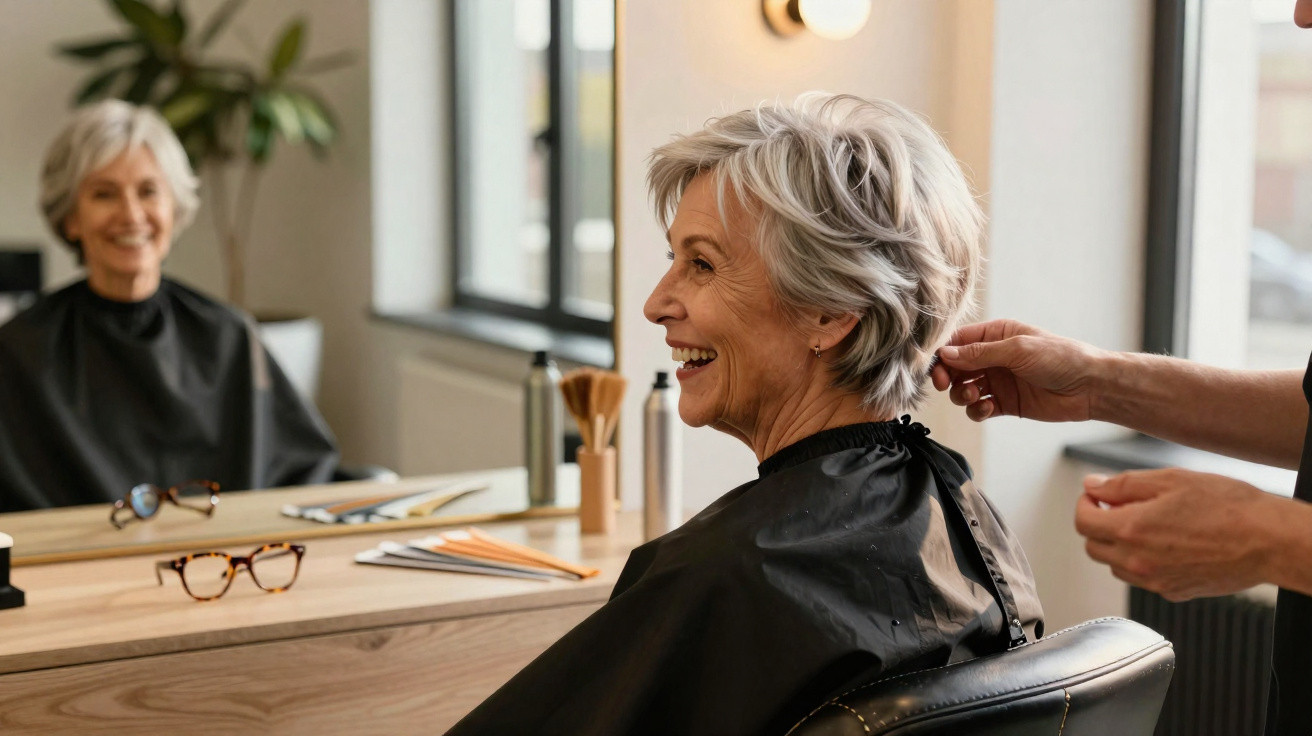
Well-kept natural grey - subtly enhanced with silvery or pearly tones - can also look far more modern than a poorly chosen dye job. Shine is the deciding factor: dull grey can look tired quickly, while glossy, well-cared-for grey can look incredibly elegant.
How women can find the right hair colour after their 60th birthday
If you’re unsure whether your current colour still suits you, these questions can help:
- Do I look tired or washed out in this colour when I’m not wearing make-up?
- Do my fine lines look more noticeable than they did before?
- Do I need much more make-up for the hair colour to “work”?
- Does my regrowth look obvious and awkward after only two weeks?
If you’re answering “yes” more than once, it’s worth discussing it in the salon. Often, a small tweak - a touch lighter, a few reflective pieces, or a different tone within the same shade family - is enough to make the face look visibly more youthful.
Care, texture, risk: What mature hair needs beyond colour
Beyond choosing the shade itself, hair condition plays a huge role. Mature hair snaps more easily, dries out faster and can take pigment unevenly. Aggressive bleaching and repeatedly colouring the full length increase the risk of split ends, breakage and a dull finish.
Useful additions alongside a colour consultation include:
- Conditioning treatments with protein and moisture before and after colouring
- Special shampoos and conditioners for coloured or grey hair
- Heat protection when blow-drying or straightening
- Regular trims to keep the colour looking fresh
It’s also important not to cling to an idea of “your” hair colour from 20 years ago. Skin tone shifts, brows can fade, and even eye colour can appear slightly different. A subtly adjusted shade that accounts for these changes often suits who you are now far better.
If you embrace that process, the right colour, shine and well-placed dimension can take years off your face - without anything drastic, simply by choosing the right hair colour over 60.

Comments
No comments yet. Be the first to comment!
Leave a Comment