
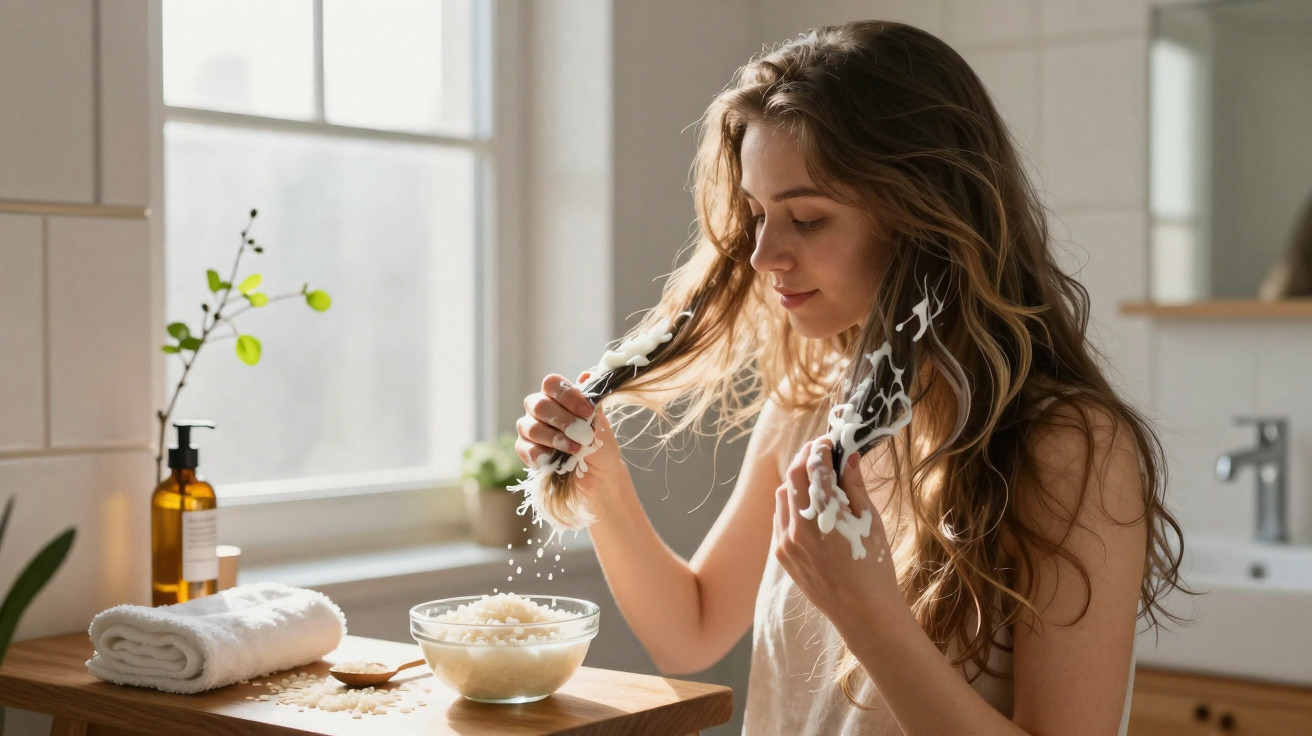
Many people, at this time of year, automatically reach for pricey salon treatments or the latest luxury brands. Yet a simple cupboard staple can often deliver a similar result - for pennies per use. A quick mask mixture based on rice is said to give dull hair renewed bounce and visible shine. But what is the idea behind it, how do you make it properly, and what matters most when you apply it?
Why our hair looks so worn out after winter
After months of dry indoor heating and biting wind, the hair fibre takes a real hit. Scarves and hats constantly rub against the lengths, the cuticle becomes rougher, and moisture is lost. The end result: hair can look flat and lacklustre, go static, and snap more easily.
- Central heating dries out hair and the scalp
- Cold weather narrows blood vessels, so the hair root is supplied less well
- Friction from hats, scarves and roll necks damages the cuticle layer
- More frequent blow-drying increases dryness
If you then lean heavily on products packed with silicones, you often only hide the problem for a short time. The surface may feel smoother, but under that coating the fibre can remain fragile.
Rice as a beauty classic: what’s behind the trend
Rice water and rice paste have long been used in parts of Asia as a care ritual for long, strong-looking hair. The perceived benefit mainly comes down to two ingredients: starch (the rice flour dissolved in the water or bound in the paste) and inositol, a vitamin-like substance from the B group.
"Rice starch settles over each hair like a fine veil, smooths the surface and helps light reflect more strongly."
A smoother cuticle doesn’t just feel silkier - it also looks shinier. Inositol can also penetrate the hair fibre and attach itself to the keratin structure. Studies indicate that it remains in the hair even after rinsing. It may:
- improve the elasticity of the hair fibre
- reduce breakage and split ends
- increase resistance to mechanical stress
In effect, it can echo aspects of premium repair treatments - just using a very simple starting ingredient.
How to mix a rice hair mask using kitchen ingredients
You only need a handful of easy-to-find ingredients for the basic blend. What really matters is getting the texture right, so it spreads evenly and rinses out without a struggle.
Ingredients for one use
- about 100 g cooked, cooled white rice (slightly sticky is ideal)
- 2 tablespoons of almond oil or, alternatively, olive oil
- roughly half a glass of rice cooking water, or lukewarm water as needed
If your scalp is sensitive, it’s usually better to choose a gentle, well-tolerated oil such as almond, jojoba or rice bran oil.
Step-by-step instructions
- Cook the rice as normal. Don’t pour all the water away - set some of the cooking water aside.
- Let the cooked rice cool completely, then transfer it to a tall container or a blender.
- Add the oil and blend thoroughly until you get a pale, creamy mixture.
- If the texture stays too thick or grainy, add cooking water or lukewarm water little by little.
- Keep blending until there are genuinely no rice particles left - you’re aiming for a smooth, pudding-like paste.
"The more uniform the paste, the more comfortably it spreads - and the more easily it disappears from the lengths when you rinse it out."
Applying it properly: how to get the most from the rice mix on dull hair
The rice mixture tends to work best when hair isn’t completely dry, but also not soaking wet. Slightly damp lengths lift the cuticle a touch, without watering the mask down too much.
Application on the head
- Wash your hair, or at least wet it thoroughly, then squeeze it out well with a towel.
- Work the rice mask into the lengths section by section, focusing on the mid-lengths and ends.
- Treat the healthier roots more sparingly so the hair doesn’t feel weighed down there.
- Twist the hair loosely and wrap it in a towel or a shower cap.
- Leave it on for 20 to 30 minutes; if the lengths are very damaged, 40 minutes is also possible.
The warmth under a towel or cap acts like a mini sauna effect: the active ingredients can slip into the fibre more easily, and the oil spreads more evenly.
The right way to rinse it out
Rinsing thoroughly is what stops the hair feeling dull or sticky afterwards. Do it like this:
- rinse with plenty of lukewarm water, gently massaging through the lengths
- keep going until the water runs clear and you can’t see any milky streaks
- then use a mild shampoo, ideally without harsh sulphates
- optionally apply a lightweight, low-silicone conditioner to the ends
Once dry, many people find the lengths feel denser, smoother and a little heavier, without going limp. Shine shows up best if you let hair air-dry, or if you style using a moderate blow-dry temperature.
How often the rice mask is worth doing - and who it suits
For most people, using it once or twice a month is enough to strengthen dull lengths. If your hair is heavily stressed - lots of heat styling, bleaching, frequent colouring - you can use the mixture weekly and then reduce the frequency again after a few weeks.
It can be especially useful for:
- fine hair prone to split ends and breakage
- mid-lengths to ends that are mildly to moderately dry, without major scalp issues
- waves and curls that have lost definition and shine
Very oily roots or a scalp that greases up quickly can be sensitive to oil-based care. In that case, apply only to the very bottom lengths or reduce the amount of oil in the recipe.
More than cosmetics: what really gives hair lasting strength
No mask recipe in the world can fully cancel out a consistently unhealthy lifestyle. Keratin - the building material of hair and nails - is produced inside the body. To do that, your system needs both raw materials and proper rest.
Nutrition for stronger hair fibres
Hair roots respond slowly, but clearly, to what’s on your plate day after day. Among the key factors for sturdier fibres are:
- Protein (for example from eggs, pulses, fish, dairy)
- Iron (for example from red meat, lentils, oats)
- Zinc (for example from nuts, seeds, wholegrains)
- B vitamins (for example from wholegrains, green vegetables, yeast)
- Omega-3 fatty acids (for example from oily sea fish or linseed oil)
If you diet frequently or regularly skip meals, you may notice hair becoming finer and duller over time. Even a slightly more considered eating pattern can make a noticeable difference.
Stress, sleep and their quiet effect on your hair
Long-term stress pushes up cortisol levels. That hormonal environment can disrupt the hair cycle, leading to finer strands and less shine. At the same time, when sleep is poor, the body rebuilds less consistently and repairs more slowly.
Small routines can help: consistent bedtimes, brief breaks during the day, and gentle movement such as walking or yoga. Better scalp circulation supplies hair roots with more nutrients - and after a few months, it shows.
Risks, limits and smart combinations for the rice trick
In everyday use, the rice mixture is generally considered well tolerated. If you’re prone to allergies, patch-test a small amount of the paste in the crook of your elbow first. If your skin doesn’t react, using it is usually straightforward.
A few things are still worth bearing in mind:
- Using very oily masks too often can weigh down fine hair.
- If too much rice residue stays in the hair, styling products may spread less evenly.
- Very porous, heavily bleached lengths may, alongside rice, occasionally need deeply hydrating treatments with glycerin, aloe vera or panthenol.
Many people pair the rice mask with a simple scalp routine: briefly massage the scalp before washing, either with your fingertips or a soft massage brush. This encourages circulation and can support how well caring ingredients from shampoo and conditioner do their job.
If you treat the whole process like a small wellness ritual - calm music, warm towels, maybe a cup of tea while it’s working - you may find it lifts not just your hair, but your mood as well. And it’s precisely this blend of targeted care, inner calm and a touch of kitchen chemistry that creates what many are after: a lively, healthy shine instead of tired winter hair.


Comments
No comments yet. Be the first to comment!
Leave a Comment