
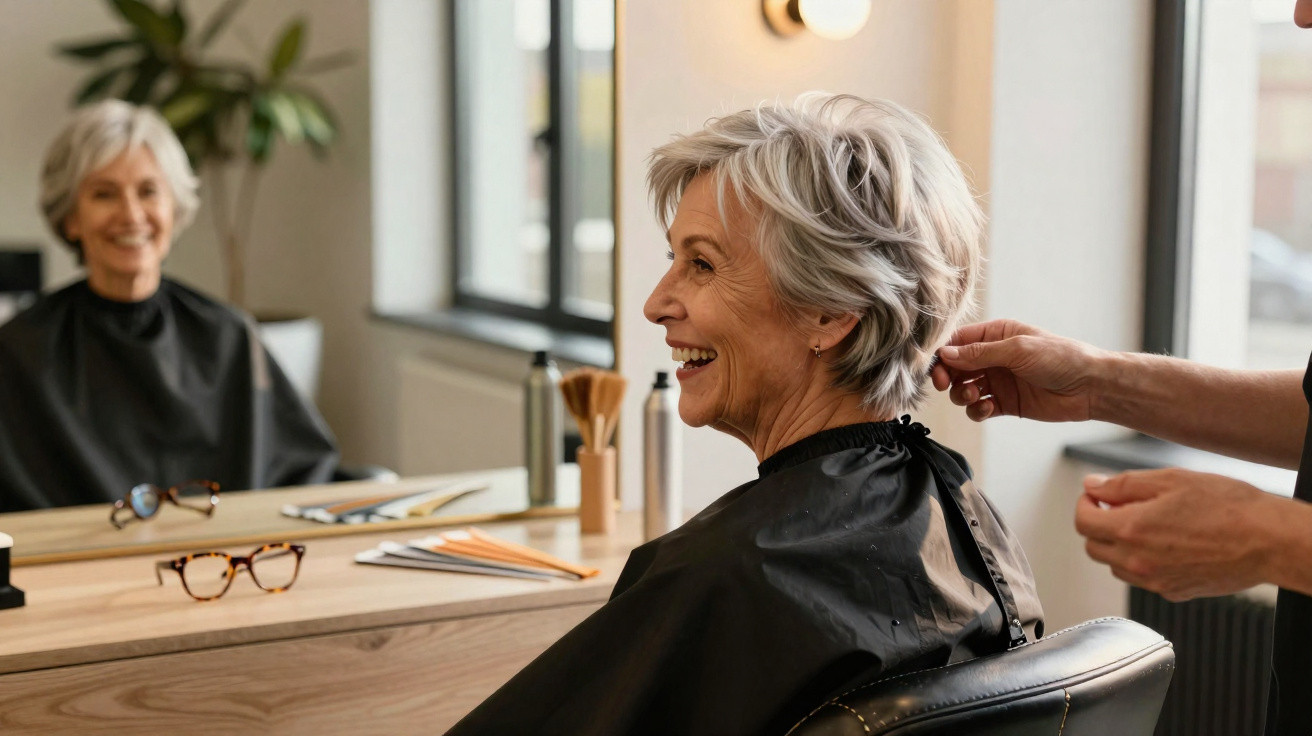
With the first warm days of the year, many women want a clean break: less fuss, more lightness, but without an “old-lady hairstyle”. That is exactly where a new trend from professional salons comes in: the so-called trixie cut. It’s a short haircut that nods to the Pixie, but updates it with intent - and is designed with the needs of more mature hair in mind.
What the trixie cut is really about
The trixie cut originated in TONI&GUY salons and is closely associated with stylist Cos Sakkas. His approach blends two ideas: the familiar Pixie shape and a contemporary method known as the “Transient cut”. The result is a short style that feels soft, yet still holds a defined silhouette.
Compared with a classic Pixie, the trixie cut is left slightly longer overall. The ends are heavily texturised; instead of stopping in blunt lines, the lengths taper out gently into feathered edges. Around the face and cheekbones, more hair is deliberately retained, while the nape is kept soft rather than closely shaved.
The trixie cut is a short, textured cut that creates volume in the right places and visually lifts the face - especially with fine, grey or white hair.
Because it plays with varied lengths and layering, the style gains air and movement. This “airy” quality is what sets it apart from many compact short cuts that can quickly look severe.
Why the trixie cut can look so much younger from 70 onwards
From around 70, hair often changes noticeably. It tends to become finer and, in many cases, more fragile. Volume can thin out in particular at the crown and temples, while facial contours generally soften. This is precisely the point at which the trixie cut proves its strength.
Targeted volume instead of a helmet-like shape
The layering is focused mainly on the top of the head. Hair in this area is cut in a way that makes it easier to lift and encourage upward movement. That helps avoid flat roots that can make the face look tired. With a small amount of texture spray, hair can appear fuller - without needing lots of product.
- More fullness at the crown, where hair often starts to thin
- Soft, layered pieces at the temples to disguise sparse areas
- A gentle nape line that makes the back of the head look rounder
This gives the overall look more life and less harshness, even when the hair is completely grey or white.
A subtle mini-lift effect for the face
There’s another visual advantage: the pieces around the cheekbones are placed to frame the face. Features can look more defined, while attention is drawn away from forehead lines or deeper creases around the nose.
The lightly feathered ends also catch and reflect light differently from blunt edges. On white or silver-grey hair, this can create a built-in “glow”. That brightness around the face can read like a gentle lifting effect - even without make-up.
Well-cut, soft contours draw the eye to the eyes and cheekbones rather than to fine lines or areas that have started to sag.
How to explain the trixie cut to your hairdresser in spring 2026
Many salons already recognise the term “trixie cut”, but not all of them do. It helps enormously to be clear during the consultation. Rather than relying on a trend name alone, describe how you want the haircut to look and feel.
Key points to cover in the salon
- Say you want a longer, more softly cut version of a Pixie.
- Emphasise that the nape should not be shaved; it should taper out softly and naturally.
- Ask for extra length in the pieces around the face and cheekbones.
- Mention glasses or a hearing aid so the shape around the ear sits comfortably.
- Explain whether your style leans more elegant and understated or more relaxed and edgy.
A photo on your phone can help - especially one showing a woman with grey or white hair, not only a very young model. That way, the stylist can immediately see the direction you mean.
Everyday styling: minimal effort, strong impact
One of the trixie cut’s biggest advantages is how quickly it can be styled. It’s not meant to sit perfectly; it should look lightly tousled and alive. That suits mature hair well, as it often has its own distinctive fall.
| Step | Time | Effect |
|---|---|---|
| Towel-dry | 1–2 minutes | Removes moisture while keeping natural texture |
| Texture spray or a lightweight cream | 1 minute | Adds grip, highlights layers and pieces |
| “Scrunch” into shape using your fingers | 2 minutes | Looser, more youthful finish - no “helmet” |
If you like, you can blow-dry the fringe slightly to one side or simply lift it with your hands. The goal isn’t a freshly straightened look, but something that feels naturally grown - just better structured.
The trixie cut relies on movement. The less you brush and the more you work with your fingers, the more modern the result looks.
How often should the trixie cut be trimmed?
To keep the shape crisp, booking an appointment every five to seven weeks is recommended. That may sound frequent, but it can save time in the mornings because the style remains easy to manage.
If you leave it longer between cuts, the shape can start to “droop” downwards. The face-framing pieces may then look tired, as they become too long and can cover the eyes. Often, a quick check-up appointment - where only the outlines and nape are refreshed - is enough.
Who is the trixie cut actually for?
The trixie cut is particularly appealing if the following apply:
- Hair is fine and quickly looks flat or lacking in strength.
- Hair colour is white, grey, or heavily lightened.
- Longer styles feel heavy or too high-maintenance.
- You want a change, but not something that feels too extreme.
With very curly hair, the cut can be adapted. Hairdressers often work dry in these cases, so the curl’s bounce is taken into account. The overall style stays similar; the lines are simply shaped a little rounder.
What does “Transient cut” actually mean?
This term appears again and again in connection with the trixie cut and can sound technical at first. Essentially, “Transient” describes an approach that keeps transitions extremely soft. Instead of hard edges, you get flowing, almost invisible layers.
For more mature hair, that’s useful because it avoids obvious “breaks” in the shape. The cut grows out more naturally, and the result looks less often “over-styled”. It’s exactly this sense of lightness that can make many women appear younger - without feeling as though they are dressing up as someone else.
Risks if the cut isn’t executed well
As with any trend, the result depends heavily on the salon’s technical skill. A few common mistakes can make the trixie cut fall flat:
- The nape is cut too short or shaved, making the style look harsh.
- The sections around the face are left too heavy and drag the features down.
- There’s not enough texture; the hair sits like a bowl and loses all lightness.
One practical tip: for your first appointment, book a consultation slot with extra time. That gives the stylist space to ask about your daily routine, any medication that may affect hair, and how willing you are to use styling products.
How to pair the trixie cut with colour and glasses
Many women over 70 now wear their natural colour with confidence - whether snow-white or a blended grey. The trixie cut supports that choice. Thanks to the moving, textured ends, you can add a few lighter pieces without the style looking “striped”. A subtle shine spray or a pearly toner can also give white hair extra radiance.
If you wear glasses, include the frames in the plan. Bold, colourful frames often suit a calmer, more elegant version of the trixie cut. Fine metal arms, on the other hand, work beautifully with a wilder, more “messy” interpretation. Ideally, put your glasses on during the consultation so the cut can be tailored precisely around them.
Ultimately, the trixie cut brings together three things many women over 70 are looking for: a modern feel, less day-to-day effort, and a haircut that plays to white or grey hair rather than trying to hide it. If you’re ready to take the classic Pixie one step further, it offers a surprisingly fresh option for spring 2026.




Comments
No comments yet. Be the first to comment!
Leave a Comment