
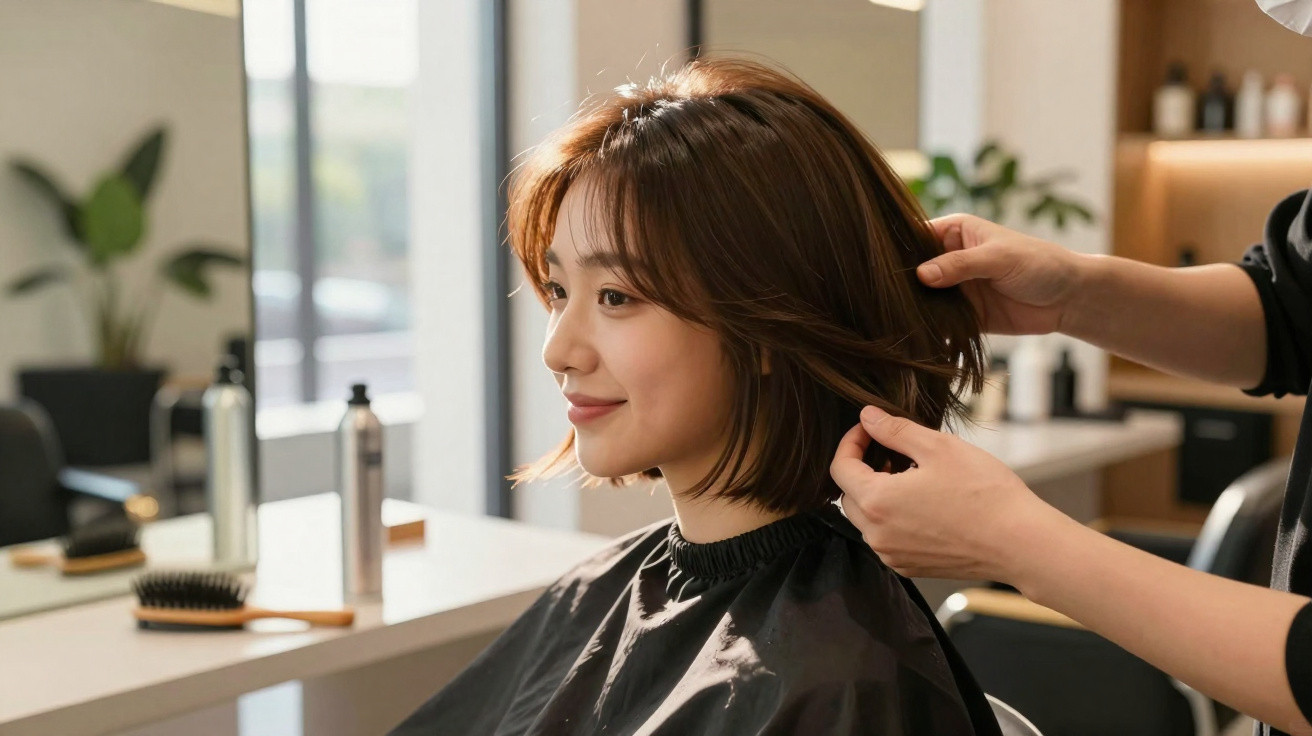
International beauty magazines are currently buzzing about a bob that visually sculpts the face - without relying on powder, bronzer or highlighter. Known as the Contour Bob or Lazy Bob, it’s designed to deliver a fresh, awake look while still feeling polished and surprisingly low-maintenance - exactly what many people want in a fast-paced day-to-day.
What’s really behind the “Contour Bob”
At its heart, the Contour Bob is a classic bob, usually sitting anywhere from chin length to collarbone length. The point isn’t an ultra-edgy outline; it’s the precision tailoring. The front sections are shaped to emphasise the cheekbones and jawline in a very deliberate way.
"The cut uses the contours of the face like a make-up artist - just with hair instead of brushes."
Typically, the length moves between a neat chin-skimming bob and a longer Lob that lands around the collarbones. The top layer is often lightly layered, with the front commonly left just a touch longer than the back. That’s what creates the “expensive”, calm silhouette many people associate with quiet luxury.
Why the hairstyle is considered “lazy”
Plenty of trend-led cuts only look great if you spend 20 minutes each morning with a round brush, straighteners and several styling products. The Contour Bob has effectively emerged as the opposite. It’s meant to work in real life - without emptying half the bathroom cabinet.
- The basic shape is designed to sit well so the hair naturally falls into place.
- The front pieces frame the face without needing meticulous blow-drying.
- A light product is enough: often a small amount of mousse or a styling cream does the job.
People who wear the cut often say a quick rough-dry upside down - or air-drying plus a few quick adjustments - is more than enough. Hence the nickname Lazy Bob: low effort in terms of time, not in terms of the final result.
How the bob shapes cheekbones and the jawline
The impact is similar to make-up contouring: highlights and shadows are used to bring structure forward. With the Contour Bob, that job is done by the way the lengths transition.
The “face-framing” strand trick
Rather than a blunt, straight edge around the face, the front strands are cut so they finish somewhere between the cheekbones and the chin. This helps the proportions look more balanced:
- Cheekbones appear more defined because the strands begin just underneath them.
- A stronger jawline looks softer, as the hair gently skims and breaks it up.
- Rounder faces gain more structure and often appear slimmer.
Many stylists rely on subtle layering and Point Cutting - fine snips into the ends - to avoid harsh lines. This adds movement and prevents the overly solid “helmet” look that a very blunt bob can create.
Which face shapes suit the cut?
One big advantage of the Contour Bob is how adaptable it is, which is why it suits almost any face shape. The key is making small tweaks to length and layering.
| Face shape | Recommended option |
|---|---|
| Round | Slightly longer at the front, avoid overly short layers, and start the framing pieces around chin level. |
| Oval | Very flexible; both chin length and collarbone length work well, ideally with gentle waves. |
| Square | Soft layers around the jawline, plus waves or loose curls to take the edge off strong angles. |
| Heart-shaped | More volume through the lower section to balance a narrower chin; keep any fringe area relaxed rather than heavy. |
Many hairdressers like to cut the Contour Bob on dry hair. That way they can see how each section naturally falls and adjust it millimetre by millimetre. It can make a noticeable difference, particularly with curls or very thick hair.
How to brief your hairdresser in the salon
Walking into a salon with a vague “something trendy” is a recipe for crossed wires. A few clear, specific points make a huge difference.
"The right words in the consultation often decide whether you leave the salon with a wow effect - or frustrated."
These are the requests you can state clearly:
- A bob that sits from the chin to, at most, collarbone length.
- Slightly longer at the front than the back, for movement and elegance.
- Soft, face-framing pieces that sit around the cheekbones and jawline.
- Fine layering - no harsh, blocky line; aim for a fluid shape.
- Check and refine the final result on dry hair, so length and volume can be matched precisely.
Bringing photos makes communication even easier. One important detail: choose images of people with similar hair texture and a similar face shape - not only celebrities with a completely different starting point.
Styling tips: how to get the maximum effect
Even though the cut is designed to be low-effort, a few small tweaks can make the sculpting effect stronger. Many professionals favour a lightweight mousse or an airy volumising foam that adds body without weighing the hair down.
Everyday routine
- After washing: on towel-dried hair, work a small amount of mousse through mid-lengths and ends.
- Drying: either rough-dry upside down for extra fullness, or use a brush to turn the hair slightly inwards - especially at the front.
- Finish: scrunch and loosen with your fingers so the contours stay soft and don’t look overly “done”.
If you have natural curls or loose waves, a diffuser works well. The Contour Bob can actually benefit from texture, because it reinforces the shaping effect.
Is it suitable for fine, thick and curly hair?
Many trend reports highlight that the cut can suit almost any hair type - as long as your hairdresser adjusts the technique accordingly.
- Fine hair: choose gentle layering rather than heavy thinning, use lightweight products and avoid rich oils. The front pieces shouldn’t be left too long, or everything can quickly drop flat.
- Thick hair: add more texture and thin strategically through the lower sections so the bob doesn’t look overly bulky. Point Cutting is especially valuable here.
- Curls and waves: cut dry so bounce and curl pattern are taken into account. Keep the face-framing pieces a little longer, as they often spring up in everyday wear.
Care, longevity and potential pitfalls
To keep the Contour Bob looking sharp, regular trims are worth it. Depending on how quickly your hair grows, the interval is usually six to ten weeks. Leave it too long and the front pieces can drift into a length that stops flattering the face.
If you love very layered cuts or wear dramatic colour transitions, it’s worth discussing with your hairdresser how everything will work together. Too many competing effects - heavy layers, strong Balayage, a statement fringe - can undermine the bob’s clean, calm feel.
One more consideration: the Contour Bob relies on precision. A rushed five-minute snip won’t cut it. Ideally, your hairdresser takes time to check the outline carefully and factor in your expressions, your glasses, and even the length of your neck.
Why this cut fits everyday life in 2026 so well
Right now, many people want styles that look groomed, high-quality and “put together” - without relying on loads of product or perfectionism. Overloaded Instagram hair trends with ten styling steps have lost some of their appeal. A smart, well-placed bob can tick several boxes at once:
- It saves time in the bathroom each morning.
- It looks just as appropriate in the office as it does at dinner.
- It can be switched up quickly with small changes - a bit more wave, a side parting.
The Contour Bob meets that desire for understated impact: you don’t look “heavily styled”, but somehow everything about the face looks more in balance. If you’ve been battling contour palettes and still never quite got the effect you wanted, a great salon appointment may deliver more than any new make-up routine.






Comments
No comments yet. Be the first to comment!
Leave a Comment