
Trend looks with ultra-thin or bleached brows are all over TikTok and Instagram. In everyday life, though, plenty of people want their natural, fuller brow line back - the kind that properly frames the eyes again. The good news: you don’t need to book a salon appointment or commit to permanent make-up. With a few consistent evening habits, your brow area can visibly recover.
Why so many people suddenly want full brows again
Beauty trends run in circles. First, broad, fluffy eyebrows in the style of "Soap Brows" were the ideal; then feeds filled up with ultra-fine lines and almost invisible, lightened arches. Celebrities and influencers now show up with nearly colourless brows, which changes the whole face at once - striking in photos, but often difficult to wear day to day.
If you reached for tweezers in the 2000s or during a TikTok hype cycle, you’ll know the downside: hairs don’t always grow back as densely, gaps remain, and the brow can look uneven and fragile. On top of that, as we age, hair growth tends to slow down and the hairs themselves often become finer.
"The mix of old over-plucking mistakes, new trends and the natural ageing process means many people are dreaming of a strong - but still natural - brow line again."
Rather than changing shape every time fashion shifts, it’s worth taking a step back and making a plan: what level of density genuinely suits your face? Not everyone needs an XXL brow; sometimes a slightly fuller, more balanced line is enough to give the eyes more presence.
Start with the basics: what density suits your face?
Before you get into specific techniques, take a calm look at your current brow shape. Stand in front of a mirror in daylight and give yourself five minutes:
- How does your natural brow line look without make-up?
- Where are there true gaps, and where is it simply minor unevenness?
- How expressive is your face - do you need softer, more flexible brows rather than sharply drawn blocks?
- How light or dark are your brows compared with the hair on your head?
A lot of people realise the "problem area" is smaller than they assumed. Often it’s just an overly sharp arch, a brow that starts too far in, or a tail that’s thinned out. That’s exactly what the next four steps target.
A longer break from tweezers: let them grow instead of constantly shaping
The most important step - and also the toughest - is to leave your brows alone for a while. Truly. No daily touch-ups and no "I’ll just quickly remove that one hair" moments.
Skin and hair follicles need several weeks - sometimes two to three months - to rebuild a more stable structure. Constant plucking irritates the root, and at some point it may stop producing hair altogether, meaning it doesn’t come back.
"A tweezing break of at least six to eight weeks gives the roots a chance to recover and push through new hairs."
What you can do during this time:
- Only remove hairs that are clearly far outside your natural line, for example on the upper eyelid area or in the centre of the forehead.
- Skip magnifying mirrors - they encourage perfectionism and over-plucking.
- Limit check-ins to two fixed days per month instead of "correcting" every evening.
If you feel unsure, you can book a brow expert once to map out a basic shape, then let everything grow back in peacefully. That way you don’t feel lost while the hairs return.
Daily brushing: more fullness through a simple routine
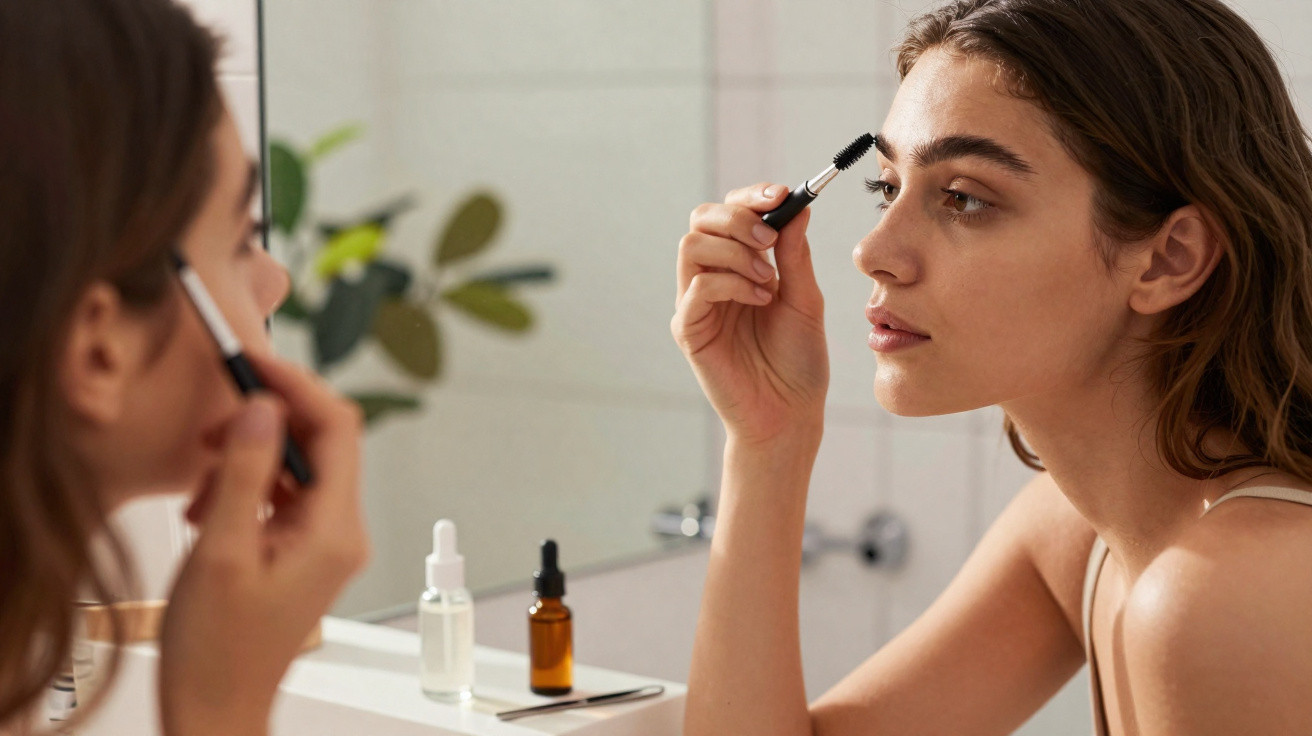
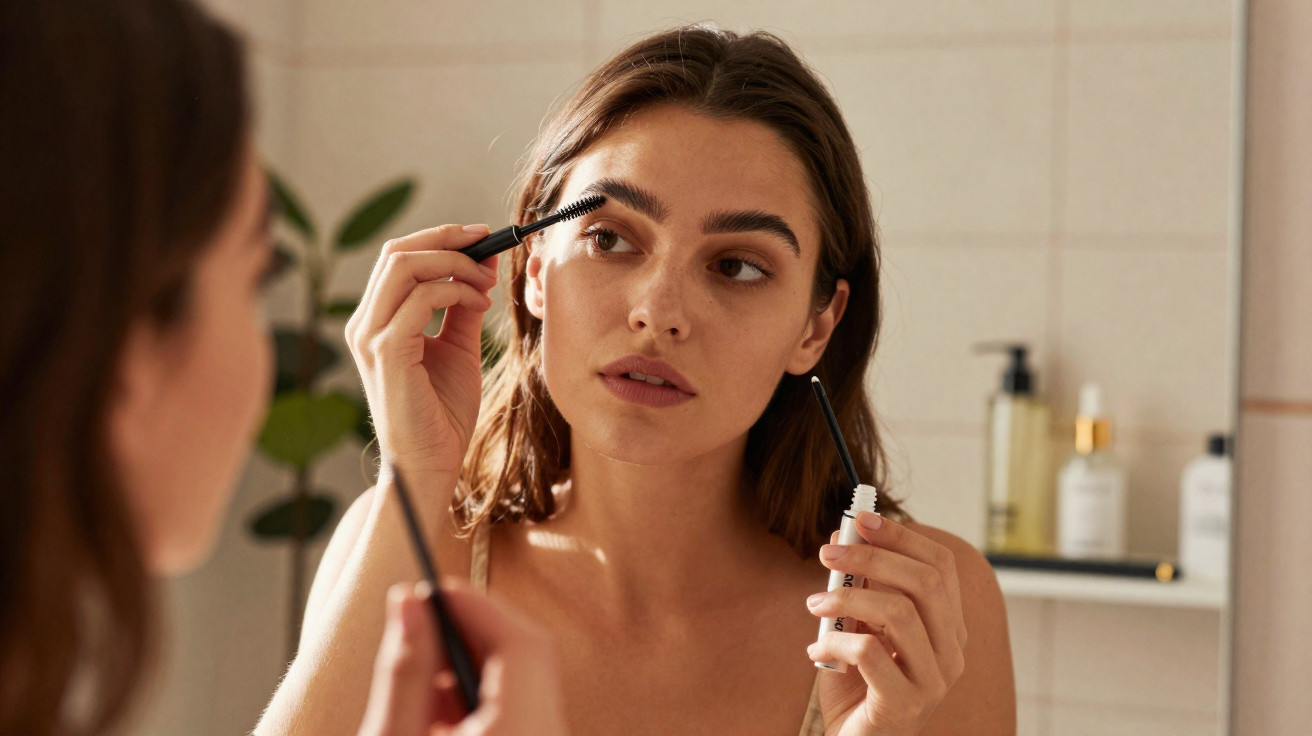
The second lever gives an immediate visual boost and takes around 30 seconds: brush your brows every evening with a clean spoolie (like an old mascara wand - thoroughly washed) or a dedicated brow brush/comb.
How to brush correctly
- First, gently comb the brows upwards from root to tip.
- Then lay the hairs slightly diagonally outwards, following the natural direction of growth.
- Avoid heavy pressure - treat it more like a light massage.
These movements encourage microcirculation in the skin. Better blood flow means improved nutrient delivery to the root. At the same time, you smooth down flyaways and give the brow line more definition straight away - even without make-up.
"When you brush consistently, brows can look more orderly and fuller after just a few days, even if hardly any new hair has grown yet."
A practical bonus: brushing makes it much easier to see where the genuine gaps are - and where you may have simply mistaken texture for missing hairs.
Evening care: targeted serums and oils for stronger brows
Skincare doesn’t stop at the forehead. If you want stronger brows, weave them into your night-time routine. Dedicated brow serums and simple oils can help nourish the hair structure and make the root more resilient.
Which ingredients make sense
- Peptides: signalling molecules that can support hair growth and strengthen the root.
- Panthenol and biotin: condition the hair fibre, improving shine and softness.
- Plant oils such as castor, jojoba or almond oil: coat the hair, reduce dryness and make brows feel more supple.
What matters most isn’t a "miracle" promise - it’s consistency. A gentle serum or oil applied every night on clean, dry skin will do more over time than an expensive product you forget after three days.
Evening application tips:
- Remove make-up thoroughly, including between the hairs.
- Use a cotton bud or a fine brush to apply a small amount directly along the brow line.
- Massage in softly with a fingertip for about 30 seconds per side.
"Many people notice the first subtle changes after four to six weeks - more shine, fewer brittle hairs, and a few new hairs appearing around the edges."
If your skin is sensitive, avoid fragrance and harsh preservatives in brow products, and reduce use immediately if you notice irritation.
Make-up trick: draw hair by hair instead of painting a block
While you’re waiting for real density to return, make-up can help you through the in-between stage. Instead of drawing thick blocks, one technique looks especially natural: the "hair-by-hair" effect.
How the hair-by-hair look works
- Choose a very fine brow pencil or a felt-tip style liner in a shade that’s no more than one tone darker than your brows.
- Draw short, slightly curved strokes in the direction the hairs grow, weaving them between existing hairs.
- Focus on gaps rather than filling the entire brow.
- Set everything with a lightly tinted gel that lifts hairs and holds them in place.
"The aim isn’t to paint a new shape, but to make the existing brow look denser - like a filter in real life."
With this method you can even test trends like very thin or lightened brows without plucking or bleaching a single hair. Simply add a little more concealer around the brow line or choose a very light brow gel - and remove it all again in the evening.
How long does it take for brows to look fuller?
Eyebrows have their own growth cycle. Unlike the hair on your head, you won’t see big changes within a few days. Typical time frames:
| Time period | What realistically changes |
|---|---|
| After 1–2 weeks | More order from brushing, a more groomed look, and a few short stubbles becoming visible. |
| After 4–6 weeks | The first genuine increase in density and a clearer natural shape. |
| After 3 months | A noticeable difference compared with the starting point: gaps look smaller and the line appears more balanced. |
If you’ve plucked very aggressively for years, you’ll usually need extra patience. Some follicles may be permanently damaged, so certain areas may never return to their former density. In that case, combining care, brushing and natural-looking make-up is what helps create the appearance of a continuous brow line.
When a professional makes sense – and when it doesn’t
Even with strong DIY habits, an appointment at a brow studio can be worthwhile. A professional can quickly spot which shape suits your face and where you should stop reaching for tweezers.
Professional help can be useful, for example:
- if you’re unsure where your natural line actually sits,
- if old permanent make-up residue distorts the shape,
- if your brows have grown in very asymmetrically.
A pricey session is less useful if you’re not willing to follow the recommended waxing or tweezing break afterwards. Without consistent work at home, even the best professional shaping won’t last.
Risks, limits – and how to set realistic goals
Brows can improve, but they won’t transform into a completely new facial feature overnight. When your goals are realistic, it’s easier to stay motivated - and you’re less likely to grab tweezers in frustration.
Unnecessary risks mostly come from:
- frequent tinting with strong oxidising agents on already thin brows,
- harsh exfoliation directly over the brow area,
- uncontrolled DIY bleaching at home.
If you know you’re prone to impatient plucking, make it harder for yourself: put the tweezers in a drawer you rarely open, or deliberately leave them with a friend for a few weeks. That protects what’s slowly growing back.
With four straightforward measures - a tweezing break, daily brushing, targeted care and a natural make-up technique - brows can gradually regain fullness. What matters isn’t perfection but consistency: a few minutes each evening can be enough for your reflection to show a noticeably more harmonious, stronger brow line after a few weeks.




Comments
No comments yet. Be the first to comment!
Leave a Comment