
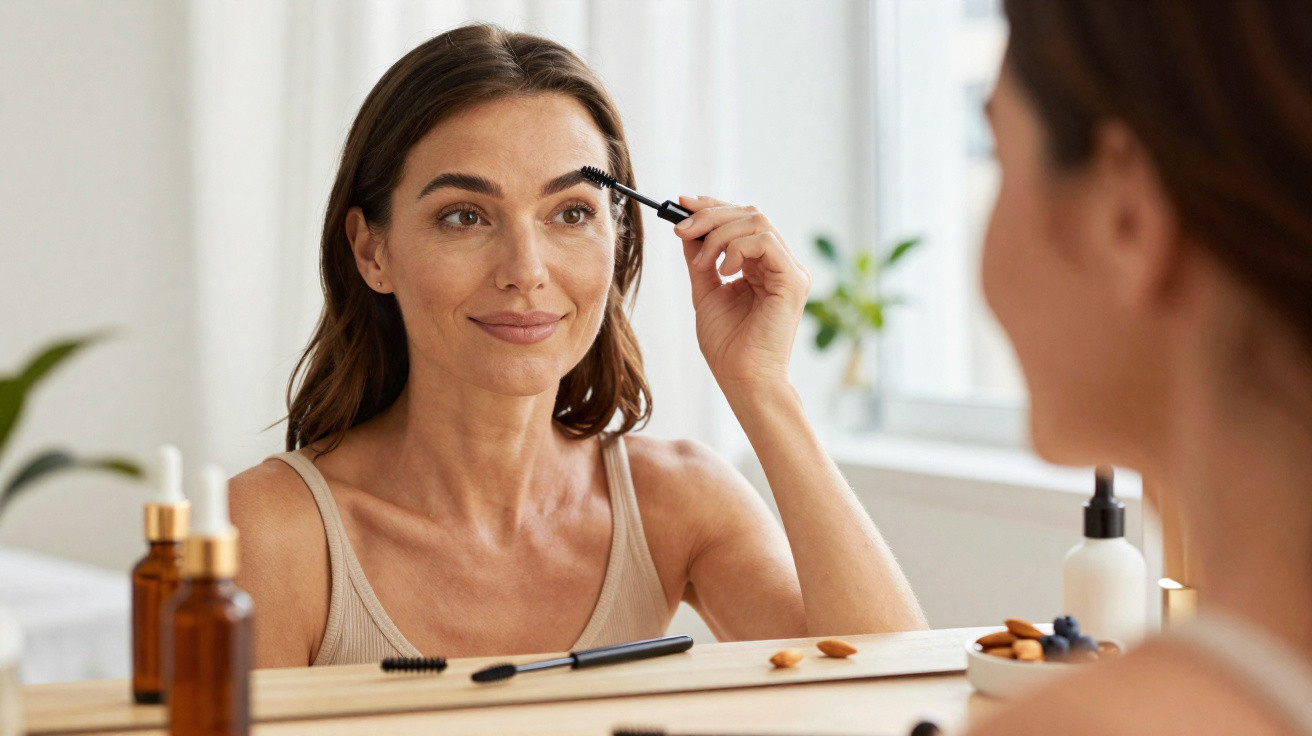
Many women catch themselves in the mirror in their mid‑50s and wonder why their eyes suddenly look tired, even when they don’t feel it.
Often, the cause isn’t wrinkles or dark circles at all, but a few centimetres higher: the eyebrows. They can become sparser, lose their shape and density, and with that a little of the face’s youthful lift. With three focused approaches-care, make-up and diet-you can noticeably soften this effect.
Why eyebrows lose fullness after 50
As the years pass, facial hair changes much like the hair on your head. Growth cycles shorten, individual hairs become finer, and gaps start to show more clearly. That’s when many people suddenly notice small “holes” along the brow line.
There are several common triggers:
- Hormonal changes during the menopause
- Oxidative stress from the sun, smoking or environmental exposure
- Past over‑plucking phases that damaged the roots
- Nutrient shortages, for example after dieting or from an unbalanced diet
“The good news: you don’t need a radical permanent fix, and you don’t have to paint your brows into dark blocks. Three well‑judged steps are often enough to make the eyes look noticeably younger.”
1. Care them like real hair: nourish your brows on purpose
The most overlooked step often starts with removing make-up. If you only take off eye make-up at night, it’s easy to leave traces of gel, powder or pencil sitting in the brows. Over time, that can dry out the hairs and irritate the skin underneath.
Clean gently, then rebuild
First, cleanse the brows thoroughly but kindly. Use an oil‑based cleanser or cleansing milk on a cotton pad, then sweep softly over the hairs until there’s no more colour coming off. With the area properly clean, the roots can respond better to care.
Next comes targeted nourishment. Particularly useful ingredients include:
- Biotin and peptides to support hair growth
- Plant oils such as castor oil, argan oil or jojoba oil
- Added hydration for the skin, such as hyaluronic acid or glycerine
Many pharmacies and high‑street chemists stock eyebrow serums built around these ingredients. In the evening, apply them with a fine brush along the brow line.
Castor oil as a natural brow booster
A familiar staple from the home medicine cupboard is enjoying a comeback: castor oil. It mainly contains fatty acids rich in ricinoleic acid, which can stimulate circulation around the hair root. That can help the hair structure appear stronger.
If you like, you can make a simple brow balm yourself:
- Melt a small amount of castor oil with a little beeswax in a bain‑marie.
- Pour into a clean jar and let it cool.
- Use a mascara spoolie to pick up only a tiny amount.
- Brush the brows upwards first, then gently outwards.
This not only conditions the hairs but also lightly sets them-without the stiff, “concrete” feel many traditional gels can leave behind.
“If you give your brows a little care every day, you can create the basis for a visibly denser line within a few weeks-without any invasive treatments.”
2. Apply make-up like a pro: structure and light, not solid colour
A lot of people over 50 instinctively reach for a darker pencil to cover gaps. The result can quickly look severe or harsh. A more flattering approach is to work with light and emphasise the shape with intention.
Use highlighter to create the illusion of fullness
A pale, creamy product-such as concealer or a subtle highlighter-placed directly beneath the brow arch visually lifts the area and makes the brow line look more defined. Key points:
- Choose a shade only slightly lighter than your skin tone
- Draw a fine line following your natural brow shape
- Blend softly with a brush or fingertip until there’s no hard edge
That contrast between the lighter skin under the brow and the brow hair itself makes the brow appear fuller and cleaner-without adding any extra “ink” into the hairs.
Mimic hairs, don’t colour in a block
When it comes to filling in, lots of tiny strokes look far more natural than one continuous stripe. Good options include:
- Fine brow pencils with a sharp tip
- Powder in a tone that matches your hair colour exactly
- Light, tinted gels that don’t set too rigidly
Technique: brush the brows into their natural shape first. Then add short, hair‑like strokes in the sparse areas, always following the direction of growth. Brush through again so the product and hairs merge.
Experts often advise against very strong gels that dry hard and leave residue-especially on mature skin, where any stiff texture can make lines look more pronounced.
Why permanent solutions aren’t always ideal
Treatments such as microblading or permanent pigmentation can sound tempting: wake up to “finished” brows every morning. Over the years, though, the downsides can become more obvious:
- Colours can shift, turning greyish or reddish
- Fine strokes can blur and appear wider
- Frequent top‑ups put extra strain on already sensitive skin
“Especially on mature skin, flexible solutions you can adjust at any time often look more natural-and more consistently well‑kept-than permanent pigments.”
3. Diet: what’s on your plate ends up in your brows
Eyebrows, like scalp hair, are made from keratin. For the body to produce stable, resilient hairs, it needs certain building blocks from food.
Key nutrients for strong brow hairs
Specialists most often point to these nutrients:
- Protein: provides the basic components for hair structure
- Biotin: involved in healthy hair growth
- Omega‑3 fatty acids: support the skin and hair follicles
- Zinc and iron: important for cell division and oxygen supply
In everyday life, these are fairly straightforward to include. Here’s one possible day plan:
| Meal | Example | What it provides |
|---|---|---|
| Breakfast | One egg, plain yoghurt with chia seeds | Protein, biotin, omega‑3 |
| Lunch | Salad with salmon and lentils | Protein, iron, healthy fats |
| Dinner | Vegetable soup with chickpeas or beans | Plant protein, zinc, fibre |
If you rarely eat fish, you can use walnuts, linseeds or algae oil to increase omega‑3 intake. If hair loss persists or the gaps are very pronounced, it’s worth asking your GP for a blood test to rule out iron or zinc deficiency.
What suits brows especially well over 50
Brows never work in isolation-they frame the whole face. A few additional tweaks can amplify the rejuvenating effect:
- A lightly lifted fringe can complement the brow arch more harmoniously.
- Well‑cared‑for eyelids and a whisper‑thin line of kohl can make the eyes look brighter.
- Avoid overly sharp edges: softer transitions are better, especially at the inner brow.
If you want to try a new shape, it’s best to start with a professional brow stylist. You can test which width and length genuinely open up your face-without risking overdoing it with tweezers.
Common misconceptions about brows in the second half of life
Plenty of myths circulate about eyebrows. Three come up again and again:
- “Darker automatically looks younger”: Not true. Overly dark brows can make the face appear tougher and sterner. Slightly lighter than your natural colour often looks more modern.
- “Once it’s permanent, you never have to think about it again”: Permanent pigment still needs care and corrections, particularly as skin matures and textures shift.
- “Oils don’t do anything”: They won’t create new follicles, but they can make existing hairs look smoother, denser and better cared for.
Keeping these points in mind-and combining care, make-up and diet with intention-can make a surprising difference to your brows, even if tweezers were a little over‑enthusiastic back in the 1990s.
Ultimately, it’s not about a perfect Instagram brow, but an expression you recognise as your own. Slightly lifted, softly defined and properly nourished, eyebrows over 50 can do exactly that: give the face back the freshness you’ve felt on the inside all along.

Comments
No comments yet. Be the first to comment!
Leave a Comment