
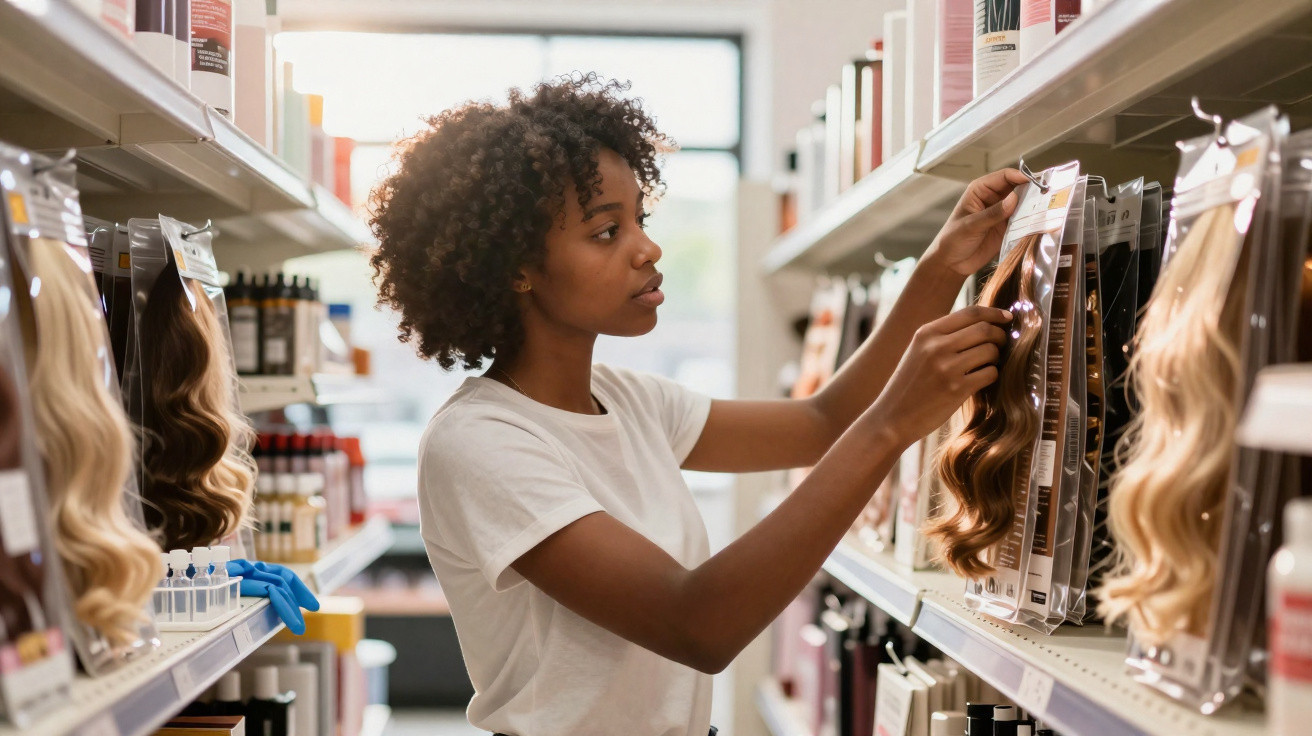
A recent study has identified dozens of potentially harmful chemicals in commonly used hair extension products, prompting fresh questions about safety and the lack of regulation.
What the study examined in hair extension products
Scientists from the Silent Spring Institute and the Southwest Research Institute in the US bought 43 widely sold hair products. As part of their review, they recorded how each item was promoted - including any claims such as being non-toxic - as well as the marketing approach, including products seemingly targeted at younger people.
Problematic chemicals showed up in all but two of the products tested. That suggests the issue may be broader than earlier, smaller hair extension studies had implied.
The researchers also stress that this matters particularly for Black women, who often use hair extensions for cultural reasons and for convenience. One study reported that about 70 percent of Black women wore hair extensions regularly, compared with around 10 percent in other racial groups.
"While prior reports have found some chemicals of concern in hair extensions, there's still much we don't know about their overall chemical makeup," says analytical chemist and lead author Elissia Franklin, from the Silent Spring Institute. "We wanted to get a better picture of the extent of the problem."
"This is an industry that has long overlooked the health of Black women, who should not have to choose between cultural expression, convenience, and their health."
Hair extensions can be made from a mix of natural and synthetic materials, and they are frequently treated with added chemicals so manufacturers can advertise features such as 'flame resistant', 'waterproof', or 'antimicrobial' on the packaging. Despite this, there is currently little regulation covering these materials.
To capture as complete a picture as possible, the team used a non-targeted method designed to detect as many chemical signals as it could. They note that more targeted screening - where analysts look only for specified substances on a list - can miss other relevant compounds.
Key chemicals identified
Among the potentially hazardous substances detected, the study found 48 chemicals that are currently listed on major hazard lists. Of these, 12 are included under California's Proposition 65, which flags substances that are "known to cause cancer, birth defects or other reproductive harm" via exposure through water contamination.
Across 36 of the samples, the researchers detected 17 chemicals associated with breast cancer. Some of these can disrupt hormones in ways that may influence breast cancer risk.
The team also reported four potentially harmful flame retardants in the samples. These were identified even in bio-based samples, which the researchers say indicates such chemicals are often added later rather than being inherent to the base material.
Another notable finding was the presence of organotins - potentially toxic compounds - in almost 10 percent of the tested samples. Organotins are used in manufacturing and have been linked to biological disruption in animal studies.
"We were especially surprised to find organotins," says Franklin. "These are commonly used as heat stabilizers in PVC and have been linked with skin irritation, which is a common complaint among hair extension users."
Why exposure and regulation are being questioned
Because extensions are typically worn for long periods and sit close to the skin and airways, the researchers argue that stronger action is needed on regulation, manufacturer responsibility, and clearer warnings for consumers.
They add that heating hair extensions is common, and that heat can vaporise and alter chemicals, potentially increasing exposure.
At the same time, the researchers emphasise an important limitation: the study did not directly measure health outcomes in participants. More work is needed to establish likely exposure levels and to determine how unsafe those levels may be.
For most of the products, the team did not measure concentrations, only whether the chemicals were present. However, where levels were quantified - including for dibutyltin - concentrations exceeded those recommended by standards agencies.
"These findings make clear that stronger oversight is urgently needed to protect consumers and push companies to invest in making safer products," says Franklin.
"Companies rarely disclose the chemicals used to achieve these properties, leaving consumers in the dark about the health risks from prolonged wear."
The research has been published in Environment & Health.



Comments
No comments yet. Be the first to comment!
Leave a Comment