
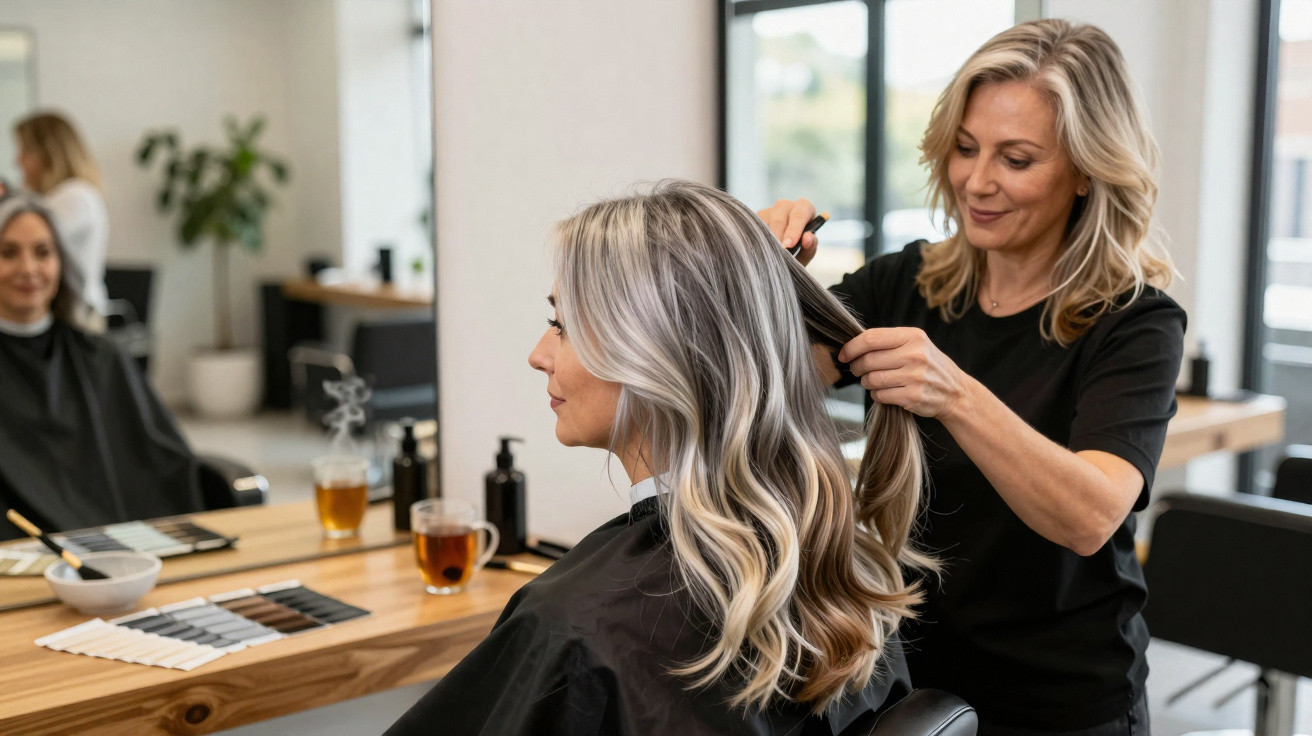
Those first silver strands rarely appear in a neat, even pattern - but with the right colour approach, they can become a real feature.
More and more people are opting to embrace their grey instead of covering it up, although the in-between stage can look a bit chaotic. High-Low balayage - a contrast-led colouring technique - is gaining traction as a clever way to make salt-and-pepper hair look purposeful and radiant, rather than like an uneven mix of random shades.
What salt-and-pepper hair really is
Grey hair almost never happens all at once. Its technical term is “canities”: pigment gradually fades one strand at a time. For months - and sometimes for years - you can feel stuck between two looks.
You’ll still have plenty of your natural colour in certain areas, while white hairs begin to gather around the temples, crown, or hairline. That’s what creates the classic salt-and-pepper appearance: a blend of darker strands, mid-greys, and bright silver or white threads.
This phase can be tricky to manage. Full-coverage colour can look severe once roots show after only a couple of weeks, yet letting everything grow can feel unkempt and ageing. High-Low balayage is designed to sit neatly in that gap.
High-Low balayage doesn’t fight grey; it rearranges the contrast so salt-and-pepper hair looks intentional, not accidental.
High-Low balayage, explained simply
When people hear “balayage”, they often picture beachy waves and sun-kissed blonde. In reality, the technique is much broader: colour is painted on freehand in a graduated way, creating a softer transition and avoiding hard lines.
With High-Low balayage, the aim isn’t “lighter overall”. It’s “more seamlessly blended”. A colourist works two main components through the hair:
- lighter sections (the “highs”) that mirror your grey and white strands
- slightly deeper sections (the “lows”) that reflect your original base shade
Applied carefully, these tones reduce the harsh jump between remaining natural pigment and newly white strands. Rather than a single flat dye, the end result is a woven mix of shades - more like an expensive textile than a solid block of colour.
The idea is to play with light and shadow so there is no obvious line where your natural grey starts and your old colour stops.
Why it suits the “transition” phase so well
High-Low balayage is especially effective when you’re not fully grey. There’s still enough natural depth to support lowlights, and enough silver coming through for the brighter pieces to look believable.
Because the placement is strategic and the blend is soft, regrowth tends to be much less obvious. Many people can leave longer between appointments than with traditional root touch-ups, because the eye notices the overall harmony rather than a sharp line at the scalp.
Choosing the right tones for your grey
Technique is only part of the equation - shade choice matters just as much. A good colourist will assess your skin tone, how your greys are distributed, and the overall finish you’re after.
| Goal | Best tonal direction | Typical effect |
|---|---|---|
| Emphasise grey, look chic and cool | Cool tones: ash, icy, smoky beige | Sharp, modern, strong contrast |
| Soften grey, look natural and soft | Warmer tones: beige, soft gold, champagne | Gentle, blended, “sunlit” salt-and-pepper |
| Reduce tiredness or sallowness in skin | Neutral-cool: mushroom, taupe | Balanced, flattering on most complexions |
If you enjoy the drama of silver, cooler shades can make it feel deliberate and fashion-forward - for example, ashier lowlights paired with pale, almost platinum highs around the face.
If you’re after a subtler, effortless look, warmer beiges and champagnes can soften the shift by melting grey into your base shade, so the contrast feels less abrupt.
Cool tones highlight the grey; soft golden or beige tones help it blend seamlessly into the rest of the hair.
How a salon creates a High-Low effect
The exact process varies by stylist, but the approach usually follows a similar, straightforward logic.
1. Mapping your grey pattern
First, the colourist identifies where grey is most concentrated - commonly the temples, parting, and nape. That map guides where the highs and lows should go. For example, someone who’s very grey at the front may suit brighter face-framing pieces, with richer lowlights underneath to keep depth.
2. Painting light and dark in balance
Typically, the lighter pieces are placed beside (or woven through) existing grey strands. This helps prevent obvious streaks and makes the grey look like part of the overall design.
Then, darker lowlights are painted between those lighter ribbons. This brings back dimension that can be lost as pigment fades, so hair doesn’t look flat or washed out.
3. Keeping maintenance realistic
Because balayage avoids stark horizontal bands of colour, it grows out with much less root contrast. Many people can extend appointments to every three or even four months.
Over time, your colourist can shift the balance of highs and lows as more white comes through. It can take you from the first silvers to almost fully grey - just with a different emphasis at each visit.
Who High-Low balayage suits best
High-Low balayage can be tailored to many hair types and routines, but it’s particularly useful in a few common situations:
- People in their 40s, 50s or 60s who have scattered grey but aren’t ready to go fully silver.
- Anyone fed up with six-weekly root touch-ups and strong demarcation lines.
- Those who prefer movement and depth in their hair instead of one single, flat shade.
- Professionals who want a polished result that doesn’t shout “fresh dye job”.
It suits short bobs, longer layers, straight hair or waves. On curly hair, the painted sections can be placed to follow the curl pattern, helping the light catch each twist and spiral.
Practical tips before asking for High-Low balayage
Turning inspiration pictures into a workable plan depends on a clear chat with your stylist. It helps to cover:
- How much grey you want to show: do you want to celebrate it, or mostly soften it?
- Your maintenance budget: how often do you genuinely want to come into the salon?
- Your tolerance for warmth: some people love golden tones; others want everything cooler and ashy.
- Damage history: prior bleaching or straightening affects how much lightening can be done safely.
Bring photos of salt-and-pepper looks you like, but also photos you dislike. Both help your colourist narrow down tones and placement.
Care and risks: keeping salt-and-pepper glossy
Any lightening process puts stress on the hair shaft. High-Low balayage uses targeted lightening rather than bleaching the entire head, but aftercare still makes a difference.
At home, opt for a gentle, sulphate-free shampoo and use a mask weekly to keep the hair fibre supple. Many stylists also recommend a purple or blue-toned shampoo once a week to offset yellowing that can appear in both blonde and white strands.
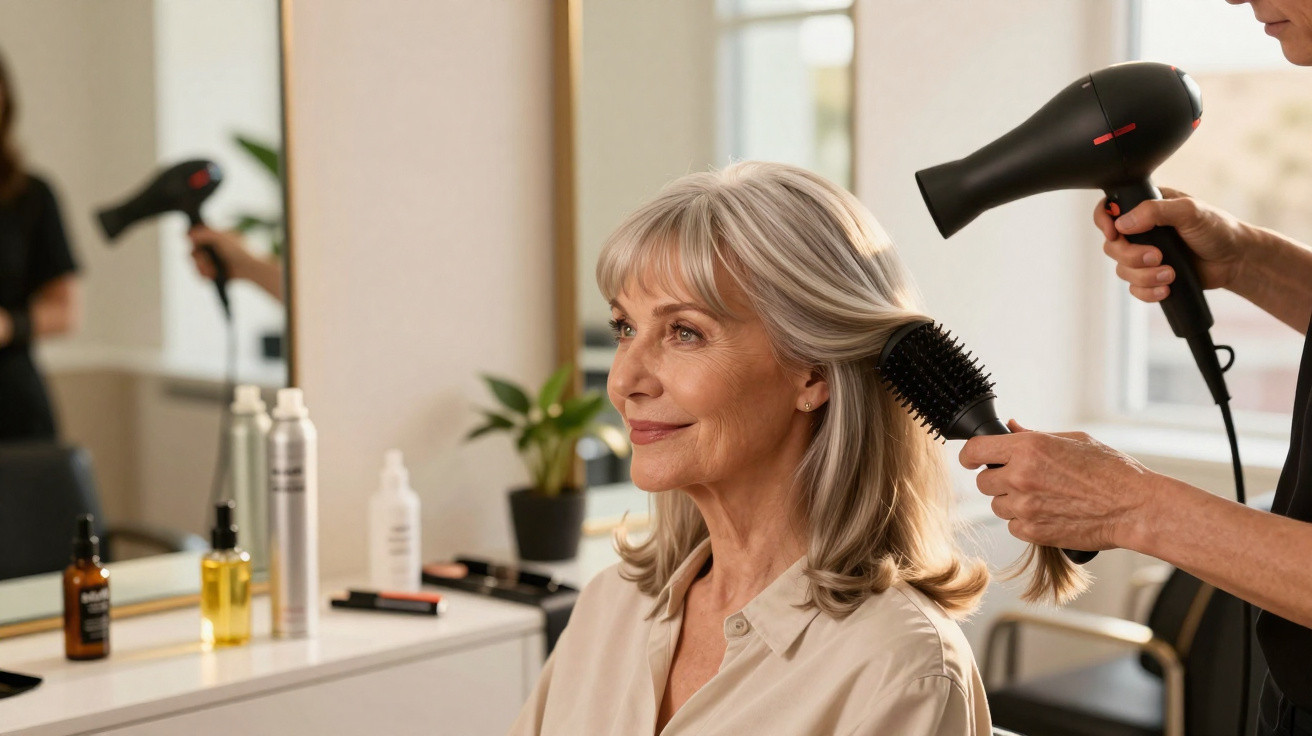
Heat styling can quickly knock back shine in grey hair, which reflects light differently from hair with pigment. A heat protectant and moderate tool temperatures can noticeably improve how crisp (rather than fuzzy) grey looks.
Key terms that colourists use
Salon terminology can sound confusing, so it’s useful to know a few basics before you book:
- Lowlights: slightly darker sections added for depth and to help lighter strands stand out.
- Tone: the “temperature” or character of colour - cool (ash, pearl), warm (gold, copper), or neutral.
- Demarcation line: the obvious boundary where old colour finishes and new growth begins.
- Dimension: the 3D, moving effect created when multiple shades work together.
Knowing these words makes it easier to describe what you want. For instance, you might ask for “soft lowlights close to my natural shade to support the grey” or “cooler highs around my face to sharpen the salt-and-pepper effect”.
When it’s done with care, High-Low balayage can turn what feels like fading pigment into a deliberate style choice - keeping grey visible and authentic, but arranged in a way that flatters your features and your age rather than trying to disguise it.





Comments
No comments yet. Be the first to comment!
Leave a Comment