
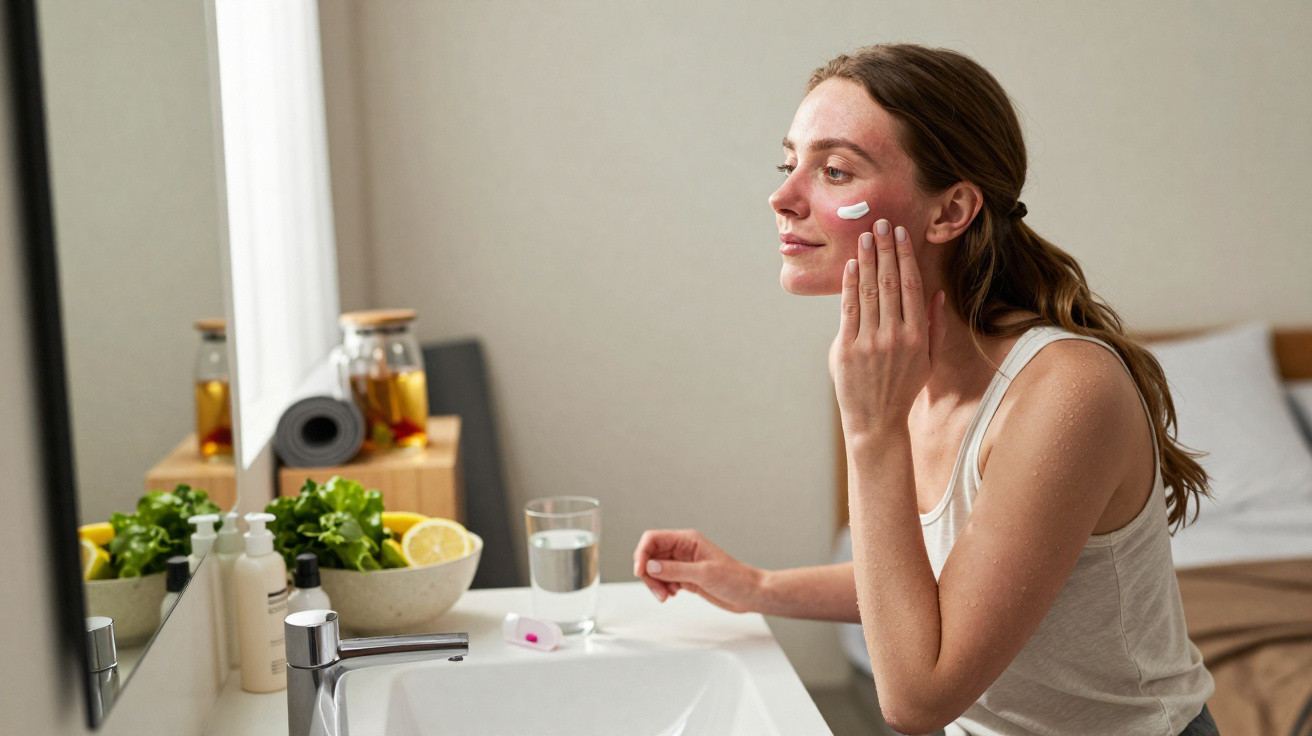
Many people initially assume that a flushed face simply means they have “sensitive” skin, or that they have developed a late form of acne. In reality, rosacea is driven by chronic inflammation, and it is far more than a cosmetic annoyance. Specialists increasingly view it as a systemic condition in which the skin, gut, nervous system and mental wellbeing interact - which is why it often needs a comprehensive, personalised treatment plan.
What rosacea really is - and how it differs from acne
Rosacea is one of the most common chronic inflammatory skin conditions affecting the face. It most often appears between the ages of 30 and 50. Men and women are affected at similar rates, with a slight predominance in fair‑skinned women.
Common signs include:
- recurrent or persistent redness in the centre of the face
- visible, enlarged small blood vessels (telangiectasia)
- small red bumps and pustules that can resemble acne
- burning, stinging or a feeling of tightness in the skin
- eye symptoms in many people
“Rosacea isn’t a ‘cosmetic flaw’ - it’s a chronic inflammation that needs to be taken seriously and managed long term.”
Unlike acne, rosacea does not produce blackheads, and the skin often feels dry and reactive rather than oily. Symptoms tend to flare and settle in cycles: periods of intense redness are followed by calmer phases - often triggered by familiar factors such as sunlight, spicy foods or stress.
Four clinical forms: why accurate classification matters so much
Professional bodies divide rosacea into several clinical forms, and these can overlap:
| Form | Main features |
|---|---|
| erythematotelangiectatic form | persistent redness, visible vessels, sensation of heat |
| papulopustular form | red bumps and pustules, an acne‑like appearance |
| phymatous form | thickened, lumpy skin, often on the nose; more common in men |
| ocular form | red, burning, dry eyes; inflamed eyelid margins |
The type present influences which treatments take priority: vascular lasers when redness is the main issue; anti‑inflammatory creams and tablets for papulopustular rosacea; surgical/dermatological procedures for marked thickening; and close collaboration with ophthalmologists when the eyes are involved.
Causes: when genes, lifestyle and microorganisms interact
Rosacea develops through a complicated mix of influences. There is no single cause, but several recurring components are well recognised:
- genetic predisposition and fair skin
- over‑reactive facial blood vessels
- a misregulated immune response with ongoing inflammation
- a compromised skin barrier
- changes in the skin microbiota
One microscopic skin inhabitant is particularly relevant: the Demodex mite (a follicle mite). It exists on everyone’s skin, but appears to multiply more in rosacea. The immune system may then overreact, fuelling inflammation. Experts caution against one‑track thinking: it is not only about reducing Demodex, but about improving the entire skin “environment” - less excess sebum, a more resilient barrier, and fewer irritants.
The gut–skin–brain effect: rosacea as a reflection of internal processes
In recent years, research has increasingly focused on the so‑called gut–skin–brain axis. Many people with rosacea also report digestive issues such as irritable bowel symptoms, bloating or food intolerances. Studies suggest that:
- an imbalanced gut microbiome (dysbiosis) can release inflammatory messenger substances
- these can travel via the bloodstream to the skin
- low‑grade chronic inflammation may therefore worsen rosacea
Mental and emotional factors can also play a part. Stress, lack of sleep, anxiety or depressive symptoms may drive inflammation through stress hormones and neurotransmitters. Visible facial flushing can, in turn, increase psychological strain - creating a loop that is difficult to break without support.
“Rosacea very often shows what has slipped out of balance internally - in the gut, in the nervous system, in everyday life.”
Common everyday triggers: what makes flare‑ups more likely
Over time, many people become able to pinpoint what tends to set off a flare. Frequently reported triggers include:
- strong sun exposure, sunbeds, sauna visits
- spicy foods or very hot food and drinks
- alcohol, particularly red wine and spirits
- major temperature changes, such as moving from warm to freezing conditions
- emotional stress, excitement, performance nerves
- overly harsh scrubs and aggressive cleansing products
- certain medicines, for example some blood pressure treatments
These triggers are highly individual. Keeping a food diary or a personal “trigger list” can make patterns easier to spot. When you know your own amplifiers, it becomes much easier to keep redness flare‑ups under control.
Why early diagnosis makes such a difference
Many patients spend years with the wrong label, such as “adult acne”, “eczema” or simply “sensitive skin”. During that period, they often reach for harsh anti‑spot products or home remedies - and unknowingly intensify the inflammation.
An early assessment in a dermatology clinic offers several benefits:
- distinguishing rosacea from other conditions such as lupus, contact allergies or acne
- clear identification of the rosacea subtype and severity
- targeted, effective treatment rather than trial‑and‑error
- early intervention before permanent vessel changes or thickening develop
If the eyes are involved, ophthalmologists should be a fixed part of the care team. Untreated ocular rosacea can extend to the cornea and impair vision.
Holistic treatment: more than just a cream
You cannot simply “cream away” rosacea, but it can often be controlled very well when several layers of treatment work together. Common approaches include:
Medicines and dermatological treatments
- anti‑inflammatory gels and creams containing metronidazole, azelaic acid or ivermectin
- for severe cases: anti‑inflammatory antibiotic tablets for a limited time, or low‑dose isotretinoin
- laser and light therapies to reduce visible vessels and persistent redness
Alongside this, many clinicians also pay attention to what is happening “inside”: diet, sleep, stress levels and gut health. Under professional guidance, omega‑3 fatty acids and probiotics are often recommended to help dampen inflammatory processes throughout the body.
Skincare that genuinely suits rosacea
For everyday routines, the guiding rule is “as much as necessary, as little as possible”:
- very gentle, fragrance‑free cleansing, without alcohol and without harsh surfactants
- a well‑tolerated, medical‑grade product aimed at redness and barrier support
- a rich but non‑greasy moisturiser for sensitive skin
- consistent, high‑factor sun protection all year round
“Four steps are often enough: gentle cleansing, targeted treatment, moisturising, sun protection - consistently, every day.”
Mechanical exfoliants, coarse brushes, facial steam baths and heavily perfumed products commonly trigger new flare‑ups, so they are best left on the shelf.
How diet and lifestyle can help calm the skin
Many people report improvements when they adjust their lifestyle. Common strategies include:
- more fresh, minimally processed foods and fewer ready meals
- adequate fluids, especially water and unsweetened tea
- cutting down alcohol, particularly red wine
- keeping sleep as regular as possible and limiting late‑night screen work
- stress management, for example through walks, breathing exercises, yoga or psychotherapy
If you suspect intolerances, it is best to investigate them with medical support rather than cutting out entire food groups on your own. Nutrient deficiencies can further weaken the skin.
What you can do in practical terms - a clear, usable roadmap
If you suspect rosacea, these three guiding questions can help:
- Do typical symptoms fit (redness, visible vessels, burning, flare‑ups)?
- Does your skin react strongly to sun, spicy foods, alcohol or temperature changes?
- Are there parallel digestive issues, severe stress or eye irritation?
If much of this applies, the first step is a dermatology appointment. There, it can be clarified whether rosacea is present and which subtype is dominant. It can help to bring photos of flare‑ups and a list of possible triggers to the consultation.
If you already have a confirmed diagnosis, many people benefit from a kind of “whole‑picture check”: What does your diet look like? How many hours of sleep are realistically achievable? Which strategies could help you handle stress at work or in daily life in a healthier way? Rosacea often responds very sensitively to small improvements across these areas.
This is how a seemingly “purely cosmetic” redness can become a clear plan: medical treatment, suitable skincare, targeted lifestyle adjustments, and an attentive eye on signals from the skin, gut and mind. Many people then find that flare‑ups become less frequent and less intense - and that feeling in control of their skin returns to the forefront.
Comments
No comments yet. Be the first to comment!
Leave a Comment