
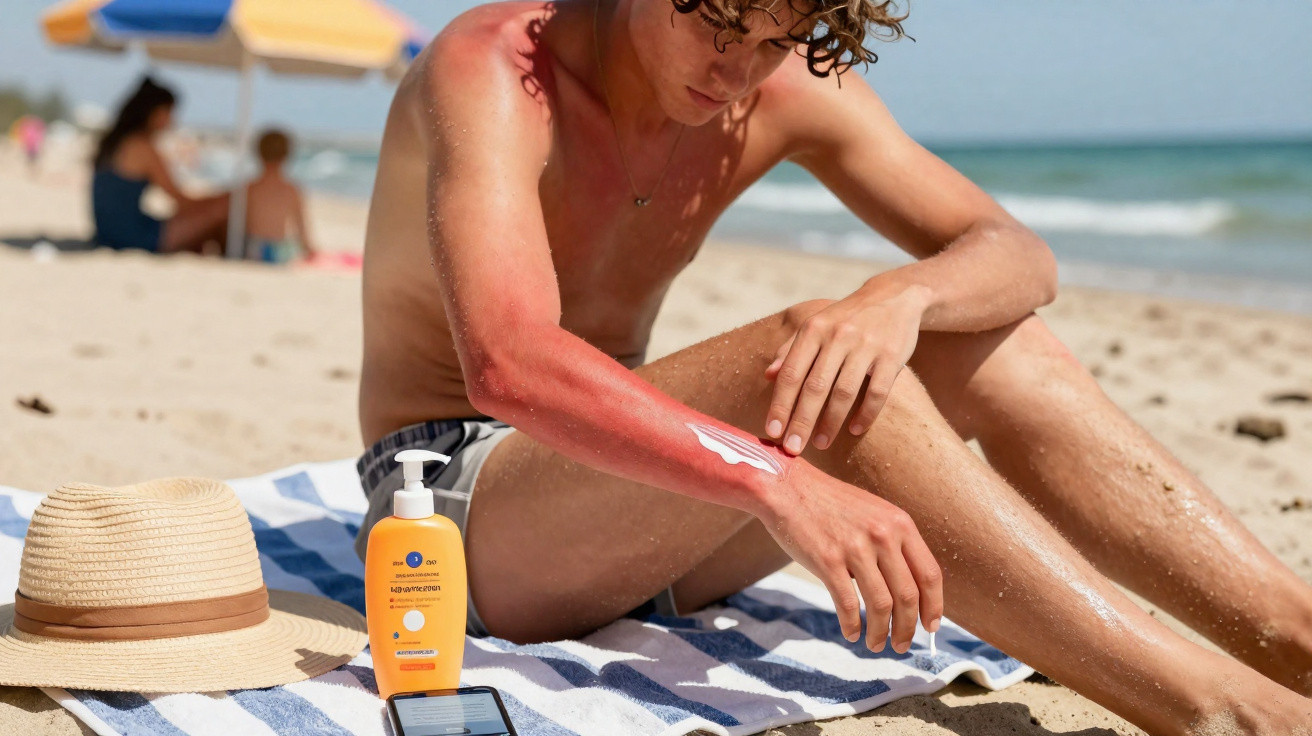
Sunscreens have had a difficult run lately. Earlier this year, testing commissioned by the consumer organisation Choice reported that a number of sunscreens were not providing the level of sun protection people would reasonably expect.
In one case, a product labelled sun protection factor (SPF) 50+ recorded an SPF as low as 4 when tested.
That result set off a chain reaction. Some sunscreen companies paused sales or recalled products, and further recalls have since followed.
On top of this, media investigations have raised concerns about both sunscreen testing methods and how some products are formulated.
This week, the Therapeutic Goods Administration (TGA) said several sunscreens use a shared “base formula” supplied by a single manufacturer. The TGA also said early testing suggests some sunscreens made with this base formula could be as low as SPF 4.
Given all this, it’s understandable if consumers are unsure whether their sunscreen is doing what it claims.
Below is what we currently know about the TGA’s latest announcement, and what might sit behind it.
Why the concern about sunscreen SPF?
Ever since SPFs were introduced, they’ve served as a straightforward guide for consumers about the degree of protection a product should provide.
However, measuring a sunscreen’s SPF is not simple. The standard approach involves applying sunscreen to volunteers’ skin, exposing the area to ultraviolet (UV) light, and then assessing how much redness appears over time.
Because skin responds differently from person to person - and because laboratories and testers don’t all operate identically - the outcomes can vary. For example, a product might return a high SPF at one laboratory, yet offer much lower protection when assessed elsewhere.
Even if a sunscreen’s real-world SPF is lower than what’s stated on the label, it may still provide some defence. But the risk of sunburn, DNA damage and developing skin cancer would be higher.
What’s a base formula?
The TGA’s current concerns focus on a “base formula” used across multiple sunscreens. This base formula - sometimes referred to as the core or vehicle - is essentially the sunscreen’s underlying foundation and typically contains:
- solvents/carrier liquids (water, oils, silicones)
- emulsifiers, surfactants, stabilisers (which help components mix and stop them separating)
- thickeners or gels
- preservatives, antioxidants
- pigments, tints, fragrances, texture enhancers
Additional ingredients are then incorporated into the base, particularly UV filters. In some cases, the base can be supplied to third parties with UV filters already included.
Some formulations also contain extra components, such as photostabilisers designed to help UV filters remain effective for longer when exposed to sunlight.
For a sunscreen to work properly, the base needs to perform several functions. It should:
- distribute UV filters evenly (avoiding clumps or separation)
- stay stable as the product sits over time
- help prevent UV filters breaking down in sunlight
- still be pleasant to use on skin (easy to spread and able to adhere well)
It’s also common for multiple brands to rely on the same base and then make minor adjustments, such as changing the colour or adding a particular scent.
Although UV filters are essential, they won’t perform as intended without a robust, well-engineered base. If the base formula is weak or defective, any product built on it may fall short. And if many sunscreens share that base, then multiple products and brands could be affected.
The TGA has identified at least 21 products that use this same base formula.
How might a base formula fail?
At this stage, we don’t know the specific reason the TGA is worried about this particular base formula. But in general, there are several ways a base can underperform, including:
- poor dispersion or aggregation: UV filters may clump together or settle, leaving gaps in protection
- photodegradation: without effective stabilisers, filters can degrade in sunlight
- chemical incompatibility: fragrances, pigments or other additives might interact negatively with UV filters
- dilution by inert ingredients: excess filler can lower the effective concentration of active UV filters
- physical instability: the product may separate, change thickness, or crystallise over time
- manufacturing or packaging stress: inadequate mixing, exposure to heat or light during production, or unsuitable packaging can damage the base
That said, not every sunscreen using the same base will automatically fail. Protection can vary depending on small ingredient modifications, manufacturing care, differences between batches, and storage conditions.
How do I check if my sunscreen’s affected?
The TGA lists affected brands and products on its website, and Choice also provides information.
Brands that are directly impacted may release recall notices, refund options and batch details.
You can also contact the company, provide your batch number and ask whether your product is included.
What if my brand’s affected?
If your sunscreen is on the affected list:
- don’t depend on it for sun protection, particularly for extended exposure
- take it back to the retailer for a refund or replacement (some brands are offering refunds or vouchers)
- keep an eye out for further TGA updates, as investigations may add more products to recall lists
- speak with a health professional if you’re concerned about skin damage or previous sun exposure
What’s the take-home message?
These recent developments don’t mean every sunscreen is untrustworthy. They do, however, underline the importance of good sunscreen design, sound formulation and effective regulatory oversight. The TGA’s work could result in tougher testing, improved formulation expectations and clearer advice for consumers.
In the meantime, until it’s clear exactly which brands are affected, it may be sensible to choose trusted brands - those that publish test results, operate transparently and have established reputations.
Lastly, sunscreen is only one part of staying safe in the sun. Use multiple layers of protection: wear protective clothing, hats and sunglasses, seek shade, and avoid prolonged time in direct sunlight where possible.
Mike Climstein, Associate Professor, Faculty of Health, Southern Cross University; Michael Stapelberg, Adjunct Associate Professor, Faculty of Health, Southern Cross University, and Nedeljka Rosic, Senior Lecturer, Faculty of Health, Southern Cross University
This article is republished from The Conversation under a Creative Commons licence. Read the original article.




Comments
No comments yet. Be the first to comment!
Leave a Comment