
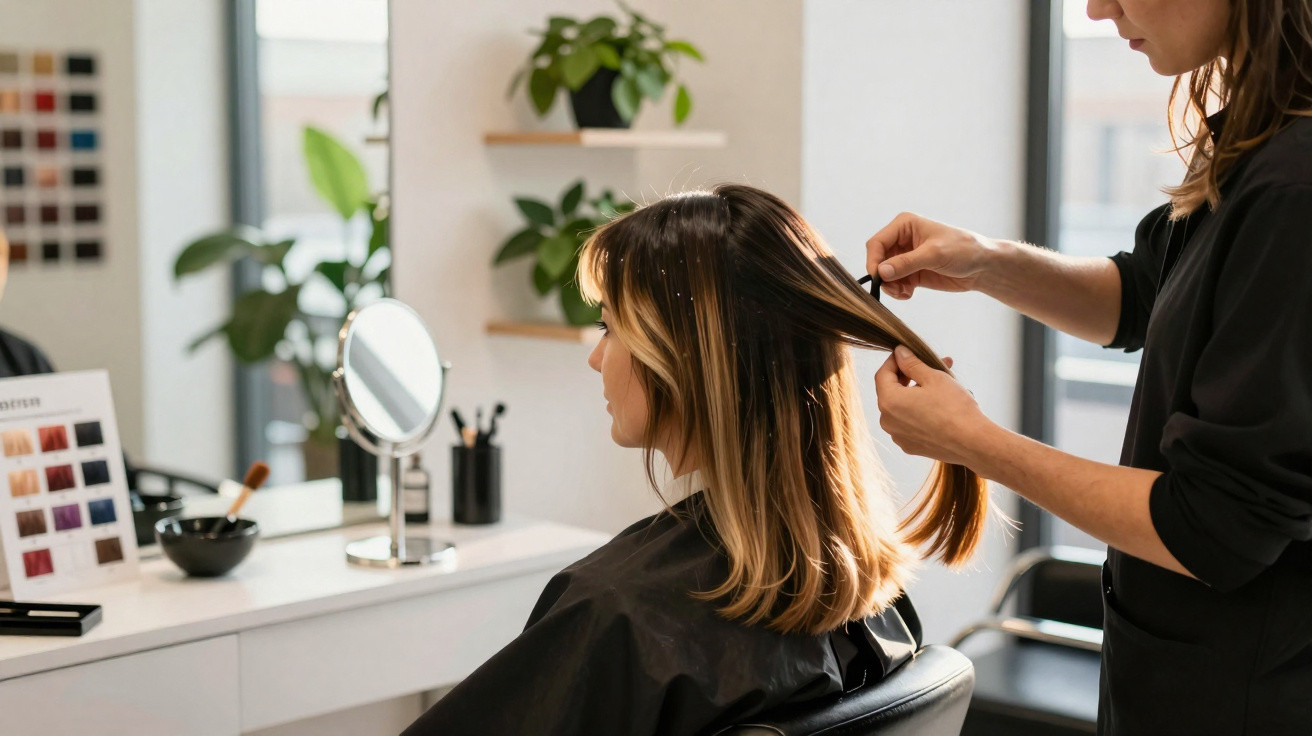
The woman sitting in the salon chair wore a familiar expression: equal parts optimism and dread. For years, she’d stuck with the same warm chestnut-ever since her forties. It had become part of who she was, as recognisable as her go-to lipstick or the scent her grandchildren can pick out instantly. But today, as the stylist fastened the cape and stepped back, he let out a small sigh and said, almost apologetically: “This colour is actually aging you.”
She stared at herself. The same shade, the same cut, the same mirror-yet in that moment, everything felt slightly off. Nearby, women in their sixties and seventies lifted their eyes from their phones, clearly following every word. No one wants to hear that the hair colour they adore is the very thing dragging down their face, their skin, even their confidence.
In a salon, a comment like that travels faster than hairspray.
And not everyone is reacting kindly.
When your “signature colour” quietly turns against you
Spend a Tuesday morning in a busy salon and you’ll see a pattern repeat. Women over 60 arrive convinced the only issue is regrowth-then leave realising the bigger issue might be the colour itself. The honey blonde that looked luminous 15 years ago can suddenly read brassy and flat on hair that’s become finer and thinner. A rich dark chocolate that once felt bold can start to emphasise every line around the eyes, almost like it’s been drawn in.
The jolt isn’t only about what they see. It hits emotionally, too.
Because being told that what used to brighten your face now weighs it down is never easy.
A London colourist once described a loyal 67-year-old client who refused to part with her inky brown dye. “I feel like myself with this colour,” the woman insisted, even though the black-brown tone was making her translucent skin appear almost grey. The tipping point came with the photos from her son’s wedding. Standing beside her daughter-in-law-glowing, softly highlighted-her hair looked strangely artificial. Solid. Heavy. Unforgiving.
They took it slowly over three appointments, carefully lifting the depth and introducing cooler chocolate ribbons with the lightest touch of caramel. Her fine hair immediately looked airier and fuller, and the overall effect softened her jawline. “I look less tired,” she said, watching herself in the mirror. “I thought I just needed more eye cream.”
All along, the colour had been the problem.
Stylists keep coming back to the same reality: what flatters you at 40 doesn’t automatically carry you through your 60s. Skin can lose warmth and density. Natural pigment fades. Fine hair catches and reflects light differently, which makes harsh tones stand out more. A copper that once looked healthy can suddenly make redness in the complexion more obvious. And a buttery blonde can shift into a yellowish halo around the hairline.
For many clients, the most upsetting part isn’t the explanation-it’s the sense that nobody warned them. Their “forever colour” quietly slipped from chic into severe, and no one said a thing. Until one stylist finally did.
The shades stylists quietly beg women over 60 to rethink
Ask an experienced colourist what they’d happily retire on fine hair after 60, and you’ll hear the same list again and again. Right at the top: dense, single-process black or extremely dark brown. On finer hair, those deep shades can create a helmet-like effect-movement disappears, dimension vanishes, and the face loses lightness. In some cases, the scalp can even show through, making hair appear sparser.
Next up: a stark, one-note platinum-particularly when it veers yellow. On social media it can look fashion-forward. Under bathroom lighting, it often reads chalky and fragile. Mature faces tend to be flattered by subtle variation, not a solid sheet of uncompromising colour.
Then there’s the category that causes the most disagreement at salon basins everywhere: strong warm browns and reds. The cosy “pumpkin spice” brunette. The vivid copper that used to draw compliments-until, one day, it doesn’t. Where these tones once added brightness, stylists say they can start to intensify the look of broken capillaries, rosacea, or sun damage.
A Paris stylist shared a story about a 63-year-old journalist devoted to her golden auburn. In daylight, the combination of orange-leaning hair and naturally pink-toned skin gave her a constant, slightly overheated look. “I thought I just flushed easily,” she laughed afterwards, once they’d softened the shade into a neutral rose-brown with fine, cool highlights. She looked calmer. Brighter. More “her”-just refreshed.
Still, the sense of betrayal towards her old shade was genuine.
Beneath the drama, the reasoning is fairly straightforward. After 60, fine hair can behave almost like a fibre optic thread: it picks up and throws back every tone placed on it. Go too dark and you build a sharp frame that draws attention to every shadow and highlight in the face. Go too warm and you dial up redness and sun spots. Go too cool and flat and the skin can appear washed out.
That’s why many colourists now avoid talking about “young” or “old” colours and focus instead on balance. The aim isn’t to look 35. It’s to stop your hair from adding ten years you never asked for. The most flattering shades soften contrast, blur hard edges, and help the eye read your features as rested rather than rigid.
So what actually works on fine hair after 60?
Top colourists aren’t prescribing one universal shade. Instead, they make small, strategic changes to what you already like. If you’re committed to darker hair, the recommendation is often to soften only the hairline and the top layer. A handful of ultra-fine, slightly lighter strands around the face can lift everything-without “turning you blonde.”
If you’ve been holding on to a golden blonde, the adjustment is usually towards something cooler and more beige, interwoven with your natural grey. That combination can create the impression of thicker hair, because the eye sees depth rather than one flat block of colour. Quietly, many stylists consider this salt-and-champagne mix the new luxury blonde.
The underlying rule is simple: allow some of your real texture and pigment back in, rather than battling it relentlessly.
Certain chair-side mistakes crop up again and again. Covering every root aggressively every four weeks with a heavy formula that stains the scalp. Choosing a box dye one or two levels darker because “the lighter one never covers properly.” Adding bright, chunky highlights that stick out from fine hair like wires, instead of blending seamlessly.
Most people recognise that moment: you look in the mirror and realise the routine that used to work now looks… wrong. The hardest part isn’t the colour itself; it’s the feeling you’ve somehow failed at upkeep. You haven’t. Your face has changed. Your hair has changed. The old approach is the issue-not you.
And honestly, nobody manages this perfectly every day-scrolling undertone charts, analysing colour wheels, booking toners on schedule. Most of us simply hope the usual appointment will still “do the job.”
Stylists who focus on mature, fine hair tend to repeat the same message, gently, like a refrain.
“Stop chasing your 45‑year‑old colour and start chasing light,” says Elena, a colourist in Madrid who works mostly with women over 60. “Light around the face. Light on the ends. Light in the eyes when you see yourself again.”
To get there, they typically recommend three small shifts:
- Lift your base colour by one shade to soften harsh lines and bring back movement.
- Choose ultra-fine, varied highlights rather than chunky streaks-especially around the face.
- Let some of your natural grey stay as built‑in highlights, not something you must erase.
The frustration many women feel when told their favourite colour is ageing them often eases once they see what subtle adjustments can do-how much younger their hair itself can appear without anything drastic. The trick isn’t a dramatic makeover; it’s a quiet move towards softness and dimension.
The debate that’s not really about hair at all
Once you strip away the formulas and salon chatter, the argument over “ageing” hair colours after 60 reveals something more personal. It isn’t merely a clash between clients and stylists, or warm tones versus cool ones. It’s the push and pull between identity and change. For many women, their signature shade carries a whole timeline-marriage, work, children, loss, reinvention. Being told it no longer suits them can feel like someone is rewriting that history.
At the same time, there’s a very real lift that comes from seeing a reflection that finally matches how you feel. Not necessarily younger-just less burdened by a colour that no longer fits this stage. Some women keep their beloved brunette or signature red out of principle, and that choice is entirely valid. Others let it go and find that a softer tone doesn’t erase them at all. It releases them.
Perhaps that’s the real question hanging in the air whenever a stylist says, “This is aging you”: are you ready to change the story your hair has told for decades-or not quite yet?
| Key point | Detail | Value for the reader |
|---|---|---|
| Reassess dark, flat colours | Very dark brown or black on fine hair can harden features and highlight thinning | Helps avoid shades that unintentionally add years to the face |
| Soften, don’t erase | Lighter face-framing pieces and dimensional tones work better than one solid colour | Makes hair look fuller, softer, and more modern without a total makeover |
| Work with your natural pigment | Blending grey with beige, cool or rose-brown tones creates balance and depth | Gives a more flattering, low-maintenance look that suits skin and texture |
FAQ:
Question 1 Which hair colours age fine hair the most after 60?
Answer 1 Dense black, very dark browns, flat platinums and strong, warm coppers or golds are often the most unforgiving. They increase contrast, draw attention to redness and can make thinning more noticeable. Softer, slightly lighter, more dimensional takes on your usual shade are generally more flattering.Question 2 Do I have to go grey to look modern?
Answer 2 No. Plenty of women look brilliant with blended colour that mixes natural grey with beige blonde, softer browns or cool-toned highlights. You can remain brunette, blonde or red-as long as the shade is adapted to your current skin tone and hair texture.Question 3 How often should I colour fine hair after 60?
Answer 3 Most colourists recommend extending to 6–8 weeks for full colour, then using gentle root touch‑ups or toners in between if necessary. Over-processing fine hair with frequent, heavy dyes can make it appear thinner and more fragile.Question 4 What should I ask my stylist for at my next appointment?
Answer 4 Request a base that’s softened by one shade, ultra‑fine highlights around your face, and a tone that complements your skin (neutral or slightly cool if you flush easily; slightly warm if you look washed out). Take a photo of yourself from a day you genuinely liked your hair-rather than a celebrity reference.Question 5 Is it too late to fix a colour that’s ageing me?
Answer 5 Almost never. A skilled colourist can gradually lift dark dye, neutralise brassy warmth, or introduce dimension into flat colour over a few visits. The key is to move slowly, protect the condition of fine hair, and stay open to small tweaks rather than an overnight dramatic change.
Comments
No comments yet. Be the first to comment!
Leave a Comment